How to Choose the Right Animation Style for Your Brand
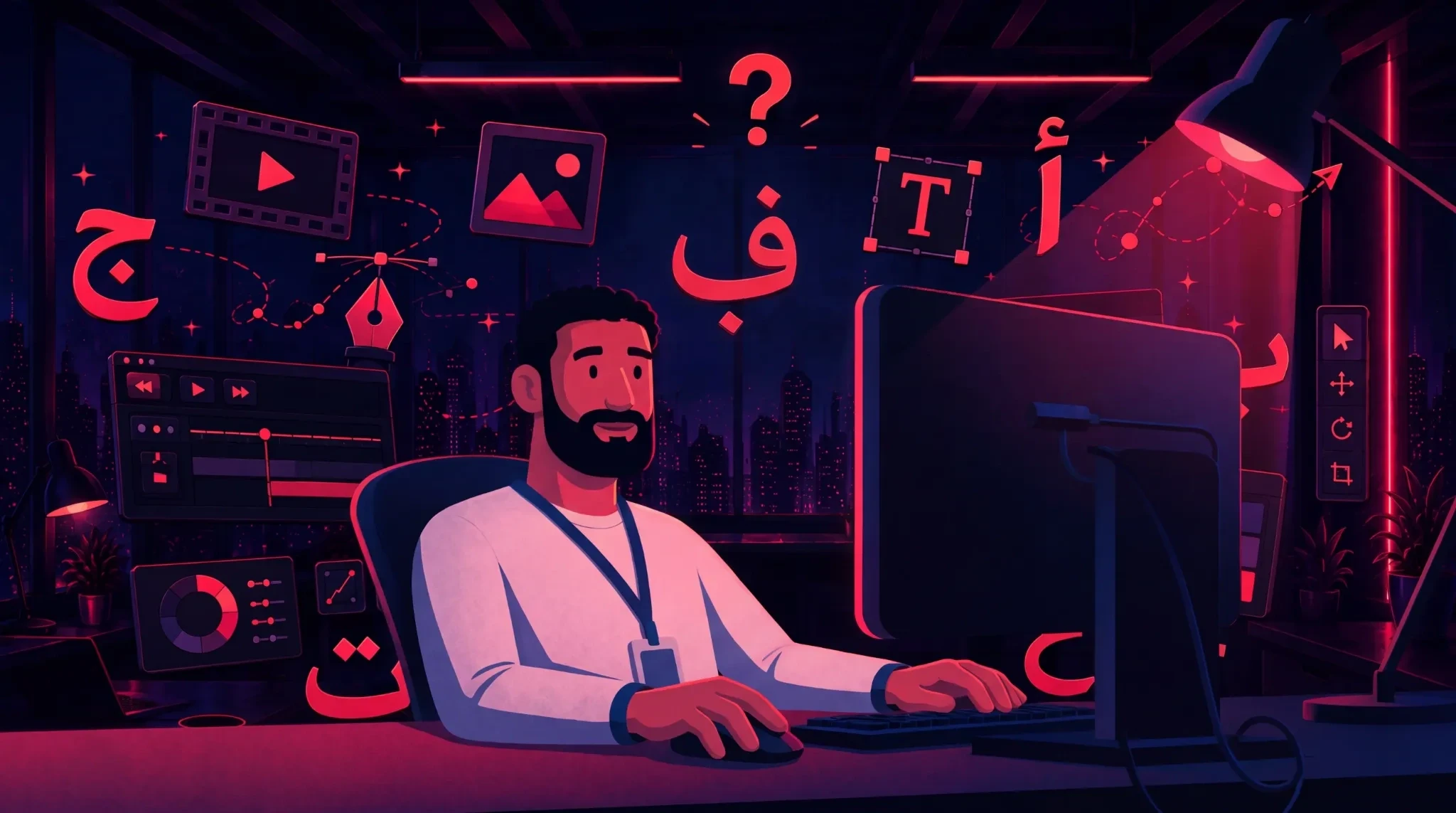
Arabic AI prompts often mirror, garble, or lose meaning. See why most models fail — and how to generate consistent Arabic images and video. Start free.
Arabic AI Prompts for Images and Videos: How to Get Accurate, On-Brand Results
Arabic AI prompts can help brands produce localized images, videos, voiceovers, and campaigns faster—but only when the workflow accounts for Arabic script, regional dialects, and brand consistency.
For marketing teams, ecommerce brands, and agencies across MENA, the cost of getting this wrong is bigger than one unusable image. Broken Arabic text, inconsistent products, changing characters, and the wrong dialect create extra revisions, delay campaign launches, and weaken customer trust.
This guide explains how to write better Arabic AI prompts and build a repeatable workflow that reduces rework, protects brand identity, and helps teams turn one campaign brief into scalable content.
What Are Arabic AI Prompts?
Arabic AI prompts are instructions written in Arabic, English, or transliterated Arabic that guide an AI model to generate visual content, video, dialogue, or voiceover for Arabic-speaking audiences.
They usually involve three separate challenges:
Visual direction: describing the subject, composition, camera angle, lighting, and style.
Language direction: choosing Modern Standard Arabic or the correct regional dialect.
Text accuracy: ensuring Arabic words displayed inside an image or video are correct, connected, and readable.
These should not be treated as one task. A model may understand an Arabic scene description but still fail to reproduce exact Arabic copy inside the image.
Why Arabic AI Prompts Often Fail
Arabic is a right-to-left script with contextual letter shapes, joining behavior, and optional diacritics. The W3C guide to right-to-left text explains why correct base direction is essential for Arabic content, while the Unicode Arabic specification documents Arabic joining, ligatures, and harakat.
Generative image and video models do not always process those rules like a text-layout engine. They may treat letters as visual forms instead of exact language, which can lead to disconnected letters, mirrored words, missing dots, invented words, or inconsistent labels.
This is why the best workflow separates AI-generated visuals from verified Arabic copy whenever exact wording matters.
Common Arabic Prompting Mistakes That Waste Budget
1. Asking the model to solve everything in one prompt
A long prompt that combines art direction, product details, Arabic headlines, dialect, legal copy, and multiple formats gives the model too many opportunities to fail. Separate the creative brief from exact copy and production requirements.
2. Using “Arabic” without naming the dialect
Arabic audiences are not one language market. Egyptian, Saudi, Gulf, Levantine, and Modern Standard Arabic differ in vocabulary, rhythm, and tone. Choosing the wrong register can make localized content feel distant or unnatural.
3. Re-prompting every asset from scratch
When teams recreate the brand, character, and product definition in every prompt, outputs drift. That increases review time and makes a campaign feel visually inconsistent.
4. Publishing generated Arabic without human review
Arabic text can look convincing while still being incorrect. Every headline, label, subtitle, and call to action should be checked against approved source copy before publishing.
5. Measuring output volume instead of usable output
Generating 100 assets is not efficient if the team can publish only 20. A better ROI metric is the percentage of assets that pass brand, language, and platform review without major revision.
A High-ROI Arabic AI Prompt Framework
Use the following structure to improve clarity and reduce unnecessary generations:
Business goal: State whether the asset is designed for awareness, product discovery, lead generation, or conversion.
Audience and market: Define the country, customer segment, and platform.
Dialect and tone: Specify Saudi, Egyptian, Gulf, Levantine, or MSA, plus the desired voice.
Main subject: Describe the person, product, or environment precisely.
Brand rules: Include approved colors, visual style, product proportions, logo use, and elements that must not change.
Composition: Define aspect ratio, camera angle, focal point, and empty space for copy.
Exact text: Keep approved Arabic wording in a separate field or add it during editing when possible.
Negative constraints: List unwanted changes such as altered packaging, extra objects, unreadable text, or a different character identity.
Example Prompt
Create a premium 4:5 social ad for a Saudi ecommerce audience. Show the approved product on the left with accurate proportions and packaging colors. Use clean studio lighting, a deep navy background, and leave 35% negative space on the right for Arabic copy. Maintain the locked product and brand identity. Do not generate text, redesign the label, add extra products, or change the logo. The final Arabic headline will be added from approved copy during editing.
This structure gives the model a clear visual task while protecting the parts that directly affect brand trust and conversion.
The Four Types of Consistency Brands Need
Character Consistency
The same face, clothing, proportions, and identifying features should remain stable across every image and video. This is essential for recurring brand characters, spokespeople, and campaign storytelling.
Product Consistency
Packaging, labels, materials, colors, and proportions must remain accurate. For ecommerce and performance campaigns, product drift can create confusion at the point of purchase.
Environment Consistency
The same store, studio, office, or campaign world should remain recognizable across formats. Reusable environments reduce setup time and strengthen visual recall.
Brand Consistency
Colors, logos, typography, tone, and visual language should stay aligned across every team and channel. Consistency makes production faster because reviewers spend less time correcting preventable brand errors.
Step-by-Step Workflow for Consistent Arabic Campaigns
Step 1: Define the market before the prompt
Choose the country, audience, platform, campaign goal, and dialect first. A Saudi conversion ad and an Egyptian awareness video should not use the same language direction.
Step 2: Lock the brand, product, and character
Create an approved reference for each recurring element. In ALStudio, Brand DNA, Product DNA, and Character DNA can preserve those definitions across creative workflows instead of forcing teams to repeat them in every prompt.
Step 3: Separate visual generation from exact Arabic copy
Generate the composition and visual system first. Add verified Arabic copy through a controlled text layer whenever perfect spelling and typography are required.
Step 4: Create one approved master asset
Before scaling, approve one asset for product accuracy, language, visual style, and campaign hierarchy. Use it as the quality benchmark for every variation.
Step 5: Adapt instead of rebuilding
Turn the approved master into platform-specific versions for social posts, paid ads, ecommerce placements, and video. This reduces creative drift and speeds up approvals.
Step 6: Review the campaign as a system
Check all assets together. Look for changes in faces, products, colors, Arabic copy, and tone—not only errors within a single image.
How This Improves Marketing ROI
A consistency-first workflow creates value in four practical ways:
Fewer revisions: approved brand and product references reduce avoidable correction rounds.
Faster production: teams adapt a master direction instead of rebuilding every asset.
More usable outputs: clearer prompts and controlled Arabic text increase the publish-ready rate.
Stronger conversion confidence: accurate products, familiar branding, and market-appropriate language reduce friction for customers.
To measure ROI, track:
cost per approved asset;
average revision rounds per asset;
time from brief to publication;
percentage of generated assets approved for use;
conversion rate by Arabic dialect or market;
campaign output produced per team member.
These metrics reveal whether AI is genuinely improving production or simply increasing the number of drafts.
Arabic AI Prompting for Agencies and Enterprise Teams
For Agencies
Agencies need to scale Arabic content across multiple clients without mixing brand identities. Reusable brand systems, locked references, and approved dialect guidelines help teams increase campaign capacity without increasing review work at the same rate.
For Ecommerce Brands
Ecommerce teams need accurate products across listings, paid ads, seasonal campaigns, and social content. Product consistency protects customer expectations and helps creative testing focus on the offer and message rather than correcting packaging errors.
For Enterprise Marketing Teams
Enterprise teams often work across markets, departments, and approval layers. A shared creative system helps local teams produce faster while maintaining central brand governance.
How ALStudio Supports Arabic Creative Production
ALStudio is a Creative AI Operating System built for creators, marketing teams, agencies, and enterprises. It connects brand memory with image, video, voice, copy, and campaign workflows in one workspace.
Its Arabic-first capabilities include a right-to-left interface, 22+ Arabic dialect voices, localized creative workflows, and Brand, Product, and Character DNA for consistent output across teams. Instead of repeatedly explaining the brand to separate tools, teams can set their creative identity once and reuse it throughout production.
That means fewer disconnected workflows, faster campaign adaptation, and a clearer path from brief to approved content.
Start creating with ALStudio and build Arabic campaigns with stronger brand consistency from the first asset to the final delivery.
Frequently Asked Questions
Should Arabic text be generated inside an AI image?
Use generated in-image text only when exact wording is not critical. For headlines, offers, labels, prices, legal copy, and calls to action, use approved Arabic copy in an editable text layer and verify it before publishing.
Is it better to write AI prompts in Arabic or English?
Both can work. The best choice depends on the model and task. English may produce stronger visual interpretation in some models, while Arabic is valuable for dialect, cultural context, dialogue, and voice direction. A hybrid workflow often delivers the strongest result.
How do I keep the same character or product across a campaign?
Use one approved reference and a reusable identity definition rather than describing the subject from scratch each time. Keep the same proportions, colors, camera rules, and negative constraints across every generation.
Which Arabic dialect should a brand use?
Choose the dialect used naturally by the target audience. Use Saudi or Gulf Arabic for localized Gulf campaigns, Egyptian Arabic for Egyptian consumer content, Levantine Arabic where appropriate, and MSA for formal or multi-market communication.
How can teams calculate the ROI of Arabic AI content?
Compare cost per approved asset, revision time, production speed, usable-output rate, and campaign conversion before and after adopting the workflow. The goal is not more generations—it is more approved, on-brand content with less production effort.
Conclusion
Successful Arabic AI prompting is not about finding one perfect phrase. It is about building a production system that combines clear prompts, the right dialect, verified Arabic copy, and consistent brand references.
When those elements work together, marketing teams can reduce rework, launch campaigns faster, create more usable assets, and protect the brand experience across every Arabic market.
Start free with ALStudio and turn one campaign brief into consistent Arabic content across image, video, voice, and social.