How Much Does Social Media Video Production Cost in Dubai?

Social media video production cost Dubai varies by scope. Compare pricing, production models, hidden costs and AI workflows before setting your video budget.
Social Media Video Production Cost Dubai: 2026 Pricing and What Animus Delivers
Social media video production cost in Dubai can range from around AED 1,500–8,000 for short-form content to AED 25,000–100,000+ for cinematic brand films and commercials, depending on the crew, locations, talent, equipment, creative complexity, usage rights and post-production.
These are market reference ranges, not fixed Animus Agency tariffs. The final budget depends on what the campaign actually needs.
The more useful commercial question is:
How much does each approved, campaign-ready asset cost after filming, editing, platform adaptations, localization, revisions and additional versions are included?
That distinction is important because a modern social campaign rarely needs just one video.
A Dubai brand may need:
Instagram Reels
TikTok videos
YouTube Shorts
Paid-social cutdowns
Alternative hooks
Product-focused edits
Arabic versions
English versions
Motion graphics
CGI variations
Different aspect ratios
Campaign extensions
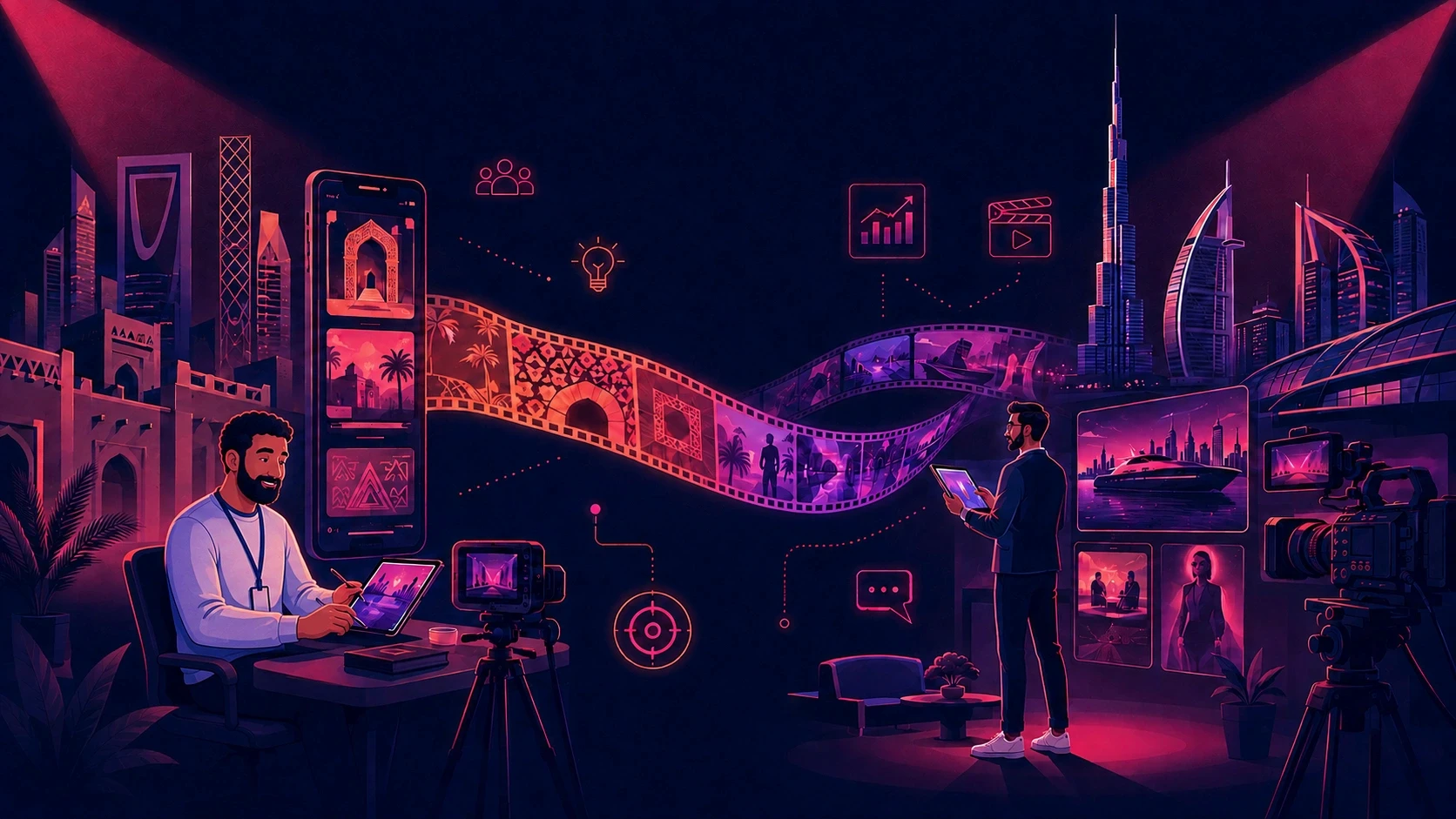
At Animus Agency, we approach social video production as a broader creative production system rather than treating every social video as an isolated deliverable. Our production capabilities cover filming, VFX, 3D animation, CGI, AI creative videos, motion graphics and post-production.
Explore Animus Studio and production services
What Is Social Media Video Production Cost in Dubai?
Social media video production cost in Dubai is the total investment required to plan, produce, edit, adapt and deliver video content for social media campaigns.
A conventional production budget can include:
Creative concept development
Scriptwriting
Storyboarding
Production management
Talent or presenters
Camera crew
Lighting
Sound
Equipment
Locations
Permits where required
Editing
Motion graphics
VFX
CGI
Color grading
Sound design
Revisions
Final exports
For social campaigns, however, the production scope often extends further.
Brands may also need:
Vertical versions
Square versions
TikTok adaptations
Instagram Reels
YouTube Shorts
Paid-ad cutdowns
Multiple hooks
Arabic localization
English localization
Voiceover
Subtitles
Product variations
Additional edits after performance data becomes available
This is why a production quote should be evaluated against the complete campaign output, not just the price of the first video.
At Animus, this broader production approach connects creative development with filming, animation, CGI, AI creative production, motion graphics and post-production.
Social Media Video Production Cost Dubai: 2026 Reference Ranges
There is no single Dubai production rate because every project has a different scope.
As a planning reference:
Short-Form Social Video: AED 1,500–8,000
This level can include:
Founder videos
Talking-head content
Simple product demonstrations
Basic Reels
Interviews
Small production shoots
The final cost depends on crew, equipment, location, editing, revisions and deliverables.
Professional Social Content: AED 3,000–8,000
A more developed social production may include:
Creative planning
Professional filming
Lighting and sound
Script development
Editing
Captions
Motion graphics
Multiple social exports
This can be suitable for brands that need recurring social content rather than a single campaign film.
Corporate Video: AED 10,000–30,000
Corporate productions may involve:
Company profiles
Interviews
Employer-branding content
Product explainers
Internal communications
Corporate storytelling
Cinematic Brand Film or Commercial: AED 25,000–100,000+
Premium commercial production can involve:
Multiple locations
Actors or models
Art direction
Large crews
Cinema cameras
Set design
Advanced lighting
CGI
VFX
Complex sound design
Extensive post-production
For this type of work, the objective is usually bigger than creating a single social post. The hero film can become the source for a wider campaign system.
Animus works across commercials, animation, CGI, 3D, social media content and AI creative production, allowing a campaign to use different production disciplines depending on the creative requirement.
See Animus commercial and project work
Why the Price of One Video Can Be Misleading
A brand may initially request:
“We need a 30-second social media video.”
But the actual campaign may require:
30-second master
15-second cutdown
6-second bumper
Instagram Reel
TikTok version
YouTube Short
Paid-social version
Arabic version
English version
Alternative opening hook
Product-focused version
The original production quote can therefore represent only part of the eventual cost.
This is why Animus approaches production with the distribution requirements in mind.
The question is not only:
How much does it cost to make the video?
It is:
What campaign system can we create from the production investment?
That difference becomes especially important when a brand needs recurring social content.
How Animus Approaches Social Media Video Production
Animus Agency is a creative production agency working across Dubai, London and Cairo, with services spanning filming, VFX, 3D animation, CGI, AI creative videos and motion graphics. The agency says it was established in 2017 and has worked with 500+ clients.
Learn more about Animus Agency
For social media campaigns, that means Animus can build the production around the actual creative requirement rather than forcing every project into one production format.
A campaign might combine:
Live action + motion graphics + CGI + VFX + AI creative production + social adaptations.
The exact mix depends on the brief.
Animus Social Video Production Workflow
A strong social production workflow starts before the camera turns on.
1. Campaign Brief
Animus begins by understanding:
Brand
Product
Audience
Campaign objective
Message
Platform
Content volume
Required formats
Market
Timeline
This prevents the production team from creating a hero video that later has to be rebuilt for every channel.
Animus also publishes a practical guide to video production briefs covering objectives, messaging, formats, scripts and desired viewer actions.
Read Animus's Video Production Brief Guide
2. Creative Direction and Concept Development
The production team develops the central creative idea.
Depending on the campaign, this might become:
A live-action commercial
Product film
Social campaign
CGI advertisement
3D animation
Motion graphics piece
AI-assisted commercial
Hybrid production
The important part is deciding the creative system before production begins.
3. Script and Storyboard
The script establishes:
Message
Narrative
Voice
Dialogue
Call to action
Timing
The storyboard then translates the concept into visual sequences.
This is particularly important when one production needs to generate multiple social assets.
4. Production
Depending on the project, Animus can use:
Professional filming
Studio production
Real locations
3D animation
CGI
Motion graphics
AI-generated creative
VFX
Hybrid production
Animus's Studio page specifically lists filming, VFX, 3D animation, CGI, AI creative videos and motion graphics among its production capabilities.
5. Post-Production
Post-production can include:
Editing
Color grading
Sound design
Motion graphics
VFX
CGI integration
Background replacement
Cleanup
Captions
Platform adaptations
The goal is not simply to finish one master file.
The goal is to deliver the actual files required by the campaign.
Animus Commercial Production for Social Campaigns
A commercial can become the creative foundation for an entire campaign.
For example, Animus can develop a hero commercial and then build supporting content around it:
Short social cutdowns
Product clips
Teasers
Paid-social variations
Motion graphics
CGI extensions
Behind-the-scenes content
Vertical edits
Animus also has a dedicated article explaining its approach to AI commercial production, including briefing, scripting, storyboarding, visual generation, voice, editing, localization and campaign delivery.
Read Animus's AI Commercial Production Workflow
Animus CGI and 3D Production
Some social campaigns require visuals that would be difficult or expensive to capture physically.
That is where CGI and 3D production can become part of the campaign.
Examples include:
Product transformations
Impossible environments
Product simulations
Floating products
Stylized environments
Architectural visualization
Technology demonstrations
High-end product advertising
Animus maintains dedicated CGI and 3D project categories, including 3D animation work.
Explore Animus 3D animation projects
Animus also explains that modern campaigns can combine CGI and generative AI when different parts of the creative require different production methods.
Animus AI-Assisted Video Production
AI can change the economics of social production, especially when a campaign requires many variations.
But generating an individual clip is not the same as producing a campaign.
A production-ready workflow still requires:
Creative direction
Script
Storyboard
Visual development
Consistency
Editing
Voiceover
Localization
Platform adaptation
Quality control
Animus has documented this distinction in its own AI production workflow, noting that the challenge is maintaining product, character, environment and visual identity across a complete commercial.
Animus also publishes a comparison of AI video production and traditional production, explaining how AI can support product visualization, social content, campaign localization, creative experimentation and content variations while traditional production remains important for real people, physical locations and authentic footage.
Read Animus's AI vs Traditional Video Production Guide
Traditional Production vs AI Production at Animus
The choice does not have to be one or the other.
Traditional Production
Traditional production is useful when a campaign depends on:
Real people
Real locations
Events
Interviews
Physical product demonstrations
Documentary footage
Live performances
AI-Assisted Production
AI-assisted production can be useful when the campaign needs:
High content volume
Multiple creative variations
Fast visual exploration
Product visualization
New environments
Campaign extensions
Localization
Social experimentation
Hybrid Production
A hybrid workflow can combine both.
For example:
Shoot the hero content traditionally → extend the campaign with CGI and AI → create social variations → localize → edit for different platforms.
This allows each production method to perform the role it is best suited to.
How Much Does an Animus Social Media Video Cost?
There is no single Animus price for social media video production because the scope can vary substantially.
A useful Animus project brief should specify:
Creative
Concept
Script
Storyboard
Creative direction
Production
Shoot duration
Crew
Equipment
Location
Talent
Art direction
Post-Production
Editing
Color grading
Sound design
Motion graphics
VFX
CGI
Deliverables
Number of videos
Duration
Aspect ratio
Platforms
Cutdowns
Alternative hooks
Localization
Arabic
English
Voiceover
Subtitles
Regional adaptations
Revisions
Number of rounds
Feedback process
Additional scene costs
This makes the quotation easier to understand because both the agency and client know exactly what is being produced.
For a project-specific quote, brands can contact Animus directly through its official contact page.
Contact Animus Agency about your project
Example: Dubai Ecommerce Social Campaign
Consider a Dubai ecommerce brand launching a new product.
Instead of commissioning one video, the campaign could require:
1 hero product video
3 Instagram Reels
3 TikTok videos
2 YouTube Shorts
3 paid-social variations
2 Arabic versions
2 English versions
3 alternative hooks
2 product-focused edits
That is already more than 20 campaign assets.
Animus can structure the production around the master creative and then develop the supporting content through the appropriate combination of filming, editing, motion graphics, CGI, AI and post-production.
The benefit is not simply producing more files.
It is making the original production investment useful across more campaign placements.
Cost Per Usable Asset: The Metric Brands Should Track
A useful commercial formula is:
Effective cost per usable asset = Total campaign production cost ÷ approved campaign-ready assets
For example:
Production: AED 15,000
Localization: AED 2,000
Additional formats: AED 2,000
Revisions: AED 1,000
Total: AED 20,000
Approved assets: 10
Effective cost = AED 2,000 per usable asset
This metric is more informative than looking at the cost of the hero video alone.
It also helps brands compare different production models.
What Increases Social Media Video Production Cost in Dubai?
1. Crew Size
A simple talking-head video requires a different crew from a commercial with:
Director
Producer
Camera team
Lighting team
Sound
Stylist
Makeup
Production assistants
2. Locations
Multiple locations add:
Logistics
Travel
Scheduling
Permits
Location fees
Set dressing
3. Talent
Actors, presenters and models introduce:
Casting
Fees
Usage rights
Scheduling
Management
4. Creative Complexity
A straightforward product video is different from a cinematic commercial involving VFX, CGI and controlled environments.
5. Post-Production
Editing, sound, VFX, motion graphics, CGI and color work can significantly affect the final budget.
6. Number of Deliverables
A single 30-second video and a campaign containing 20 platform-ready assets should not be priced as equivalent projects.
7. Localization
Arabic and English versions can introduce:
Translation
Copy adaptation
Voiceover
Subtitles
New edits
Cultural adaptation
Animus has also published guidance on localization for Middle Eastern campaigns, emphasizing that localization can involve language, cultural context, voice, visuals and channel execution rather than simply translating copy.
Read Animus's Middle East Campaign Localization Guide
Why Animus Is a Strong Fit for Multi-Format Campaigns
For brands that need only one simple video occasionally, a small production setup may be sufficient.
But campaign production becomes more complex when multiple creative disciplines are required.
Animus brings several of those disciplines together:
Commercial production
Filming
Animation
3D
CGI
VFX
Motion graphics
AI creative production
Post-production
Social content
The Animus Studio page presents these services as part of its broader creative production offering.
That matters because a campaign can evolve.
A project may start as a live-action commercial and later require:
CGI → motion graphics → social cutdowns → AI extensions → localized versions → additional campaign assets.
Working with a production partner that can support multiple disciplines can reduce the need to rebuild the creative workflow each time the campaign expands.
Animus for Agencies and Marketing Teams
The economics are different when production is recurring.
An agency or marketing team may need to produce content every month rather than once per quarter.
That creates recurring requirements around:
Brand consistency
Creative development
Production scheduling
Content volume
Platform adaptations
Localization
Client approvals
Revision management
Animus's AI workflow research highlights this production challenge and describes a more structured process built around approved creative identity, reusable production foundations, generation, localization, editing and delivery.
Read Animus's AI Workflow for Agencies
How to Reduce Social Media Video Production Costs Without Sacrificing Quality
The goal should not simply be to find the cheapest production quote.
Instead, reduce unnecessary rework.
1. Define All Deliverables Before Production
Know what the campaign requires before filming begins.
2. Shoot for Multiple Outputs
Plan compositions and footage with social cutdowns in mind.
3. Create Multiple Hooks
The same campaign concept can often support several openings.
4. Plan Localization Early
Do not wait until final delivery to decide that the campaign needs Arabic.
5. Reuse Campaign Assets
Products, characters, environments and visual systems can often be reused.
6. Build the Campaign Around a Master Creative
The hero asset should provide the foundation for additional content.
7. Use the Right Production Method
Not every shot needs a physical shoot.
Not every shot should be AI-generated.
Not every campaign needs CGI.
Choose the method based on the creative requirement.
Dubai Video Production Quote Checklist
Before approving a proposal, ask:
Creative
Is concept development included?
Is scriptwriting included?
Is storyboarding included?
Production
How many shoot hours?
How many crew members?
What equipment is included?
Are locations included?
Is talent included?
Post-Production
How many edit rounds?
Is color grading included?
Is sound design included?
Are motion graphics included?
Are VFX included?
Is CGI included?
Deliverables
How many videos?
What duration?
What aspect ratios?
Which platforms?
Are cutdowns included?
Are alternative hooks included?
Localization
Is Arabic included?
Is English included?
Is voiceover included?
Are subtitles included?
Rights
Who owns the final assets?
What are the talent usage rights?
Are paid-media rights included?
Additional Versions
Ask specifically:
What happens if we need another hook, another language, another aspect ratio or another product version?
This question can reveal a major difference between production quotes.
Animus: From One Video to a Complete Campaign
The most useful way to think about social media video production is not:
One video = one campaign.
It is:
One production investment = a system of connected campaign assets.
Animus's own content work reflects this approach. Its video repurposing framework describes turning one source production into reach assets, creative tests, educational content, authority content and campaign-support assets.
Read Animus's 30-Asset Video Repurposing Framework
This is particularly relevant for Dubai brands investing in social content because the production budget has to support the entire publishing cycle.
A strong campaign can move from:
Brief → Concept → Script → Production → Master Film → Cutdowns → Social → Localization → Paid Ads → New Variations
rather than ending when the master video is exported.
Frequently Asked Questions
How Much Does Social Media Video Production Cost in Dubai?
Short-form social production can commonly fall around AED 1,500–8,000, while larger cinematic productions can reach AED 25,000–100,000+ depending on scope.
These are market reference ranges rather than fixed Animus prices.
For an Animus quote, the actual deliverables, production requirements, locations, talent, post-production and number of versions need to be defined first.
How Much Does Animus Charge for Social Media Video Production?
Animus does not have one universal price because social video projects can range from simple short-form production to large commercial campaigns involving filming, CGI, VFX, animation, AI and extensive post-production.
The most accurate approach is to submit the campaign requirements directly to Animus for a project-specific quotation.
Request a project discussion with Animus
Is AI Video Production Cheaper Than Traditional Production?
AI can reduce certain production requirements, particularly for visual exploration, variations, product visualization and campaign extensions.
However, AI does not eliminate creative direction, editing, consistency, localization or quality control.
Animus's production research describes AI and traditional production as complementary approaches rather than automatic replacements for one another.
Should I Hire a Video Production Company or an Agency?
The answer depends on the scope.
A specialist production company may be appropriate for a defined filming requirement.
An agency can be useful when the project also requires creative strategy, campaign development, multiple disciplines, content adaptations and ongoing creative support.
Animus combines creative strategy and production capabilities across commercials, animation, CGI, 3D, VFX, AI creative video and motion graphics.
Does Animus Produce CGI Social Media Videos?
Yes. CGI is one of Animus's listed creative production services, alongside 3D animation, filming, VFX, AI creative videos and motion graphics.
Can Animus Create Arabic and Localized Campaign Content?
Animus works across MENA markets and publishes dedicated material on Middle East campaign localization, including Arabic messaging, regional adaptation, voice and channel execution.
The exact localization scope should be defined in the production brief.
What Should I Measure When Comparing Video Production Quotes?
Do not compare only the price of the master video.
Compare:
Total production cost
Number of approved assets
Number of platforms
Number of versions
Localization
Revision rounds
Usage rights
Post-production
Effective cost per usable asset
What Is the Biggest Hidden Cost in Social Media Video Production?
Versioning and rework can become significant hidden costs.
A campaign may require new hooks, aspect ratios, languages, product variations, platform edits and corrections after the original production is complete.
Planning these requirements before production can make the budget easier to control.
Final Takeaway: Social Media Video Production Cost Dubai
Social media video production cost in Dubai should be evaluated against the complete campaign output, not just the price of one finished video.
A simple social clip may require a relatively small production budget.
A cinematic commercial may require a much larger investment.
But the most important question for brands is what that investment produces.
At Animus, the production model can bring together:
Commercial video production
Filming
Animation
3D
CGI
VFX
Motion graphics
AI creative production
Post-production
Social media content
This allows the production approach to adapt to the campaign instead of forcing every creative requirement into the same format.
The commercial objective is ultimately to create more usable, campaign-ready content from the production investment while maintaining creative quality and brand consistency.
For Dubai brands planning a new campaign, the most useful starting point is to define the complete asset list first, then determine the production approach, budget and workflow required to deliver it.
Ready to plan your next social media video campaign? Talk to Animus Agency about your production requirements.