AI Video Production vs Traditional Production: Cost, Quality and Control
AI video production vs traditional workflows compared on cost, quality, speed and control. See which production model fits your brand and campaign goals.
AI Video Production vs Traditional: Cost, Quality and Control
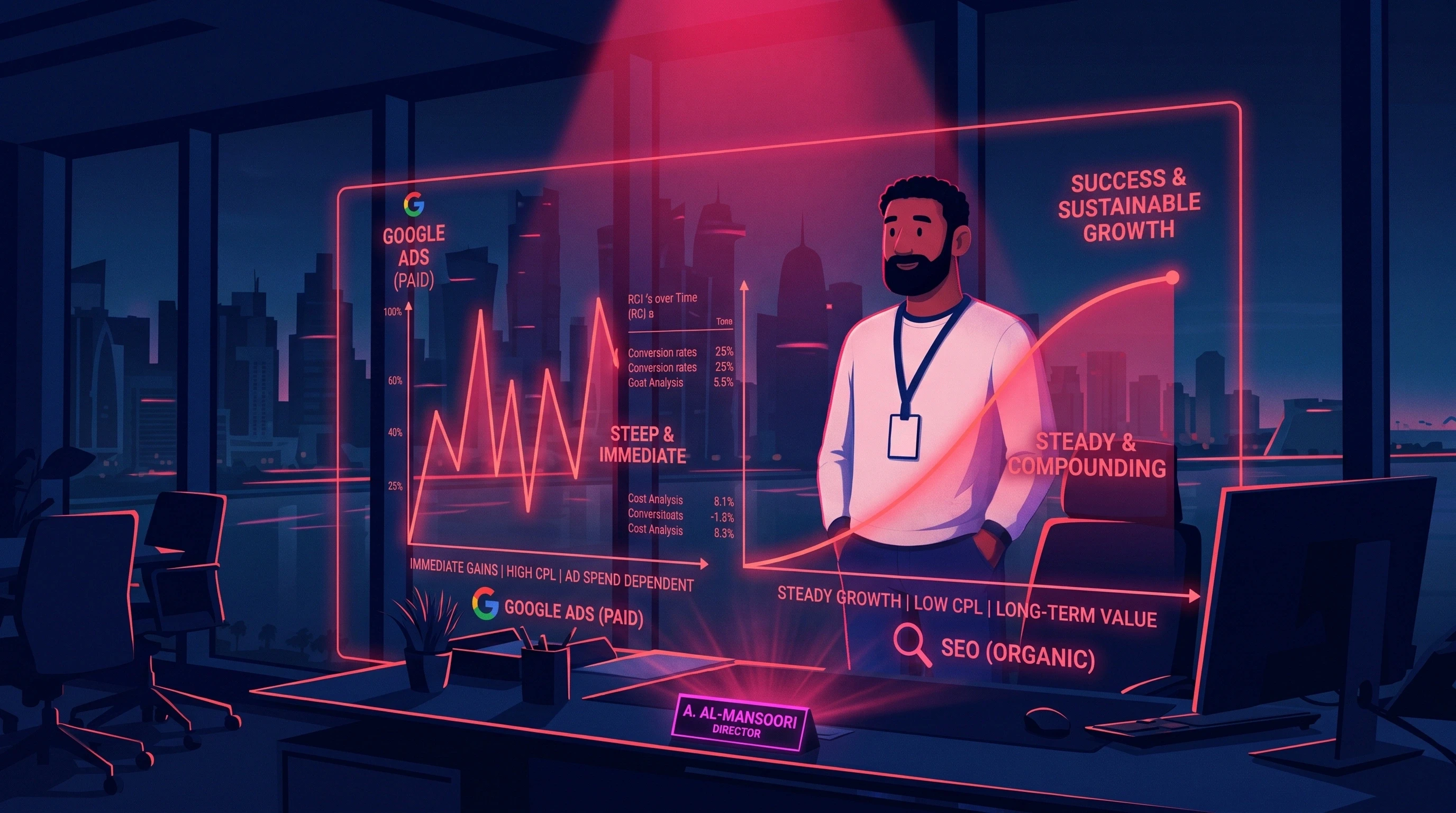
AI video production vs traditional production is not simply a technology comparison. It is a production decision about cost, speed, creative control, authenticity, scalability and the type of content a campaign actually needs.
At Animus, we work across traditional video production, commercials, animation, CGI, 3D, motion graphics, VFX and AI creative production. That gives us a practical view of where AI can change the production process and where traditional filmmaking remains essential.
AI can reduce the need for physical locations, large crews, repeated shoots and certain types of production work. It can also make creative iteration, localization and campaign variation faster.
Traditional production remains valuable when a project depends on real people, physical environments, live performances, product interactions or documentary authenticity.
So the question is not:
Is AI better than traditional video production?
The better question is:
Which production approach gives this campaign the right balance of quality, cost, speed and control?
For some projects, the answer is AI.
For others, it is traditional production.
Increasingly, the answer is a combination of both.
How Animus Approaches Video Production
At Animus, AI is not treated as a replacement for filmmaking.
It is another production capability within a broader creative system.
Animus Studio works across commercials, AI creative videos, 3D animation, CGI, motion graphics, VFX, filming and social media videos. This means production can be selected according to the creative requirement instead of forcing every project into the same workflow.
A campaign might begin with a traditional shoot.
Another might be entirely CGI.
Another might use AI-generated environments and characters.
Another might combine filmed product footage with AI-generated campaign variations.
The production method should follow the idea.
That principle is particularly important as brands move from producing one hero video toward producing entire libraries of campaign assets.
What Is AI Video Production?
AI video production uses generative AI and related creative technologies to create, modify or assemble video content from scripts, prompts, reference images, products, characters, environments and other creative inputs.
AI can support:
Commercial concepts
Product videos
Social media advertisements
Explainer videos
UGC-style content
Brand campaigns
Product demonstrations
Short-form video
Creative testing
Localization
Campaign variations
Concept visualization
AI-assisted VFX and post-production
But professional AI video production is more than generating an AI clip.
A commercial still requires:
Creative strategy
Art direction
Scriptwriting
Storyboarding
Visual development
Production planning
Editing
Sound
VFX
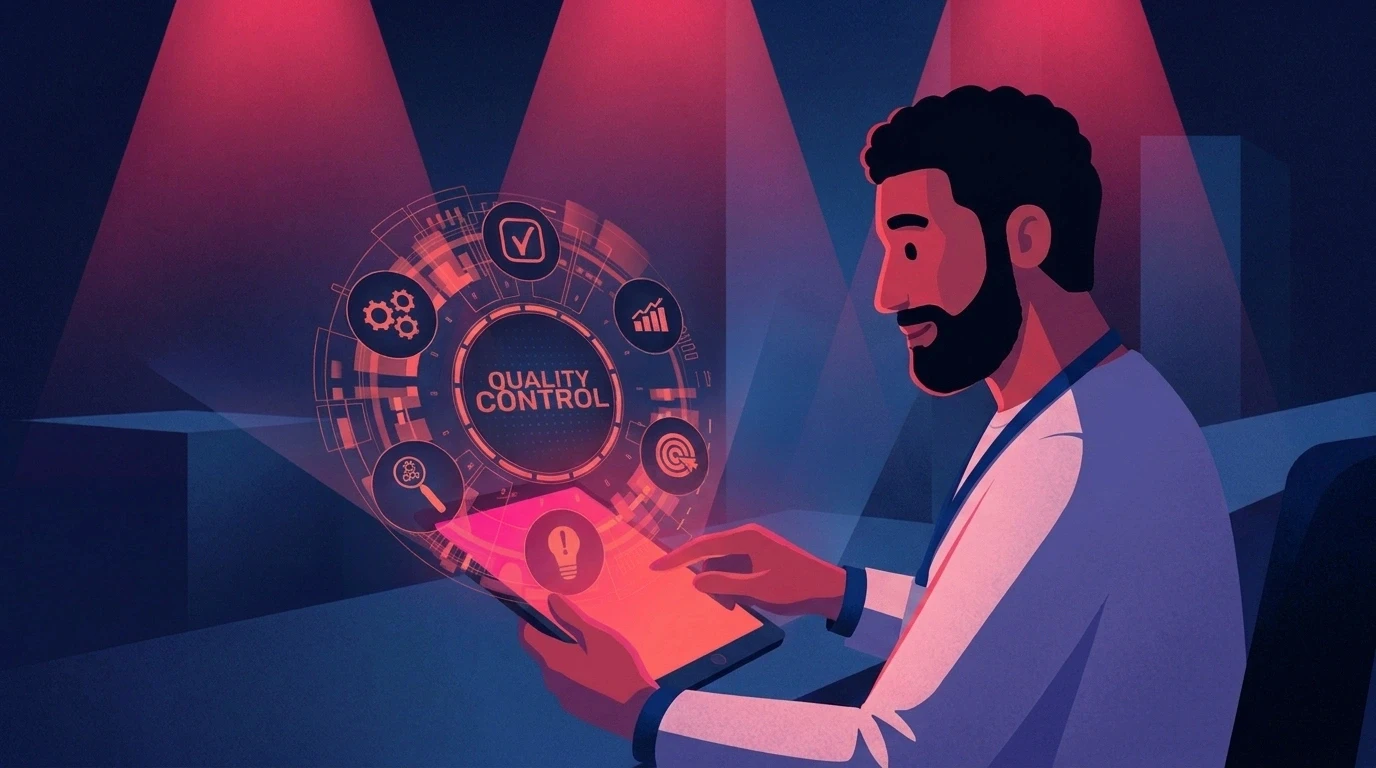
Quality control
Brand review
Campaign adaptation
That distinction is central to the way Animus approaches AI.
AI becomes part of production rather than replacing production.
For a deeper look at this workflow, see AI Commercial Production: A Step-by-Step Workflow for Brands.
What Is Traditional Video Production?
Traditional video production relies on physical filming and human-led production.
A commercial may include:
Creative development
Scriptwriting
Storyboarding
Casting
Location scouting
Set design
Production planning
Filming
Editing
Color grading
Sound design
VFX
Final delivery
Traditional production provides something AI cannot always reproduce convincingly:
real-world capture.
A real actor interacting with a physical product in a real environment creates a form of authenticity that synthetic production does not automatically reproduce.
This matters for:
Interviews
Testimonials
Documentary content
Live events
Customer stories
Physical demonstrations
Real-world product interactions
Performance-led commercials
Traditional production also provides direct control over the physical world.
The director can control:
Performance
Camera movement
Lighting
Composition
Props
Product placement
Physical environments
Blocking
Practical effects
These capabilities remain important even as AI becomes part of modern production.
AI Video Production vs Traditional Production
The difference becomes clearer when we look at the major production variables.
1. Production Speed
AI can shorten the distance between an idea and a visual prototype.
A traditional production may follow:
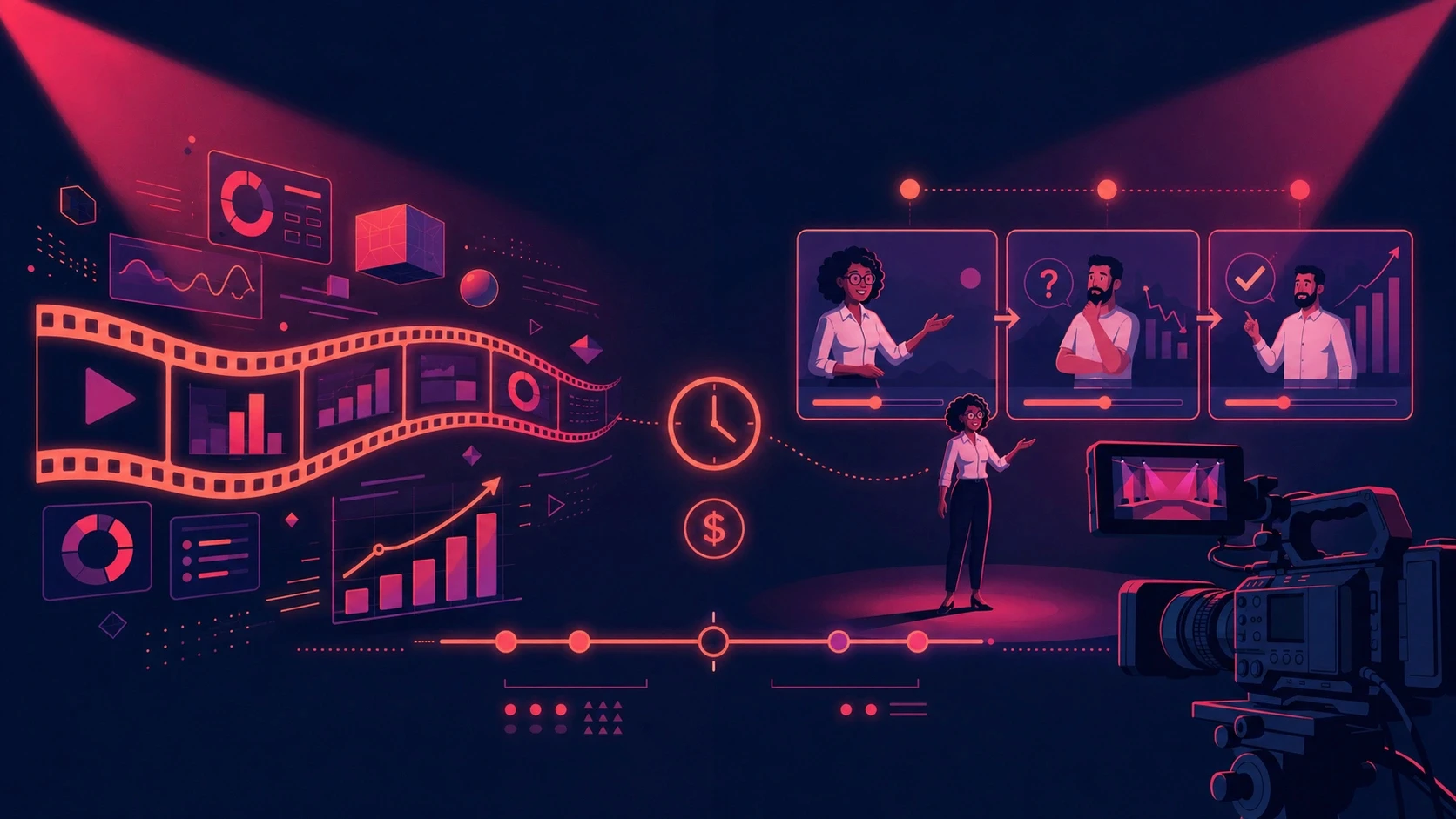
Concept → Pre-production → Scheduling → Shoot → Post-production
An AI-assisted workflow can allow:
Concept → Visual development → Generation → Review → Iteration
However, AI is not automatically faster.
A poorly organized AI workflow can produce hundreds of unusable generations.
The real advantage is the ability to iterate without rebuilding an entire physical production each time.
For agencies, the useful question is therefore not:
How quickly can we generate a video?
It is:
How quickly can we reach an approved, usable asset?
2. Production Cost
Traditional production can involve substantial physical costs:
Crew
Equipment
Locations
Talent
Transportation
Set construction
Props
Production management
Post-production
Reshoots
AI can reduce some of these requirements.
But AI production still requires:
Creative development
AI generation
Asset preparation
Editing
Quality control
Human review
Regeneration
Post-production
The important difference is often the cost structure.
Traditional production can involve a significant upfront investment for a defined shoot.
AI can make iteration and variation more flexible.
Producing one hero commercial is therefore very different from producing:
1 campaign × 10 concepts × 5 formats × 3 markets.
At that scale, the production model becomes an important business decision.
3. Scalability
Traditional production is generally designed around a defined production scope.
AI can make it easier to explore:
Different hooks
Different audiences
Different products
Different languages
Different formats
Different environments
Different creative concepts
Different social variations
This makes AI particularly relevant to performance marketing and content-heavy campaigns.
But increased production volume creates another challenge:
consistency.
Producing 50 assets is not useful if the product looks different in every fifth asset.
That is why Animus treats AI brand consistency as a production issue rather than simply a branding issue.
See How Creative Agencies Use AI Without Losing Brand Consistency for a deeper look at this challenge.
4. Creative Control
Traditional production provides physical control.
AI provides digital control.
Neither automatically replaces the other.
With traditional production, the director controls the camera, actor, lighting, set, product and physical environment.
With AI, control depends on:
The model
References
Creative direction
Prompt structure
Persistent identity
Editing
Human review
This creates a different production challenge.
A character may change between scenes.
A product may lose packaging details.
A location may shift.
Lighting may become inconsistent.
The problem is not always generation quality.
It is production continuity.
5. Authenticity
Traditional production has an important advantage when authenticity is central to the creative idea.
A real customer telling a story is not equivalent to an AI-generated customer.
A real athlete performing an action is not equivalent to a synthetic recreation.
A real location can carry cultural, historical or emotional meaning that a generated environment may not reproduce.
AI can create realistic visuals.
But realism and authenticity are different production qualities.
That distinction should be part of the production decision.
6. Iteration
Iteration is one of AI's most useful production advantages.
Imagine discovering after filming that a scene needs a different environment.
Traditional production may require:
Rescheduling
New talent availability
A new location
Additional crew
Additional production costs
AI may allow the team to regenerate or modify parts of the scene.
That makes experimentation easier.
But iteration still requires creative direction.
Generating more versions does not automatically create better versions.
AI Video Quality vs Traditional Video Quality
The assumption that traditional video always has higher visual quality than AI-generated video is becoming less useful.
AI can produce highly detailed:
Characters
Environments
Lighting
Camera movements
Product compositions
Cinematic scenes
Visual effects
But visual detail is only one part of production quality.
A commercially usable video also needs to be:
Accurate
Consistent
On-brand
Legible
Well-directed
Relevant
Properly edited
Suitable for the target audience
A beautiful AI shot with incorrect product packaging is still a production problem.
The same applies to traditional production.
A beautifully filmed commercial can still fail to serve its purpose if the creative idea, message or execution is wrong.
At Animus, production quality is considered together with creative direction, storytelling and communication.
AI, CGI and Traditional Production
AI and CGI should not be treated as competing categories.
CGI provides controlled digital production.
AI can accelerate exploration, generation, variation and certain parts of the visual pipeline.
A campaign may combine:
CGI product assets
AI-generated environments
3D characters
Traditional filming
AI-assisted VFX
Motion graphics
Traditional editing
This is particularly useful when the campaign requires both precision and creative flexibility.
Animus explores this relationship in What Is CGI Advertising? A Practical Guide for Marketing Teams.
CGI can create controlled product and environment assets while AI can support rapid exploration and variation.
The right choice depends on the shot and the campaign objective.
Why Brand and Product Consistency Matter
As content volume increases, consistency becomes harder to maintain.
AI-generated campaigns can experience drift across:
Characters
Products
Environments
Clothing
Lighting
Colors
Composition
Visual style
For an agency, this creates another layer of production work.
Someone needs to identify the problem.
Someone needs to regenerate the asset.
Someone needs to compare it against the approved version.
Someone needs to correct the final edit.
The cost is therefore not only the generation itself.
It is the rework created by inconsistency.
This is one of the reasons Animus has focused on persistent creative identity across AI production.
When Traditional Production Makes More Sense
Traditional production can be the appropriate choice when the creative idea depends on the physical world.
Real people are central to the story
Testimonials, interviews, documentary pieces and personality-led campaigns often benefit from real human presence.
The product must be physically demonstrated
Some products need to be shown interacting with real environments, materials or people.
Authentic locations matter
A specific location may be part of the story rather than simply a background.
Performance is central
Some concepts depend on subtle human performance, choreography or physical interaction.
The campaign depends on real events
Live events and real-world moments require real capture.
When AI Video Production Makes More Sense
AI becomes particularly useful when the production requirement involves scale and variation.
High content volume
A campaign needs dozens or hundreds of creative assets.
Rapid creative testing
Multiple concepts need to be explored before committing to larger production.
Multiple environments
The campaign requires locations that would be expensive or impractical to build or shoot.
Localization
One campaign needs multiple language, market or format adaptations.
Social-first production
The team needs a continuous flow of short-form content.
Rapid campaign development
The creative team needs to move quickly from concept to visual testing.
When Hybrid Production Makes Sense
Many campaigns do not need to choose between AI and traditional production.
They can combine them.
A hybrid workflow might look like:
Traditional shoot → AI enhancement → AI-generated variations → CGI/VFX → Traditional post-production
For example, a brand could film a real product demonstration and then use AI to develop additional environments and campaign variations.
A commercial could use real actors while AI generates supporting scenes.
A product could be captured through traditional photography while AI helps develop campaign concepts around the approved product asset.
A CGI product animation could then be adapted into multiple social formats.
The production method becomes modular.
Each part uses the technique that fits the creative requirement.
How Animus Combines AI With Traditional Production
This is where Animus' broader production experience matters.
AI production does not have to exist separately from commercial production.
It can sit alongside:
Filming
Animation
3D
CGI
Motion graphics
VFX
Editing
Sound design
Creative direction
The Animus Studio brings these production capabilities together across commercial and brand work.
That means an AI-generated scene does not have to exist independently.
It can become part of a larger production.
A real shot can be enhanced.
A CGI asset can be integrated into filmed footage.
An AI concept can become the foundation for a traditional commercial.
A traditional commercial can generate additional campaign adaptations.
The production system should follow the idea.
A Real Example: ULA.ai
A useful example of Animus' broader approach is the ULA.ai brand and character project.
Animus partnered with ULA.ai from the early stages of the brand, developing its identity, characters and visual universe.
The work included:
Brand identity
Logo and color system
Typography
Character creation
3D character development
Character expressions and poses
Educational videos
Animations
Feature explainers
Social media content
Digital brand applications
The project demonstrates why AI production cannot be separated from broader creative production.
The challenge is not simply generating an attractive character.
The character needs to work across a complete brand universe.
That requires identity, design, 3D, animation, storytelling and content production to work together.
AI Video Production for Agencies
For agencies, the business case for AI is often about production capacity.
An agency may manage several clients at once.
Each client has different:
Brand rules
Products
Audiences
Campaign objectives
Content calendars
Platforms
Markets
Traditional production remains important, but repeating physical production for every variation can become difficult to scale.
AI can help agencies explore more creative routes without increasing physical production at the same rate.
But agencies need systems.
Without structure, AI can create:
More versions to review
More files
More inconsistency
More approvals
More creative rework
The objective should therefore be:
More usable creative, not simply more generated creative.
AI Video Production for Enterprise Teams
Enterprise production introduces another layer of complexity.
A campaign may involve:
Multiple internal teams
Multiple agencies
Multiple markets
Multiple languages
Multiple products
Multiple approval stages
AI can increase production volume, but that makes governance more important.
Teams need:
Brand controls
Asset standards
Approval processes
Version control
Creative guidelines
Reusable assets
Consistency systems
The objective is not to remove creative teams.
It is to give them better infrastructure for managing increasingly complex production.
How Animus Turned Agency Production Experience Into AI Infrastructure
ALStudio is part of this story, but it should be understood as an extension of Animus' production experience rather than as a replacement for the agency.
Animus encountered recurring problems while working across creative development, video, animation, CGI and AI.
Teams were moving between writing systems, image generation, video generation, voice, editing and campaign production.
Creative context had to be transferred manually.
That led to a different product question:
What if the production system could preserve the creative context?
This became the foundation for ALStudio.
The story is explained in How Animus Built ALStudio.ai: Turning Agency Experience into a Creative AI Platform.
ALStudio brings together content development, film workflows, marketing production, editing and consistency systems.
Its role is not to replace Animus' creative production capabilities.
It is to provide infrastructure for teams that need to produce AI content repeatedly and at scale.
The relationship can be summarized simply:
Animus is the creative production experience.
ALStudio is infrastructure built from that production experience.
A Practical Cost Comparison
The wrong way to compare AI and traditional production is:
AI subscription price vs production shoot price.
The better comparison is:
Cost per usable, approved and deployable asset.
For traditional production, calculate:
Pre-production
Crew
Equipment
Location
Talent
Production
Post-production
Reshoots
Number of final assets
For AI production, calculate:
Creative development
AI generation
References and asset preparation
Regeneration
Editing
VFX
Quality control
Human review
Number of approved assets
Then consider the most important variable:
How many assets does the campaign actually need?
A single hero film and a 300-asset performance campaign are fundamentally different production problems.
The Hidden Cost of AI Production
AI can reduce production costs, but it can also create new forms of waste.
Endless generation
Teams keep generating because there is no defined approval process.
Inconsistent assets
The team spends time correcting characters, products or environments.
Fragmented workflows
Creative information is repeatedly transferred between different AI platforms.
Weak creative direction
The team generates content before deciding what the campaign actually needs.
Poor post-production
Generated footage still requires editing, sound, captions, VFX and quality control.
This is why Animus approaches AI production as a workflow rather than a prompt-generation exercise.
How Animus Thinks About AI Production Workflow
A practical workflow can follow:
Strategy → Creative Development → Asset Definition → Production → Review → Post-Production → Variations → Distribution
Stage 1: Strategy
Define:
Business objective
Audience
Message
Product
Market
Platform
Stage 2: Creative Development
Develop:
Concept
Hook
Script
Storyboard
Visual direction
Stage 3: Asset Definition
Identify what needs to remain consistent:
Brand
Product
Character
Environment
Visual style
Stage 4: Production
Choose the right method:
Traditional filming
AI generation
CGI
3D
Animation
Hybrid production
Stage 5: Review
Check:
Creative quality
Product accuracy
Brand consistency
Character continuity
Motion
Text
Audio
Stage 6: Post-Production
Finish the campaign through:
Editing
VFX
Motion graphics
Sound design
Color
Captions
Stage 7: Campaign Variations
Adapt the production for:
Social platforms
Paid advertising
Different formats
Different markets
Different audiences
The production workflow is more important than simply selecting an AI model.
AI Video Production vs Traditional: Decision Framework
Before choosing a production method, ask:
What is the creative idea?
Does it depend on reality, or can the world be constructed digitally?
What needs to be physically real?
Identify the elements that genuinely benefit from filming.
How many assets are required?
One commercial is different from hundreds of variations.
How many markets are involved?
Localization can significantly change the production equation.
How important is authenticity?
If real people, places or events are central to the message, traditional production may be important.
How much iteration is expected?
If the campaign will change frequently, flexible production becomes more valuable.
What must remain consistent?
Define the brand, product, character and environment elements that should survive across every asset.
What does the final campaign actually require?
Do not choose AI simply because AI is available.
Choose the production method based on the deliverables.
A Simple Production Model
Traditional Production
Best suited to: real people, real environments, physical performance and authenticity.
AI Production
Best suited to: variation, rapid iteration, digital environments, localization and high-volume content.
Hybrid Production
Best suited to: campaigns that require real-world authenticity alongside scalable digital production.
These approaches do not have to compete.
They can exist within the same campaign.
Final Procurement Checklist
Before choosing an AI video production workflow, ask:
Can it support our campaign objectives?
Can it work with traditional footage?
Can it integrate with CGI and VFX?
Can it maintain product consistency?
Can it maintain character consistency?
Can it preserve environments?
Can it preserve brand identity?
Can we create multiple campaign variations?
Can we localize content?
Can our creative team control the output?
Can we review and edit efficiently?
Can the workflow reduce production rework?
Can it scale across campaigns?
The most useful question is not:
How fast can this generate a video?
It is:
How efficiently can our team turn a creative idea into approved campaign assets?
Conclusion
The discussion around AI video production vs traditional production is moving beyond the idea that one technology must replace another.
Traditional production remains important when real people, physical environments, performance and authenticity are central to the creative idea.
AI production creates new opportunities for rapid iteration, scalable content, digital environments, localization and campaign variation.
Hybrid production connects the two.
At Animus, that flexibility is important because production has never been about one technology.
It is about choosing the right creative and technical approach for the idea.
A campaign may require filming.
It may require CGI.
It may require 3D animation.
It may require VFX.
It may require AI.
Often, it requires several of them.
The real production advantage comes from knowing where each approach creates value and how to connect them into one controlled workflow.
Animus' work across traditional production, animation, CGI, 3D, VFX and AI reflects that broader approach.
ALStudio extends that experience into creative production infrastructure for teams that need to produce AI content repeatedly and at scale.
AI does not eliminate production. It changes what production can include.
For modern brands and agencies, the important question is therefore not whether to abandon traditional production.
It is how to combine the right production methods to create better work, more efficiently, without losing creative control.
FAQs
Is AI video production cheaper than traditional video production?
AI can reduce some production costs, particularly for campaigns requiring frequent variations, digital environments or rapid iteration. The actual cost depends on creative complexity, generation, editing, quality control and human oversight.
Is AI video production better than traditional production?
Neither approach is universally better. AI is useful for speed, variation and scalable production, while traditional production remains important for real-world performances, physical environments and authenticity.
Can AI video replace traditional video production?
AI can replace or reduce certain parts of traditional production for some projects. It does not eliminate the need for filming, directing, animation, CGI, VFX or post-production across every type of campaign.
When should a brand use hybrid video production?
Hybrid production is useful when a campaign needs both real-world authenticity and scalable digital production. Real product footage, actors or locations can be combined with AI-generated environments, CGI, VFX and campaign variations.
Why does brand consistency matter in AI video production?
The more assets a campaign produces, the more opportunities there are for characters, products, environments and visual identity to drift. A controlled production workflow helps reduce this rework.
What does Animus do in AI video production?
Animus combines AI creative production with broader capabilities including video production, commercials, animation, CGI, 3D, motion graphics and VFX. This allows production methods to be selected according to the requirements of the campaign.
How does ALStudio relate to Animus?
ALStudio was built from production challenges encountered through Animus' agency work. It provides creative production infrastructure around content, film, marketing, editing and consistency, while Animus remains the broader creative production agency.
What should agencies measure when adopting AI video production?
Useful metrics include time to first approved asset, revision rounds, approval rate, regeneration rate, production time, localization time and cost per usable asset.
Final Takeaway
Traditional production is built around capturing reality. AI production expands what can be generated, modified and scaled. Hybrid production connects the two.
For agencies and brands, the opportunity is not simply to generate more videos.
It is to build a production workflow where creative direction, traditional production, AI, CGI, animation, VFX and post-production work together around the campaign objective.
That is the production model Animus is building toward:
Creative ideas first.
Technology where it adds value.
Production systems that allow teams to scale without losing control.