Arabic Typography in Motion Design: Common Problems and Best Practices

Arabic motion graphics require RTL-aware typography, shaping, timing, and voice sync. Learn technical best practices for professional Arabic animation.
Arabic Motion Graphics: How Animus Creates High-Converting Arabic Video at Scale
Arabic motion graphics require more than translating English text into Arabic. The typography, animation, voiceover, visual hierarchy, pacing and platform format all need to work naturally for Arabic-speaking audiences.
For brands producing content across MENA, that creates a much larger production challenge.
One campaign may need to become:
Arabic hero films
Instagram Reels
TikTok videos
YouTube ads
Paid social creatives
Product videos
Arabic-English versions
Motion graphics
CGI content
2D and 3D animation
Multiple aspect ratios
Multiple regional adaptations
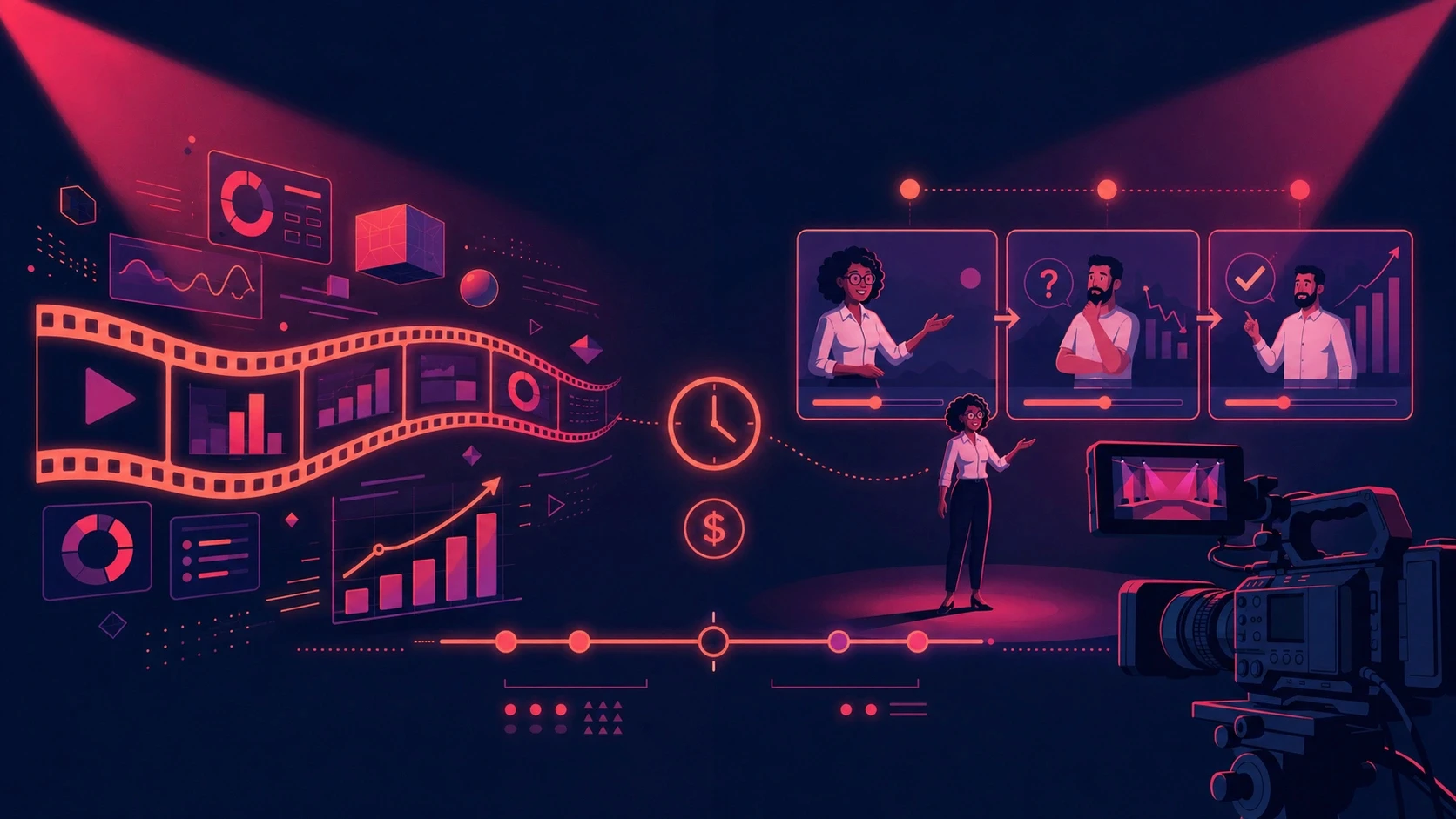
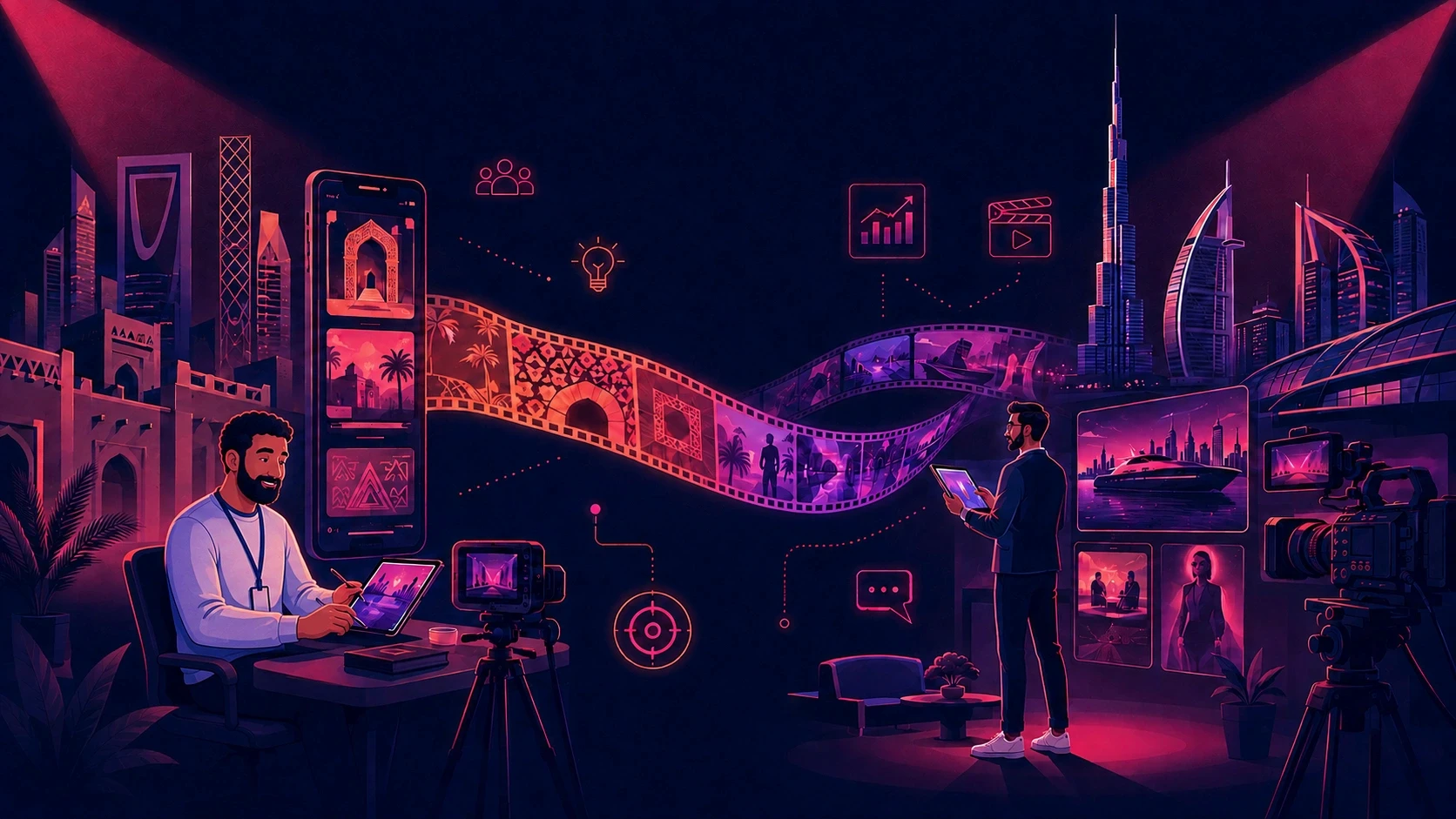
At Animus Agency, Arabic content production sits inside a broader creative production system that combines creative direction, video production, motion graphics, animation, CGI, VFX, social content and AI creative video production.
Animus Studio specifically offers motion graphics, 2D and 3D animation, CGI, VFX, filming and AI creative videos, allowing Arabic content to be developed as part of the complete campaign rather than treated as a final translation step.
The goal is not simply to make Arabic text technically correct.
It is to make the entire video feel as though it was created for the audience rather than translated for it.
That distinction is central to how Animus approaches Arabic and regional content production.
What Are Arabic Motion Graphics?
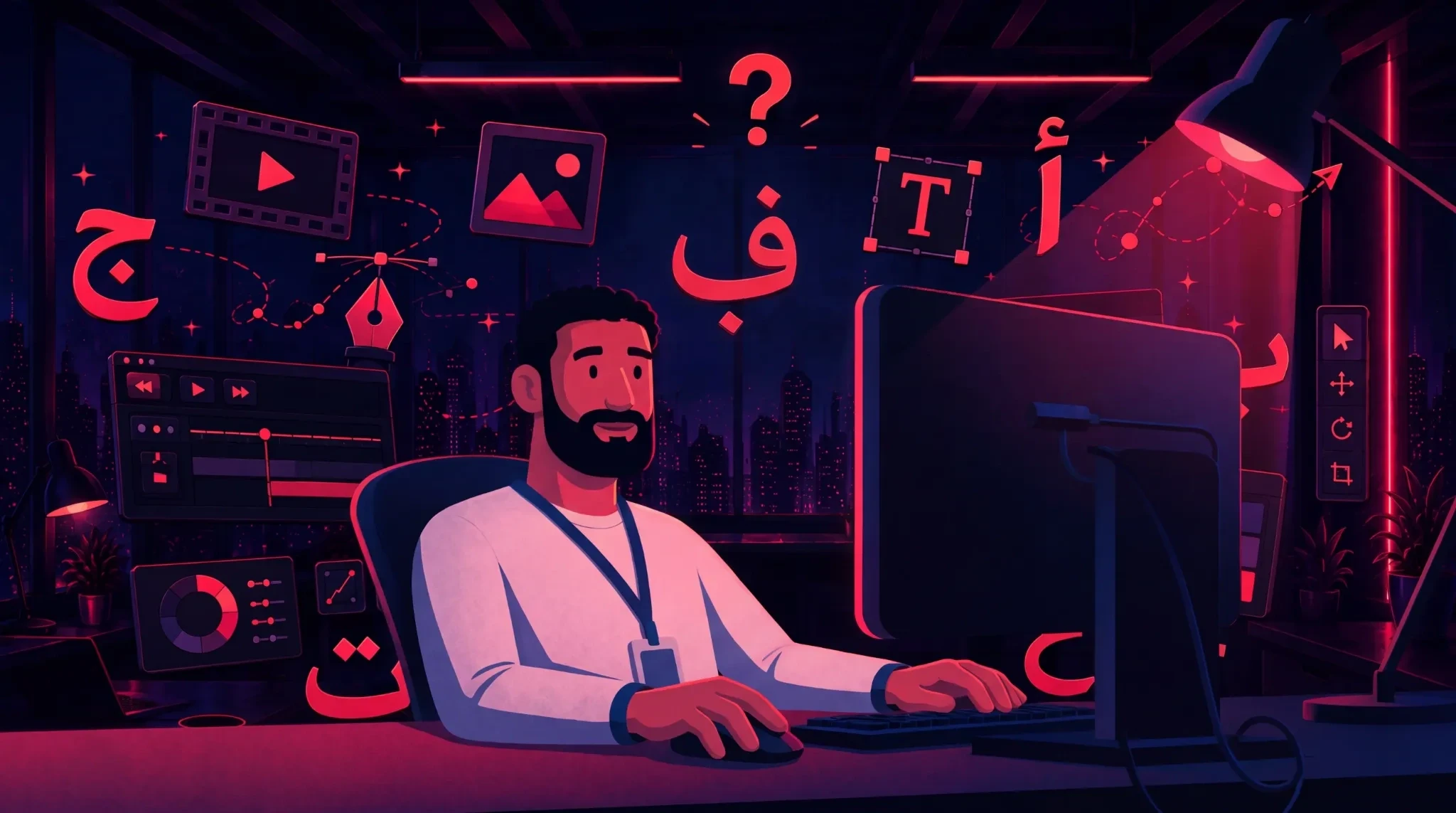
Arabic motion graphics are animated visual communications that combine Arabic typography, graphics, movement, voice and visual storytelling while respecting the way Arabic is read, spoken and processed.
They can include:
Kinetic typography
Animated advertisements
Explainer videos
Product videos
Social media videos
Title sequences
Lower thirds
Animated logos
Subtitles
Data visualizations
Brand films
CGI advertisements
Motion-led campaign content
Arabic introduces specific production requirements because it is primarily read from right to left and because Arabic letters change form depending on their position within a word.
Mixed Arabic and Latin content creates another layer of complexity.
A single campaign might contain:
Arabic copy + English product name + numerals + currency + URL + logo
All of those elements need to coexist correctly in the same composition.
And motion makes the problem more visible.
A word that looks correct in a static frame can become difficult to read when it is animated character by character, revealed in an unnatural sequence or squeezed into a layout originally designed for English.
For Animus, the objective is therefore not simply to animate Arabic.
The objective is to make movement support Arabic communication.
Why Brands Need Professional Arabic Motion Graphics
A grammatically correct translation does not automatically create an effective Arabic video.
Imagine an English product advertisement being adapted for an Arabic-speaking audience.
The Arabic headline may:
Require more or fewer words
Need different line breaks
Change the visual hierarchy
Require a different reading sequence
Need different voiceover timing
Use a different dialect
Require a different CTA placement
If the English animation has already been locked, those changes can create additional production work.
For one asset, a designer can manually fix the problem.
For a campaign containing dozens or hundreds of assets, that approach becomes difficult to scale.
A brand may need:
Social videos
Paid advertisements
Product creatives
Campaign cutdowns
Stories
Reels
YouTube versions
Arabic-English versions
Regional adaptations
That is why Animus treats Arabic motion graphics as a production discipline rather than a translation task.
How Animus Approaches Arabic Motion Graphics
At Animus, motion graphics are not treated as an isolated service.
They sit within a broader creative production workflow.
Animus Studio currently brings together:
Motion graphics
2D animation
3D animation
CGI
VFX
Filming
AI creative videos
Social media videos
This matters because modern campaigns rarely use only one production technique.
A single campaign may combine:
Live action + product footage + CGI + 3D animation + motion typography + VFX + Arabic voiceover + social cutdowns
The production system therefore needs to keep all of these elements connected.
Animus's Studio describes its work as visual storytelling across commercials, brand films, animation and immersive experiences, with production capabilities spanning motion graphics, CGI, VFX, filming and AI creative videos.
Explore Animus Studio's motion graphics, animation and video production capabilities
Arabic-First Production vs English-First Localization
One of the biggest differences in Arabic motion production is when Arabic enters the workflow.
English-First Localization
The process looks like:
English script → English design → English animation → translation → text replacement → Arabic fixes
This can work for simple assets.
But complex motion graphics often require substantial rework.
Arabic-First Production
A more integrated process looks like:
Campaign objective → Arabic audience → Arabic script → voice → storyboard → composition → animation → platform adaptations
Arabic is considered before the animation is locked.
That means the team can account for:
Text length
Reading direction
Voice timing
Dialect
Typography
Line breaks
CTA placement
Platform format
The core campaign idea does not need to change.
The execution can.
Preserve the campaign idea. Adapt the communication.
This principle also appears in Animus's broader approach to Middle East campaign localization, where the agency separates global constants from market-specific variables.
Arabic Motion Graphics Production at Animus: From Brief to Final Video
A strong Arabic motion graphics project starts long before animation.
At Animus, the production process can be thought of as a connected chain:
Strategy
↓
Creative Concept
↓
Arabic Script
↓
Voice Direction
↓
Storyboard
↓
Motion Design
↓
Animation / CGI / Live Action
↓
Arabic Voiceover
↓
Editing and VFX
↓
Social Adaptation
↓
Final QA
The advantage of this structure is that Arabic does not have to be forced into an already-finished English production.
Instead, the language becomes part of the creative direction.
7 Arabic Motion Graphics Problems Animus Has to Solve
1. Incorrect Reveal Direction
Arabic is read from right to left.
But that does not mean every animation should simply move from right to left.
The actual question is:
Does the information appear in the order the viewer needs to understand it?
For example, a benefit might appear before its headline, or a CTA might appear before the viewer understands the offer.
Animus approach
Define the information hierarchy first.
What should the viewer understand first?
What supports that message?
What should appear next?
When should the product appear?
When should the CTA arrive?
Then build the motion around that hierarchy.
2. Disconnected Arabic Letters
Arabic letters can change form depending on their position within a word.
When text is incorrectly converted, manipulated or animated character by character, letters can become disconnected or visually incorrect.
Animus approach
Before the full animation is produced, test the actual campaign typography.
Review:
Connected words
Initial forms
Medial forms
Final forms
Ligatures
Diacritics where required
Outlined text
Masked text
Scaled text
Animated text
The typography needs to work in motion, not just in a static brand guideline.
3. Character-by-Character Kinetic Typography
A common mistake is taking a Latin kinetic typography treatment and applying it directly to Arabic.
Animating every Arabic character individually can interfere with how viewers recognize connected words.
Better approach
Animate meaningful communication units:
Words
Phrases
Headlines
Benefits
Offers
CTAs
Character-level animation can still be used where appropriate.
The important point is that it should be a deliberate design decision rather than an automatic text animation preset.
4. English-First Layouts
A finished English composition may reserve a specific amount of space for a headline.
The Arabic version may need:
Different line breaks
Different text width
Different alignment
Different hierarchy
Different spacing
Simply mirroring the English composition does not always solve the problem.
Animus approach
Keep the creative system consistent while allowing the Arabic composition to breathe.
The product, colors, visual language and campaign concept can remain consistent.
Typography and layout can adapt.
5. Voiceover and Motion Timing
Arabic voiceover does not necessarily follow the same rhythm as English.
A localized sentence can be:
Longer
Shorter
More conversational
More emphatic
Different in pronunciation
If animation is locked before the Arabic voice is approved, the final video can feel rushed or disconnected.
Animus workflow
Instead of:
English animation → Arabic translation → Arabic voice
the production should move toward:
Arabic script → voice direction → Arabic voiceover → animation timing
This becomes especially important when motion graphics are part of a larger film or social campaign.
6. Arabic + English + Numbers in One Frame
Arabic campaigns frequently contain mixed-direction information.
For example:
خصم 25% على المنتج X
The composition may contain:
Arabic
English
Numerals
Percentage symbols
Currency
Product names
URLs
These elements need to be tested in the actual production environment.
Animus approach
Use real campaign copy during testing.
Do not wait until final delivery to discover that:
Numerals are positioned incorrectly
English product names break the hierarchy
RTL and LTR elements collide
The CTA becomes unreadable
The final rendered export should also be reviewed, not only the working project file.
7. Automatic Social Cropping
A 16:9 video cannot simply be cropped into 9:16 and expected to work.
The Arabic headline may become:
Too narrow
Too tall
Too close to the edge
Separated from the product
Hidden behind platform UI
Difficult to read
Animus approach
Treat every major format as a deliberate composition.
For example:
16:9
4:5
1:1
9:16
The campaign remains visually consistent, but the composition is redesigned for each format.
This is particularly relevant to Animus because social media videos are part of the Studio's production offering, alongside motion graphics, animation, CGI and AI creative video.
Arabic Content Localization Is Bigger Than Motion Graphics
Motion graphics cannot be separated from language strategy.
A Saudi campaign, for example, may require a different Arabic voice from an Egyptian campaign.
An educational video may use a different register from a UGC advertisement.
A corporate campaign may require different Arabic from a social-first product campaign.
This is why Animus approaches Arabic content as part of wider localization.
Its Arabic Content Localization guide explains how localization can involve language, dialect, culture, creative execution, voiceover, visuals, platform formats and brand identity.
The question is not:
"Is the Arabic correct?"
It is:
"Is this the right Arabic for this audience, platform, objective and brand?"
Arabic Dialects Matter in Video Production
Arabic is not one universal advertising voice.
Depending on the campaign, Animus may need to consider:
Egyptian Arabic
Saudi Arabic
Gulf Arabic
Levantine Arabic
Modern Standard Arabic
A planned combination of registers
A formal corporate film can require a different approach from a conversational social video.
That makes dialect selection a creative production decision.
Animus's broader multilingual production work emphasizes this point: Arabic should be treated according to market and audience rather than as one generic language setting.
How Animus Localizes Arabic Video for Different Markets
Animus's localization approach separates what should remain fixed from what should change.
Brand Constants
These should usually remain controlled:
Logo
Product identity
Brand colors
Typography
Core proposition
Approved claims
Visual identity
Character identity
Market Variables
These can adapt:
Language
Dialect
Voiceover
Casting
Hooks
CTA
Cultural references
Environment
Storytelling
Platform format
This creates controlled variation.
The Egyptian video can feel Egyptian.
The Saudi video can feel Saudi.
The UAE version can reflect its intended audience.
Yet the campaign can still be immediately recognizable as the same brand.
This is one of the central principles behind Animus's Middle East campaign localization approach.
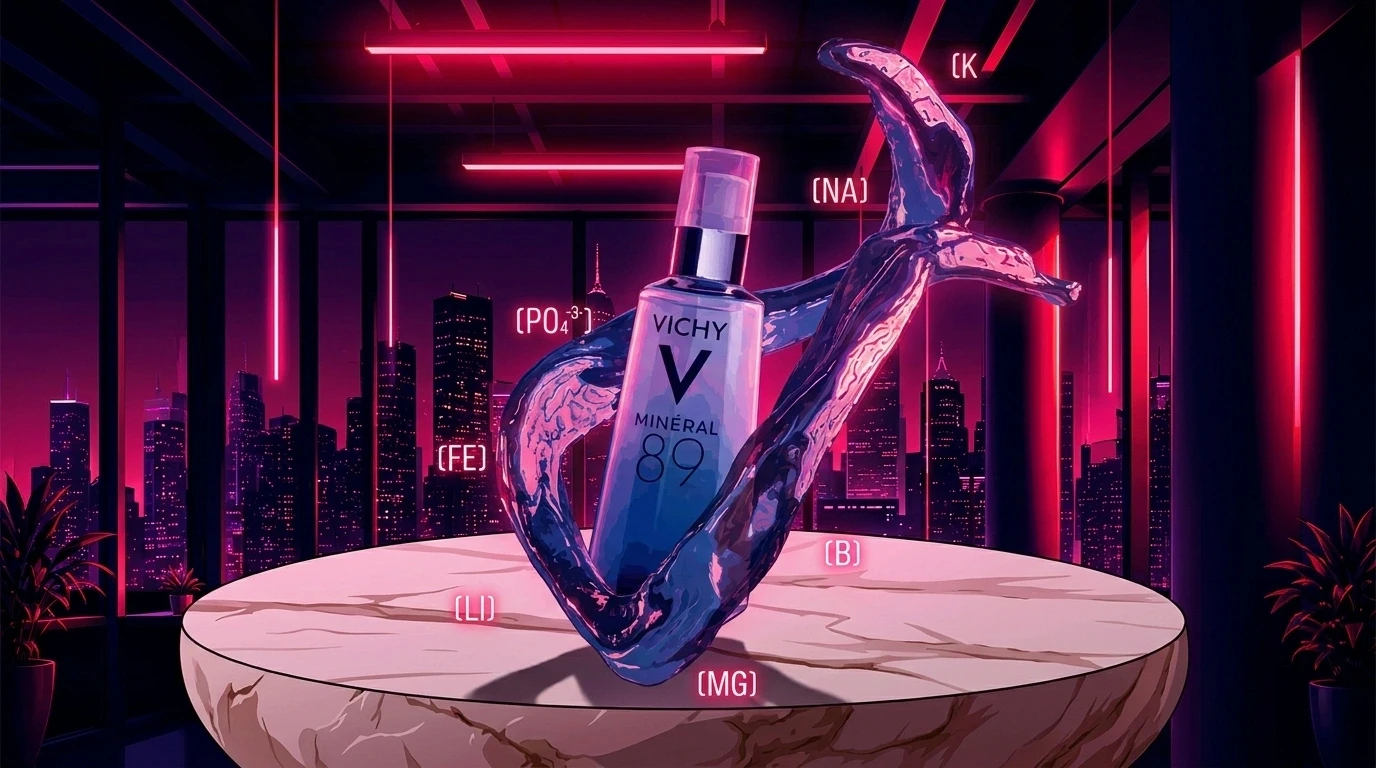
Animus Case Study: Vichy / Dercos Arabic Campaign Localization
A strong example of Animus's regional production approach is the Vichy / Dercos campaign localized for the Egyptian market.
The project required more than Arabic translation.
Animus's published case study describes a national localization campaign combining:
Localized creative direction
Brand adaptation
YouTube content
Instagram content
Facebook content
TikTok content
Dermatologist-led hero videos
Short-form content
Product visuals
Motion graphics
Platform-specific assets
The campaign followed the global brand system while adapting the creative execution for Egyptian audiences.
Animus reports 55M+ YouTube video views across organic and paid distribution for the campaign.
Read the full Animus Vichy localization case study
The important lesson is not that localization alone produced that result.
Campaign performance depends on many factors, including media, targeting, offer, distribution and creative quality.
The useful production lesson is different:
A global campaign can be substantially localized without becoming a different brand.
That is exactly the challenge Arabic motion graphics need to solve.
Animus Motion Graphics Across Different Production Styles
Arabic motion graphics do not have to mean text floating over a plain background.
At Animus, motion can become part of a larger production system.
Motion Graphics + Live Action
Arabic typography can be integrated into:
Commercials
Brand films
Product demonstrations
Social videos
Expert-led content
Motion Graphics + CGI
Useful when products need to be shown in environments or situations that are difficult to capture practically.
Motion Graphics + 3D Animation
Useful for:
Product visualization
Explainers
Character content
Brand worlds
Motion Graphics + VFX
Useful for:
Transitions
Product effects
Environmental effects
Visual transformations
Motion Graphics + AI
Useful for:
Creative exploration
Visual variations
Content scaling
Concept development
Video variations
The production method should follow the communication objective.
Explore Animus's full production capabilities
Arabic Motion Graphics for Social Media
A modern Arabic campaign rarely ends with one hero video.
The same creative idea may need to become:
Instagram Reels
TikTok
YouTube Shorts
Stories
Paid social
Organic social
Feed videos
Product-page videos
Each format changes the available visual space.
9:16
Prioritize:
Large Arabic typography
Clear hooks
Central product placement
Safe zones
Short messaging
Clear CTA
4:5
Use the additional vertical space for:
Product
Headline
Supporting benefit
CTA
16:9
Use the wider frame to establish stronger relationships between:
Product
Presenter
Typography
Environment
The campaign identity should remain consistent while the composition changes.
Arabic Motion Graphics for Product Advertising
Product advertising introduces another important requirement:
The Arabic content can change. The product should not.
If the same product appears in five scenes, its:
Packaging
Shape
Label
Color
Proportions
Key details
should remain recognizable.
This is especially important for ecommerce and consumer brands.
The production workflow therefore needs to distinguish between:
What is being localized
and
What is part of the product identity.
That same constants-versus-variables principle is central to Animus's broader localization methodology.
Arabic Motion Graphics for Brand Campaigns
Brand campaigns require an even broader system.
One Arabic campaign may eventually produce:
Hero film
Social cutdowns
Paid ads
Product videos
Stories
Static graphics
Motion graphics
Event screens
Digital banners
Platform-specific edits
This is where a production partner with multiple disciplines becomes useful.
Animus combines motion graphics, animation, CGI, VFX, filming, social video and AI creative video production within its Studio offering.
That means the Arabic motion system can be developed alongside the rest of the campaign rather than being created independently at the end.
Arabic Motion Graphics and Character Animation
Characters can become part of a brand's visual identity.
This is particularly useful for:
Education
Technology
Apps
Children's brands
Consumer platforms
Social-first campaigns
Animus's work with Ula.ai provides an example of this type of brand development.
The project involved building a visual identity and character system that could extend into animation and digital content.
The important principle is:
When a character becomes part of the brand, every animated appearance needs to protect that identity.
This applies to:
Face
Proportions
Clothing
Colors
Personality
Environment
Motion style
Localization should change what needs to change without accidentally redesigning the character.
Arabic Motion Graphics for Saudi and GCC Campaigns
Saudi and GCC campaigns often require a more deliberate Arabic production strategy.
Depending on the audience and campaign, teams may need to consider:
Saudi Arabic
Gulf Arabic
Modern Standard Arabic
Arabic-English combinations
Local cultural context
Regional casting
Arabic typography
Social-first formats
Animus's regional localization work treats these choices as part of the creative process rather than as post-production corrections.
The same principle applies across MENA:
Localize the audience experience without fragmenting the brand.
The Animus Arabic Motion Graphics Workflow
Here is a practical workflow for producing Arabic motion graphics through a full creative production process.
Step 1: Define the Market
Establish:
Country
Audience
Dialect
Platform
Campaign objective
Arabic-only or bilingual requirement
Do not brief a project simply as "Arabic."
Step 2: Define the Creative Objective
Establish:
Hook
Benefit
Proof
Product
Offer
CTA
Then determine which elements deserve the strongest visual emphasis.
Step 3: Write the Arabic Script
Adapt the message for the intended audience.
Consider:
Natural phrasing
Dialect
Sentence length
Tone
Persuasive intent
Voiceover duration
Step 4: Approve Voice Direction
The Arabic voice should be approved before final motion timing.
This gives the animator a real timing reference.
Step 5: Create the Storyboard
Plan:
Visual sequence
Typography
Product placement
Camera movement
Voice timing
CTA
Transitions
Arabic should already be represented at this stage.
Step 6: Build the Motion System
Define:
Arabic fonts
Colors
Product treatment
Illustration style
Motion language
Iconography
Graphic elements
Step 7: Animate
Build motion around meaning.
Do not simply apply an English animation preset to Arabic text.
Step 8: Add CGI, VFX or Live Action Where Required
Depending on the concept, combine motion design with:
CGI
3D animation
VFX
Filming
Product footage
AI-generated content
Step 9: Adapt for Platforms
Create intentional versions for:
16:9
4:5
1:1
9:16
Step 10: Arabic QA
Review the final export for:
RTL order
Letter connections
Punctuation
Numerals
English names
Line breaks
Readability
Voice synchronization
Product accuracy
Brand consistency
Where AI Fits Into Animus's Arabic Production Workflow
AI can accelerate parts of Arabic creative production.
It can support:
Concept development
Script variations
Voiceover workflows
Visual generation
Scene development
Content variations
Social adaptations
Post-production
But AI does not remove the need for:
Arabic linguistic review
Creative direction
Brand governance
Typography QA
Cultural judgment
Motion design
Final quality control
Animus therefore treats AI as part of a wider production system rather than a replacement for creative direction.
Animus Studio already lists AI Creative Videos alongside motion graphics, CGI, animation, VFX and filming.
The model is:
Creative direction + production expertise + AI where it creates useful leverage.
How ALStudio Extends Animus's Arabic Production Approach
Animus's agency production experience also led to the development of ALStudio.ai, a Creative AI OS designed around content production workflows.
For Arabic campaigns, the platform can support connected workflows across:
Scripts
Campaign briefs
Voiceovers
Visual generation
Brand context
Product context
Character context
Video production
Content variations
Post-production
The important distinction is that ALStudio is not intended to replace the creative direction required for a professional campaign.
It helps operationalize repeatable production workflows.
That becomes particularly useful when a campaign needs dozens or hundreds of localized assets.
Instead of repeatedly rebuilding:
Brand → Product → Character → Environment → Style
the relevant context can remain connected to the production workflow.
Why Animus Uses a Broader Production Model
A motion graphics project often starts with a simple request:
"We need an Arabic video."
But the actual production requirement may become:
Arabic script + voiceover + animation + CGI + VFX + product visuals + social versions + paid ads + multiple aspect ratios
If each component is handled independently, consistency becomes harder to control.
Animus's Studio brings these capabilities together:
Motion graphics
Animation
CGI
VFX
Filming
AI creative videos
Social media videos
The result is a production model where Arabic motion graphics can remain connected to the campaign's broader creative direction.
How to Measure Arabic Motion Graphics
A visually impressive Arabic video is not automatically a successful advertisement.
Animus recommends looking at four layers.
Language Quality
Ask:
Does the Arabic sound natural?
Is the dialect appropriate?
Is the message clear?
Is the copy suitable for the audience?
Motion Quality
Ask:
Is the text readable?
Does motion support comprehension?
Is timing natural?
Does the voice match the visuals?
Brand Quality
Ask:
Is the brand recognizable?
Is the product accurate?
Are visual elements consistent?
Does the Arabic version still feel like the same campaign?
Commercial Quality
Depending on the objective, measure:
Hook retention
Video completion
Click-through rate
Engagement
Conversion
Cost per lead
Cost per purchase
Localization itself does not guarantee performance.
It creates the conditions for the campaign to communicate more naturally with its intended audience.
Common Arabic Motion Graphics Mistakes
Avoid:
Translating after animation is finished
Treating Arabic as mirrored English
Animating every Arabic character independently
Choosing the dialect after timing is locked
Cropping 16:9 automatically into 9:16
Using placeholder text until the final stage
Ignoring Arabic-English typography
Reviewing only the project file
Failing to inspect the final export
Allowing localized content to change core brand identity
Treating every Arabic-speaking market as identical
Separating Arabic voiceover from the visual production process
Why Brands Choose Animus for Arabic Motion Graphics
Animus is not positioned only as a motion graphics supplier.
The agency combines creative strategy, branding, campaign development, video production, animation, CGI, VFX, motion graphics and AI creative production.
That means Arabic motion graphics can be developed inside the wider campaign system.
The workflow can move from:
Strategy
to
Creative Direction
to
Arabic Localization
to
Script
to
Motion Design
to
Animation / CGI / Live Action
to
Social Content
to
Platform Adaptation
without disconnecting the creative idea along the way.
Animus Studio's current capabilities include motion graphics, 2D and 3D animation, CGI, VFX, filming and AI creative videos.
See Animus Studio's full production capabilities
Arabic Motion Graphics: The Animus Approach
The strongest Arabic motion graphics are not created by adding Arabic text to an existing English video.
They are designed around the audience from the beginning.
That means:
Audience first.
Message second.
Language third.
Visual system fourth.
Motion fifth.
Platform adaptation throughout.
Animus brings these disciplines together through its wider creative-production model.
The agency's work in localization demonstrates the same principle: adapt the campaign where the market requires it while protecting the brand system that makes the campaign recognizable.
The Vichy/Dercos Egypt localization project is one example, combining localized creative direction, dermatologist-led storytelling, product visuals, motion graphics and platform-specific content while maintaining the global brand foundation.
Conclusion: Create Arabic Video for the Audience, Not the Translation
Arabic motion graphics should be designed as Arabic from the beginning.
RTL typography, connected letterforms, voice timing, dialect, bilingual layouts, product identity and platform adaptation all need to work together.
For one short video, many of these decisions can be corrected manually.
For a campaign producing dozens of videos across multiple platforms and markets, the workflow becomes just as important as the animation itself.
That is where Animus's broader creative production approach becomes valuable.
From creative direction and localization to motion graphics, animation, CGI, VFX, video production and AI creative video, Animus can carry the campaign through the production process instead of treating Arabic localization as a final technical step.
The objective is straightforward:
Create Arabic video that feels native, communicates clearly and still looks unmistakably like the brand.
Talk to Animus about Arabic motion graphics and video production
Frequently Asked Questions About Arabic Motion Graphics
What are Arabic motion graphics?
Arabic motion graphics are animated visual communications that use Arabic typography, graphics, voice and movement while respecting Arabic reading direction, connected letterforms, language structure and visual hierarchy.
Why is Arabic motion design different from English motion design?
Arabic uses right-to-left reading and connected letterforms, while bilingual campaigns can introduce bidirectional text involving Arabic, Latin characters and numerals. These characteristics affect typography, animation timing and composition.
Should Arabic motion graphics always move from right to left?
No. RTL describes reading direction rather than requiring every animation to move in one direction. The important requirement is that the information hierarchy and reading experience remain natural for Arabic viewers.
Should Arabic be translated before animation?
Ideally, the Arabic script should be approved before final animation timing is locked. Arabic wording can change line length, voice duration and visual hierarchy.
Can English motion graphics simply be mirrored for Arabic?
Not usually. Mirroring can work for some layouts, but Arabic may require different line breaks, spacing, hierarchy and relationships between typography and imagery.
Does Animus create Arabic motion graphics?
Yes. Animus Studio offers motion graphics as part of its broader production capabilities, alongside 2D and 3D animation, CGI, VFX, filming, social media videos and AI creative videos.
Can Animus create Arabic social media videos?
Yes. Social media video production is part of Animus Studio's current offering, allowing motion graphics and animation to be adapted for social platforms.
Can Animus localize an existing international campaign for Arabic audiences?
Yes. Animus has published regional localization work, including its Vichy/Dercos Egypt campaign, demonstrating how global brand standards can be adapted for local audiences through creative direction, content production, motion graphics and platform-specific assets.
Can Arabic motion graphics include CGI and 3D animation?
Yes. Arabic typography and voice can be combined with CGI, 3D animation, live action, VFX and other production techniques depending on the campaign. These are all part of Animus Studio's production capabilities.
Can AI be used for Arabic motion graphics?
Yes. AI can support visual generation, voiceover, creative variations and production workflows. However, Arabic review, creative direction, typography control and final quality assurance remain important.
How does Animus approach Arabic content localization?
Animus treats localization as a broader creative and production process covering language, dialect, cultural context, visual execution, voiceover, platform adaptation and brand consistency. Its published Arabic Content Localization guide explains this approach in more detail.
What is the best way to create Arabic video at scale?
Build a repeatable workflow where the audience, Arabic script, voice, visual identity, product, motion system and platform adaptations are considered together. This allows teams to produce more variations without rebuilding the campaign identity for every asset.
How can I work with Animus on an Arabic motion graphics project?
You can contact Animus to discuss Arabic motion graphics, localized campaigns, animation, CGI, video production, social content or AI creative production.