Can AI Replace a Video Production Company? What It Can and Cannot Do
See what an AI video production company can automate, where human direction still matters, and how brands can build faster, consistent video workflows.
AI Video Production Company: What AI Can and Cannot Replace
An AI video production company can automate or accelerate large parts of video production, including scripting, storyboarding, synthetic scene creation, voiceover, localization, editing and versioning. The business value is not simply faster generation. It is producing more approved campaign assets from the same creative direction while reducing unnecessary shoots, repeated setup and manual adaptation.
What AI cannot reliably replace is human responsibility for creative direction, real-world capture, strategic judgment, cultural context and final accountability.
The distinction matters because producing an impressive AI-generated clip is becoming easier. Producing a complete campaign in which the same characters, products, environments and brand identity remain consistent across every scene is a different problem.
While building ALStudio's Consistency Engine, we encountered that distinction directly. Individual shots could look excellent while the complete production still failed because a face changed, a product shifted proportions or an environment drifted between scenes.
The question is therefore no longer simply, "Can AI generate video?"
The better question is: which parts of a video production company can AI replace, which should AI assist, and which still require humans?
This guide provides that framework and helps marketing teams, agencies and enterprises decide what to outsource, what to keep human-led and what to operationalize through an AI production system.
Need a repeatable AI video workflow—not one isolated clip? ALStudio.ai connects scripts, storyboards, persistent characters and products, multi-model generation, editing, Arabic voiceover and campaign variations inside one Creative AI Operating System.
What Is an AI Video Production Company?
An AI video production company uses generative and assistive AI throughout pre-production, production and post-production to create professional video content with less dependence on traditional production infrastructure.
The important phrase is throughout production.
An AI video workflow can begin with a campaign brief rather than a camera. AI can assist with:
Concepts and scripts
Storyboards
Character development
Environment development
Product visualization
Synthetic footage
Animation
Voiceover
Lip sync
Editing
VFX
Localization
Background replacement
Upscaling
Social format adaptations
Traditional production separates many of these responsibilities across people, applications, production stages and vendors.
AI increasingly compresses them.
However, an AI video generator and an AI video production company are not the same thing.
A generator creates a clip.
A production workflow has to ensure that the clip fits the story, connects to the previous shot, preserves the product, follows the brand, matches the voiceover and survives final editing.
Why does this distinction matter?
Because brands rarely need one isolated clip.
A marketing campaign may require a hero video, product shots, six-second ads, vertical social cuts, localized versions and several creative variations.
Generating each asset independently can quickly create inconsistency. This is why understanding AI campaign consistency becomes important when moving from experimentation into repeatable production.
Generating more content is not enough. Teams need to control what must remain unchanged.
For buyers, that changes the selection criteria. A strong provider should be able to explain:
How many final deliverables the production includes
How characters, products and brand identity stay consistent
What still requires human creative direction
How revisions and regeneration are priced
How the hero asset becomes social and localized variations
Who owns final quality, rights and approval
Can an AI Video Production Company Replace Traditional Production?
An AI video production company can replace parts of traditional production, but it should not be treated as a universal substitute for cameras, crews or human creative leadership.
The right choice depends on what the video needs to prove, depict and communicate.
A synthetic product commercial taking place on Mars could potentially be produced almost entirely through AI.
A customer testimonial requires a real customer.
A fantasy animation does not necessarily need a physical set.
A documentary about a real factory opening requires footage of the real factory.
Choose the production approach based on the outcome
Concept development — AI + human
AI can expand creative possibilities, while humans select the direction that best supports the business objective.
Script development — AI + human
AI can accelerate ideation and create variations, while brand and creative teams approve the final message.
Storyboards — AI
AI is highly suitable for rapid previsualization, helping teams evaluate compositions and scenes before final production.
Synthetic locations — AI
AI can create environments that would otherwise require physical sets, travel or extensive CGI.
Stylized product commercials — AI or hybrid
AI can place products in impossible or highly stylized environments while hybrid production can combine generated scenes with real product footage.
Real interviews — human production
Authenticity depends on real people and real testimony.
Real events — human production
Events, launches, conferences and documentary footage require actual capture when the purpose is to document reality.
Recurring AI characters — AI with a consistency system
The challenge is not generating the first character. It is keeping that character recognizable across scenes, formats and campaigns. This is where Character DNA becomes useful as a persistent identity layer.
Editing and VFX — AI + human
AI can automate parts of post-production, but humans still need to control storytelling, timing and final quality.
Final creative approval — human
Creative judgment, business accountability, cultural decisions and brand approval remain human responsibilities.
The goal is not to force every project into an AI workflow.
The goal is to understand which production infrastructure no longer needs to be physical or fragmented.
The commercial rule
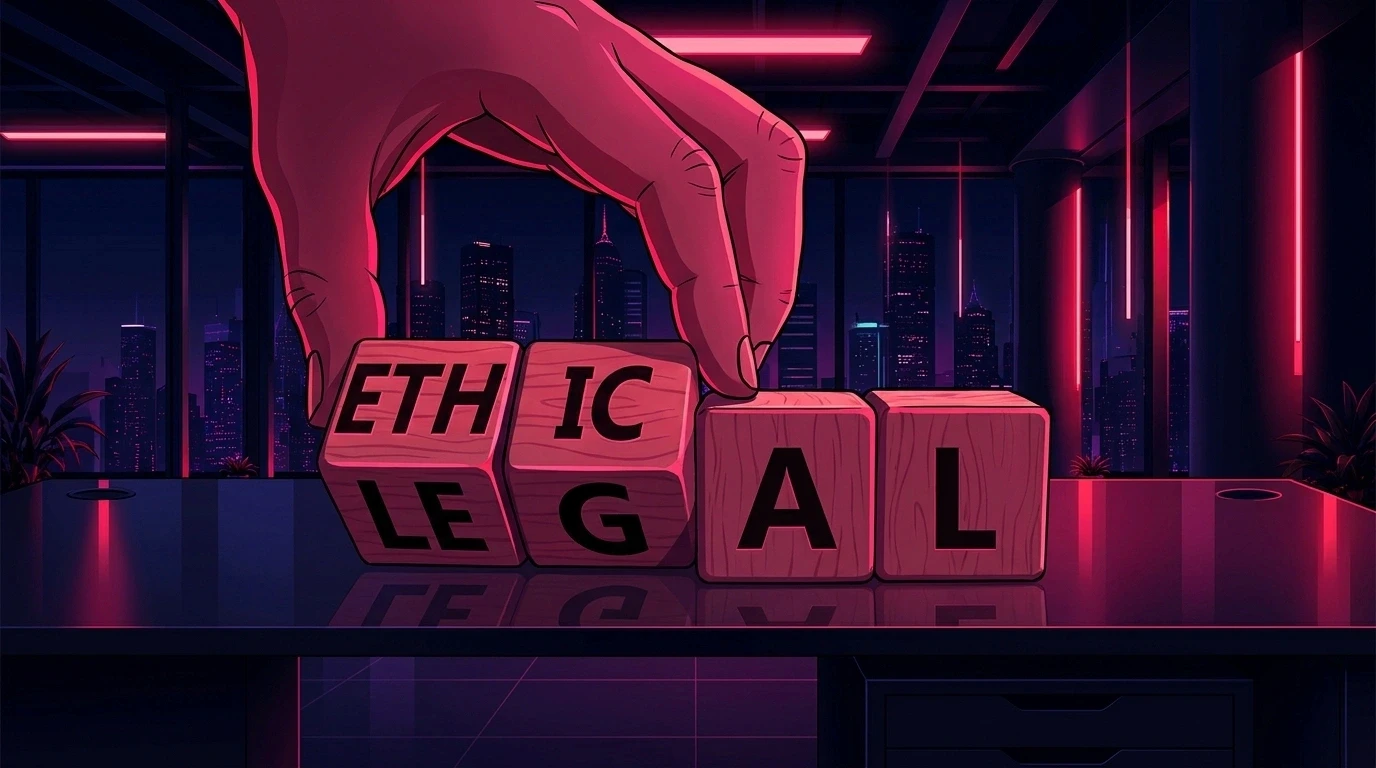
Use AI where it increases creative options, speed or variation without weakening trust. Use traditional capture where reality, testimony or exact physical interaction is the reason the audience should believe the message.
The highest-return answer is often hybrid: capture the truth that must be real, then use AI to extend the campaign efficiently.
Why AI Video Production Matters for Marketing Teams
AI video production matters because it changes video from a single deliverable into a scalable content system.
Traditional campaigns are often constrained by what was captured during the shoot.
If a vertical close-up was never filmed, the marketing team may not have it.
If another regional version is required after production, another voiceover, edit or shoot may be necessary.
Generative production changes that relationship.
Teams can create and adapt assets after the initial campaign concept has been approved.
How does it work?
A master creative direction can become the foundation for:
Hero films
Social videos
Paid advertising
Vertical variants
Product visuals
Localized voiceover versions
Different campaign environments
Shorter edits
Alternate scenes
The opportunity is significant, but so is the consistency problem.
If every variation is generated independently, the campaign can slowly stop looking like one campaign.
This is why AI video production needs persistent brand and visual memory. A structured AI content workflow can help teams move from isolated generation toward repeatable production.
The Business Cost of a Fragmented AI Video Workflow
Low generation prices can hide expensive production problems.
Every shot starts from a new prompt
The immediate cost is repeated setup and reference preparation.
The business consequence is slower production and increased dependence on individual creators remembering previous decisions.
Product or character drift
The immediate cost is regeneration and correction.
The business consequence is a lower approval rate and more revision cycles.
For product-heavy campaigns, persistent Product DNA can help separate product identity from the creative scene surrounding it.
One model is forced across every shot
The immediate cost is compromised creative choices.
The business consequence is uneven quality because different scenes may have different technical requirements.
Editing is planned too late
The immediate cost is additional cleanup and restructuring.
The business consequence can be missed deadlines and unnecessary post-production work.
Localization starts after completion
The immediate cost is retiming, resizing and additional adaptation.
The business consequence is higher versioning cost.
Social assets are rebuilt independently
The immediate cost is duplicate production.
The business consequence is lower campaign output from the same creative investment.
The goal is to increase the percentage of generated footage that becomes approved, publishable content.
Measure production, not generation: the cheapest clip is not valuable if it cannot survive brand review or become part of the final campaign.
Why Most AI Video Workflows Fail at Production
Most AI video workflows fail when they treat each generation as an independent creative event rather than part of a controlled production.
A prompt is temporary.
A brand is not.
You might create a successful first scene with a specific character. In the next generation, the face changes slightly. A third scene introduces different clothing. Another shot changes the environment. The final product shot alters part of the packaging.
Every individual generation may still look visually strong.
Together, they do not form a professional campaign.
In our internal testing across multiple AI models, one pattern repeatedly appeared: generation quality and production reliability are separate problems.
That distinction shaped ALStudio's architecture.
Instead of expecting one prompt or one video model to retain every production decision, ALStudio stores persistent creative information above the generation layer.
This approach is closely connected to the broader problem of brand consistency at scale, where the challenge is maintaining recognizable identity while increasing content volume.
Common AI Video Production Mistakes
Treating a prompt as production memory
A strong prompt can guide a generation, but it is not an enduring production system.
When multiple team members, scenes or models become involved, the same creative rules may need to be repeatedly reconstructed.
Choosing one AI model for every shot
Different models can perform differently depending on motion, aesthetics, reference control or scene requirements.
A professional workflow should be model-flexible rather than forcing every scene through one generator.
Starting generation before defining constants
Characters, products, environments and brand rules should be established before production expands.
Otherwise teams may approve incompatible creative decisions in different shots.
Ignoring post-production
Generating footage is not the end of video production.
Timing, sound, transitions, VFX, compositing, color, upscaling and final editing still determine whether clips become a finished film.
Scaling output before solving consistency
Producing more content magnifies inconsistencies.
If a product already changes between three scenes, creating 30 campaign variations does not solve the issue. It multiplies it.
For brands where product accuracy is critical, it is worth understanding Product DNA vs Reference Images and why persistent product identity can matter beyond simply uploading another reference.
Comparing providers by clip price
A clip price says little about scripting, creative direction, consistency, editing, revisions, rights, localization or final delivery.
Compare complete scopes and approved outputs—not generation units.
What AI Can Replace in Video Production
Script and concept development
AI can substantially accelerate the first stages of creative development.
A marketing brief can be expanded into concepts, scripts, shot directions and creative variations before expensive production decisions are made.
Humans should still own the final creative direction.
Storyboarding and previsualization
AI is particularly useful for turning scripts into visual references.
Instead of explaining every shot verbally, teams can evaluate camera composition, environment, mood and character direction before moving into production.
Synthetic sets and environments
Physical production is not necessary when the location itself does not need to be real.
AI can create imaginary environments, futuristic cities, stylized studios, product worlds and other scenes that would otherwise require CGI or set construction.
For campaigns built around recurring visual worlds, Environment DNA for advertising provides a useful framework for thinking about environments as persistent creative identities rather than one-off backgrounds.
Supplementary footage
AI-generated establishing shots, atmosphere, product inserts and transitions can reduce the need for additional capture.
The challenge increases when these shots contain recurring branded elements.
Voiceover and localization
Voice generation makes localized production substantially easier to manage.
ALStudio supports 22+ Arabic dialects, allowing teams to approach Arabic voice production at a dialect level rather than treating Arabic as one uniform market.
Editing and repetitive post-production work
AI can assist with tasks such as:
Object removal
Background replacement
Upscaling
Visual transformations
Certain VFX workflows
Repurposing content
The editor's role then shifts further toward storytelling, creative judgment and quality control.
What AI Cannot Reliably Replace
Authentic human testimony
A synthetic person cannot replace the evidentiary value of a real customer, employee, founder or subject sharing a genuine experience.
When authenticity is the content, filming still matters.
Real-world events
An AI-generated version of an event is not documentation of the event.
Conferences, construction progress, launches, interviews and documentary work still require real-world capture when reality itself matters.
Human creative direction
AI can provide options.
It does not assume responsibility for deciding which idea best reflects business strategy, cultural context or audience expectations.
Cultural judgment
A technically correct output can still be wrong for the market.
This is particularly important in multilingual and regional marketing, where wording, casting, clothing, environments and performance can carry different meanings.
Final accountability
Commercial production includes stakeholder approvals, rights, brand requirements and business consequences.
AI can participate in the workflow. It does not own the outcome.
AI Video Production Company vs Traditional Production Company
The key difference is not quality versus low quality. It is the type of production infrastructure each approach uses.
Traditional video production
Traditional production primarily depends on:
Physical cameras and equipment
Actors, presenters or real subjects
Physical locations and sets
Captured product footage
On-set crews
Physical production logistics
Traditional editing and post-production
Its biggest advantage is control over real-world authenticity.
Its main limitations are the cost and rigidity of physical production. Once filming is complete, creating entirely new scenes may require additional production.
AI video production
AI production primarily depends on:
Generative models
Digital characters
Synthetic environments
AI-generated product scenes
Digital storyboards
Synthetic voice and localization
AI-assisted editing
Multi-model generation
Its biggest advantage is flexibility.
New scenes, environments and variations can often be generated without returning to a physical set.
Its main challenge is consistency. Persistent digital identities become increasingly important as the number of scenes increases.
Hybrid production
Hybrid production combines the strongest elements of both.
For example:
Film a real founder.
Generate supporting environments.
Capture the actual product.
Create additional campaign scenes with AI.
Use AI for localization.
Generate social variations.
Finish everything through professional editing.
Neither approach wins every project.
The best production model is increasingly hybrid.
How to Compare AI Video Production Costs
Ask every provider to price the same complete scope:
Total campaign cost = creative development + production + iteration + consistency control + post-production + revisions + localization + channel versions
Then calculate:
Cost per approved deliverable = total campaign cost ÷ number of approved, publishable assets
Also compare:
Time from approved brief to first review
Average revision or regeneration rounds
Number of aspect ratios and cutdowns included
Cost of another hook, language or market version
Product and character correction policy
Source files, licenses and usage rights
Whether future assets can reuse the same production identities
This makes an AI, traditional or hybrid proposal commercially comparable.
Turn one production setup into more usable outputs. ALStudio keeps Brand, Character, Product and Environment DNA available across scenes and campaign workflows.
How Major AI Video Models Fit Into Production
An AI video production company does not necessarily need to depend on one model.
Runway Gen-4.5 supports text-to-video and image-to-video generation with an emphasis on motion, fidelity and prompt adherence.
Google's Veo 3.1 expanded audiovisual generation and creative controls.
Kling VIDEO 3.0 supports capabilities including multi-shot generation, native audio and reference-based consistency.
Seedance 2.5 extends multimodal reference and audiovisual generation workflows.
The broader lesson is more important than any individual model.
Models are production resources, not production systems.
One model may be preferable for a cinematic shot while another may suit a different scene.
In our testing, we assumed the goal should be finding one model that could handle an entire project. We discovered that the more useful architecture was allowing the production to remain consistent while the underlying model changed.
ALStudio therefore supports 18+ AI video models inside a broader Creative AI OS.
This multi-model approach becomes especially valuable when teams need consistent AI commercials rather than disconnected generations.
How an AI Video Production Workflow Works
A professional AI video workflow should move from creative definition to production, consistency control and post-production rather than jumping directly from prompt to generation.
Step 1: Define the objective
Start with the outcome.
Is the video designed for awareness, sales, product education, social engagement or brand storytelling?
The production format should follow the objective.
Step 2: Build the creative direction
Establish:
Concept
Script
Audience
Tone
Visual style
Characters
Product requirements
Environment
Platform requirements
Step 3: Lock the creative constants
Anything that should not change needs to be defined before scene generation begins.
For ALStudio workflows, Constants Studio stores:
Brand DNA
Character DNA
Product DNA
Environment DNA
This creates a shared memory layer for production.
For brands that need to preserve visual identity across many campaigns, AI Brand Consistency provides a broader framework for separating brand constants from campaign variables.
Step 4: Create the storyboard
Convert the script into shots.
Determine camera perspective, scene purpose, visual transitions, action and character placement before committing to final generations.
Step 5: Select AI models by scene
Do not choose a model because it is fashionable.
Choose it because it fits the requirements of the shot.
Multi-model generation allows the production system to use different generation engines while preserving the broader creative direction.
Step 6: Generate and review scenes
Evaluate each generated scene against both visual quality and continuity.
A beautiful shot that breaks the product or character identity is not a successful production asset.
Step 7: Add voice and localization
Voiceover, dialogue and regional versions should remain connected to the same campaign direction.
Arabic campaigns, for example, may require dialect-specific rather than generic Arabic voice production.
Step 8: Complete post-production
Generated footage still needs editing.
ALStudio's Editor Studio connects video generation with workflows including editing, VFX, background replacement, object removal and upscaling.
Step 9: Create channel variations
A final campaign may then become:
16:9 hero video
9:16 Reel
TikTok edit
Short paid ad
Product cutdown
Localized version
The production becomes reusable rather than one-off.
Step 10: Measure production ROI
Track commercial results such as qualified leads, purchases, return on ad spend or completed views alongside operational results:
Cost per approved asset
First-pass approval rate
Generation attempts per accepted shot
Time to campaign launch
Number of usable variations per master
Localization time and cost
Production hours saved through reuse
This identifies whether AI is improving the campaign or merely increasing output volume.
If your team is creating AI video across disconnected platforms, ALStudio can centralize those workflows around persistent brand, character, product and environment identity.
A Practical Agency Use Case
Consider an agency creating a campaign with one recurring spokesperson character and one hero product.
The campaign needs a main commercial, shorter social clips, vertical versions and localized voiceover.
Without a production system, the agency might:
Write the script in one platform.
Develop references elsewhere.
Generate images in another system.
Generate video in multiple AI platforms.
Transfer assets into editing software.
Recreate brand and character references for every generation.
Manually build every channel variant.
The risk is not simply wasted effort.
The character could change between outputs. The product could drift. The visual style could become inconsistent.
With ALStudio, the production can begin in Film Studio while Brand DNA, Character DNA, Product DNA and Environment DNA live inside Constants Studio.
Scenes can then use different generation models without requiring the entire production identity to be recreated.
Editor Studio completes the final production.
The agency is still responsible for creative judgment.
The difference is that the infrastructure remembers more of the production.
That can improve agency economics by reducing repeated briefing, limiting unplanned correction and making additional formats or localized versions easier to produce from an approved foundation.
For agencies managing multiple recurring accounts, this connects directly to the broader challenge of consistent AI ads across campaigns and clients.
Enterprise AI Video Production
Enterprise AI video production requires governance and repeatability in addition to generation quality.
An individual creator can tolerate experimentation.
A large organization producing across teams, regions and campaigns needs more control.
Enterprise requirements may include:
Shared brand standards
Controlled visual identity
Product consistency
Reusable environments
Regional localization
Team workflows
Repeatable campaign structures
Post-production standards
This is where treating AI video as isolated generation becomes especially limiting.
Brand DNA can store brand-level constants.
Product DNA can preserve product appearance.
Character DNA can control recurring identities.
Environment DNA can create reusable production worlds.
The goal is not simply generating more assets.
It is enabling more people to produce without allowing the identity of the brand to fragment.
For enterprise teams, AI brand consistency becomes an operational issue rather than simply a creative preference.
Ecommerce AI Video Production
For ecommerce brands, product accuracy is one of the most important production requirements.
A campaign can change the scene, lighting, story and format.
The product should remain recognizable.
Product DNA is designed around that distinction.
A single product can appear in:
Lifestyle scenes
Product demonstrations
Paid social ads
Cinematic commercials
Seasonal campaigns
Different environments
The creative direction changes.
The product identity should not.
This is particularly important when brands create high volumes of product advertising, where consistent AI product content can reduce the need to reconstruct product context for every generation.
Best Practices for Choosing an AI Video Production Company
Ask what happens after the first clip
Generating one impressive scene proves generation capability.
It does not prove production capability.
Ask how the workflow handles the second, tenth and twentieth asset.
Evaluate consistency systems
Look beyond reference-image uploading.
Ask how character, product, environment and brand identity are maintained across projects.
Look for multi-model flexibility
The AI video market changes quickly.
Production infrastructure should not require a brand to rebuild its workflow every time another generation model becomes preferable.
Evaluate post-production
Video production ends with a finished asset, not a generated clip.
Editing, VFX and final delivery must be part of the evaluation.
Consider localization early
If the campaign will run across languages or markets, localization should be designed into the production workflow rather than added at the end.
Match AI to the right project
AI is particularly useful for:
Synthetic advertising
Stylized product films
Animation
Conceptual storytelling
Social content
Campaign variations
Localized creative
Traditional capture remains valuable when authenticity, documentation or real people are fundamental to the message.
Compare the complete deliverable
Confirm the runtime, number of scenes, aspect ratios, cutdowns, languages, voiceovers, revision rounds, editing level and delivery formats.
Two providers may both quote "an AI video" while selling completely different scopes.
Ask who owns accountability
Clarify who approves claims, cultural choices, product accuracy, rights and final brand quality.
AI can assist execution; a professional provider must still own the production process.
Ask what remains reusable
Determine whether the character, product, environment and brand setup can support future campaigns or disappears after one delivery.
Reusable production context can change the long-term economics of content creation.
How ALStudio Approaches AI Video Production
ALStudio.ai is a Creative AI OS designed to connect generation, consistency, production and post-production inside one creative production infrastructure.
Film Studio provides a linear production workflow from story idea through script, storyboard, character development, environments, scene generation, voiceover and final film.
Constants Studio provides the shared memory layer.
Its Consistency Engine manages four persistent forms of creative identity:
Character Consistency
Character DNA helps preserve the same recurring identity across outputs.
Product Consistency
Product DNA stores product identity so campaign environments can change without intentionally redefining the product.
Scene Consistency
Environment DNA preserves recurring locations and visual worlds.
Brand Consistency
Brand DNA stores brand-level visual rules so content generated across workflows can remain connected to the same identity.
Editor Studio then connects production with professional post-production capabilities.
Marketing Studio extends the system into campaign workflows.
This is why we describe ALStudio as a Creative AI OS rather than an isolated video generator.
The model creates the shot. The operating system manages the production.
ALStudio vs an AI video production company
An AI video production company typically provides creative services and project delivery. The provider may manage strategy, production, editing and final delivery on behalf of the client.
ALStudio is production infrastructure. Your agency or internal team operates the workflow while retaining creative direction and control.
The key differences are:
Creative service: A production company manages or delivers the project; ALStudio gives your team the production infrastructure.
Strategy: A production company may provide creative leadership; ALStudio supports the workflow while your team retains strategic ownership.
Persistent identities: A production company may maintain references depending on its workflow; ALStudio provides Brand DNA, Character DNA, Product DNA and Environment DNA.
Multi-model workflow: A production provider may use selected models; ALStudio connects multiple AI models within a broader production system.
Ongoing campaign reuse: A production company may require a new engagement; ALStudio is designed around reusable production context.
Operational control: Production companies are useful when you want managed delivery; ALStudio is useful when you want to build repeatable internal or agency capability.
ALStudio is most valuable for agencies and in-house teams that want to build repeatable capability rather than outsource every AI production from the beginning.
Benefits of an AI Video Production Company
For the right projects, an AI video production workflow can provide several practical advantages.
More creative flexibility
Scenes can be explored without physically constructing every idea.
Faster iteration
Teams can evaluate concepts visually earlier in production.
Easier campaign adaptation
A master creative direction can support more channels and formats.
Better localization workflows
Voice, text and campaign variations can be incorporated earlier.
Reduced dependence on fragmented workflows
Generation, consistency, campaign production and editing can operate within a shared system.
Reusable creative infrastructure
Characters, products, environments and brand identities can become persistent production assets instead of temporary references.
Higher campaign yield
One approved direction can support more cutdowns, hooks, formats and localized versions when the production system preserves its core identities.
Better agency economics
Reusable client context can reduce repeated setup and correction, protecting delivery timelines and margins as content volume grows.
Limitations Teams Should Understand
AI video still requires iteration.
Models can misunderstand prompts.
Movement can behave unexpectedly.
Fine visual details can change.
Complex human interaction can still be difficult.
Continuity can break.
Real-world footage still requires real capture.
More importantly, automation does not remove the need for taste.
The strongest AI production teams are not the teams that remove humans from the process.
They are the teams that know exactly where human judgment creates the most value.
When ALStudio Is the Better Investment
ALStudio is a strong fit when your organization:
Produces AI video repeatedly rather than occasionally
Needs consistent products, characters or environments
Uses several AI models for different shots
Creates multiple paid, social or localized variants
Supports Arabic or multilingual campaigns
Has an internal team or agency capable of creative direction
Wants reusable production infrastructure across campaigns
Hiring a production company may be a better fit when you need a fully managed one-off project, external creative leadership or specialized physical capture.
Many teams will use both: an expert production partner for direction and delivery, with ALStudio supporting repeatable production and identity continuity.
Build capability that remains after the campaign ships. Start with ALStudio and test one brief from script and storyboard through consistent scenes, voice, editing and channel variations.
Conclusion: What Should an AI Video Production Company Replace?
An AI video production company should replace unnecessary production friction, not human creative responsibility.
AI can increasingly handle scripting support, storyboarding, synthetic environments, generated footage, voiceover, localization, repetitive editing and campaign versioning.
Humans should continue to lead strategy, cultural judgment, authentic capture, storytelling and final approval.
The most important shift is from generation to production infrastructure—and from cost per clip to cost per approved campaign asset.
Isolated generation workflows produce approximations.
ALStudio's Consistency Engine, Film Studio and Creative AI OS create a system where Brand DNA, Character DNA, Product DNA and Environment DNA can persist while teams use multiple AI models throughout production.
For agencies building repeatable campaign systems, this is closely connected to the principles behind consistent AI commercials and AI campaign consistency.
AI does not eliminate video production.
It changes how professional video production is built.
Start creating with ALStudio.ai and turn one approved creative direction into consistent scenes, finished video and scalable campaign variations. Build a repeatable production capability from script to final film instead of rebuilding the workflow for every asset.
Frequently Asked Questions About AI Video Production Companies
1. What should I look for when choosing an AI video production company?
Look beyond whether the company can generate an impressive AI clip.
Evaluate how it handles scripts, storyboards, character consistency, product accuracy, editing, localization and multiple campaign versions.
For brand and agency work, persistent creative identity and the ability to use different AI models within one controlled production workflow are particularly important.
2. Is an AI video production company cheaper than traditional production?
AI can reduce some production costs when a project would otherwise require locations, sets, supplementary footage, CGI or repetitive post-production.
It does not automatically make every video cheaper because generation can still require iterations and human finishing.
The right comparison is the cost of delivering the complete campaign, not the cost of generating one clip.
3. Can an AI video production company handle a complete marketing campaign?
Yes, if the workflow goes beyond isolated video generation.
A complete campaign may require a hero film, social cuts, paid ads, vertical formats, localization and consistent products or characters.
Systems such as ALStudio combine Film Studio, Marketing Studio, Constants Studio and Editor Studio so campaign production can extend from creative development through generation and post-production.
4. Should an agency use one AI video model for every client project?
Not necessarily.
Different video models may be better suited to different visual or motion requirements.
A multi-model production approach lets agencies select the appropriate model for each scene while maintaining the client's Brand DNA, Character DNA, Product DNA and Environment DNA at the workflow level instead of tying the entire campaign to one generator.
5. What results should brands expect from AI video production?
Brands should expect faster creative experimentation, more flexible synthetic production and easier adaptation into multiple formats when the workflow is structured correctly.
They should not expect completely automatic production without human review.
The strongest outcomes come from combining AI execution with clear creative direction, consistency controls, professional editing and approval standards.
6. How do I calculate ROI from an AI video production company?
Compare the total campaign cost with both commercial and operational outcomes.
Track campaign revenue, leads, return on ad spend or completed views alongside cost per approved asset, revision rounds, time to launch and the number of reusable campaign variations.
7. Is ALStudio an AI video production company?
ALStudio is a Creative AI Operating System used by creative teams, agencies and enterprises to manage AI-powered production.
It connects scripting, storyboards, persistent identities, multi-model generation, voiceover, editing and campaign workflows; human teams remain responsible for strategy, direction and approval.
8. When should I hire a company instead of building an internal AI workflow?
Hire a production company when you need external creative leadership, a fully managed project, specialist production skills or physical filming.
Build an internal workflow when video demand is recurring and your team needs reusable identities, faster variations and more control across campaigns.
In many cases, the strongest model is hybrid: use production specialists where human expertise and physical capture create value, while using a persistent AI production system to scale repeatable content.