How to Create a Consistent Motion Identity for Your Brand

Learn how to build a consistent motion identity across video, ads, and social using Brand DNA and ALStudio's Consistency Engine. Start free, no credit card.
How to Build a Consistent Motion Identity for Your Brand
A motion identity is the set of rules, pacing, transitions, and animated brand elements, such as logo motion, easing curves, and kinetic typography, that keep a brand recognizable in video the same way a logo and color palette keep it recognizable in print. Most brands can define their colors, fonts, and logo in an afternoon. The moment those elements need to move across video, ads, social, and presentations, the system usually falls apart, because a static style guide cannot enforce itself across production once production is spread across many people and many tools.
This matters more now than it did even a couple of years ago. Brand video is no longer produced by one motion designer working in a single timeline. Teams generate content across multiple AI models, multiple contributors, and multiple channels at once, often in parallel. A PDF of animation rules cannot follow that work into every tool it touches, which is exactly why so many brands end up with a hero video, a set of social cuts, and a paid ad that all look like they came from three different companies.
While building ALStudio's Constants Studio, we ran into this problem directly. We were producing brand video across several AI models for different campaigns, and every model interpreted "on-brand" a little differently. That gap, between what a brand guideline says and what actually gets generated, is the exact problem a motion identity system exists to close.
What Is a Motion Identity?
A motion identity is the defined set of animation rules, pacing, transitions, and kinetic typography that make a brand recognizable in video and motion content, the same way a logo and color palette make it recognizable in print.
For a working team, a motion identity answers questions most brand guidelines never touch: how fast the logo animates in, which easing curve governs transitions, how the brand's typography moves on screen, and whether those rules hold whether the output is a 15-second ad, a product demo, or a slide deck. Without answers to these questions written down and enforced somewhere production can actually read them, every editor, freelancer, or AI tool produces a slightly different version of "on-brand."
Motion Identity vs. a Motion Designer's Personal Style
The distinction most teams miss is that a motion identity is not the same as one designer's personal style. A style lives in a single person's head and disappears the moment they leave the project or a second person joins. A motion identity is a system: documented rules and reference assets that can be handed to anyone, or any tool, and reproduced the same way every time. That reproducibility, not the animation itself, is what separates a motion identity from a one-off animated video.
Why Most Approaches to Motion Identity Fail
Most motion identity efforts fail for a structural reason: the guideline and the production tool are two separate systems that never talk to each other. A brand guideline lives in a PDF or a Figma file. Production happens in After Effects, Premiere, or increasingly, a mix of AI video models. Nothing connects the two, so consistency depends entirely on whoever is producing that day remembering, and correctly interpreting, the rules.
In our internal testing across multiple AI video models, one pattern showed up repeatedly: brand instructions written as a text prompt degrade fast. A prompt might describe a logo animation or a color rule accurately on one generation and drift on the next, especially once several team members are prompting independently for different campaigns. Re-typing full brand information into a prompt every time is not a reliable way to reproduce the exact motion look a brand needs.
This is also a gap the wider industry has started to name but has not solved. Creative tools need explicit, storable behavioral rules to stay consistent, yet a mainstream AI video platform that stores and automatically enforces those rules across every generation a team makes remains the exception rather than the norm.
Common Motion Identity Failures
Failure | Root Cause | Impact |
|---|---|---|
Prompt drift | Brand rules are re-typed as prompt text every time instead of being stored once as a governing reference | The same brand element looks slightly different in every campaign asset |
Freelancer inconsistency | Motion identity knowledge lives with individual designers instead of a shared, enforceable system | Work handed to a new freelancer or agency partner rarely matches previous output |
Channel fragmentation | Teams rebuild the motion system separately for ads, social cuts, and presentations instead of reusing one source | The brand looks like three different brands depending on the platform a viewer sees it on |
Tool switching | Producing across several AI video models or editors, each with its own defaults, without a shared brand layer connecting them | Identity resets every time a team switches models or software |
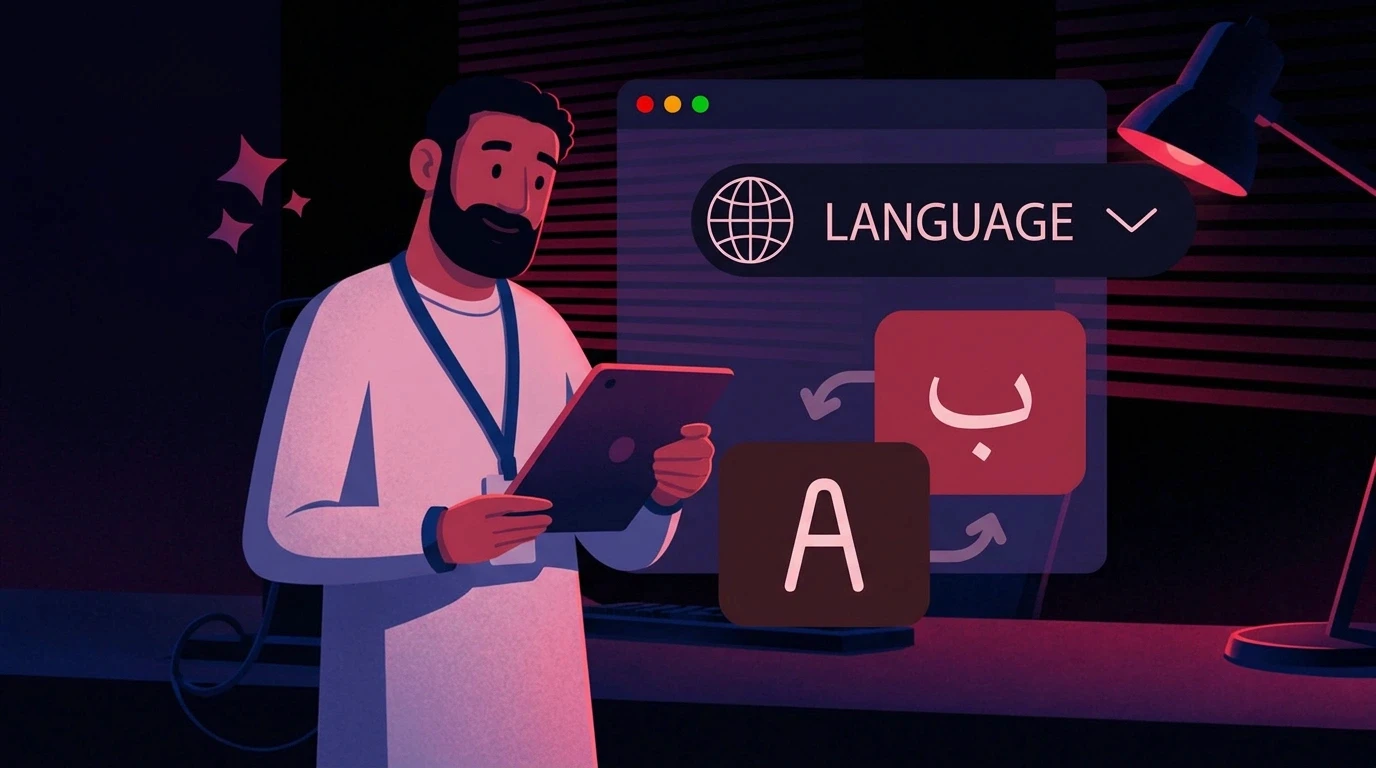
No RTL or dialect adaptation | Motion and voiceover pacing built for one language and script get applied unchanged to Arabic or other RTL markets | Kinetic typography and voiceover timing feel foreign rather than native to the intended audience |
The Types of Consistency a Motion Identity Actually Needs
Most guides treat motion identity as one thing: a logo animation and a set of transitions. In practice, a motion identity that holds up across a real production pipeline needs several types of consistency working together, not just one.
Consistency Type | What It Covers | Why It Matters |
|---|---|---|
Brand Consistent | Logo motion, typography movement, color, tone, and pacing rules across every output | Keeps the brand recognizable regardless of who or what produces the content |
Character Consistent | The same spokesperson or presenter face across every clip | Needed when a motion identity includes a recurring human presence, like a brand ambassador or UGC-style creator |
Product Consistent | The same product appearance across every ad and scene | Prevents a hero product from looking different from one campaign asset to the next |
Scene Consistent | The same environment reproduced reliably | Keeps recurring settings, like a studio backdrop or store environment, visually identical across a campaign |
When one of these fails, the whole system reads as inconsistent even if the others hold. A perfectly on-brand logo animation next to a spokesperson whose face shifts slightly between clips still breaks the illusion of a single, coherent brand. This is why treating motion identity as "just the logo animation" undersells what it actually takes to keep a brand recognizable across a real production pipeline.
A Practical Example: Launching a Multi-Channel Campaign
Consider a mid-size ecommerce brand's marketing team preparing a product launch that needs to run as a hero video, a set of short-form social cuts, a paid ad variant, and an internal sales presentation, all within the same few weeks.
Week 1: The team drafts the campaign brief and produces the hero video using one AI model, manually specifying brand colors, logo placement, and pacing in the prompt each time.
Week 2: A second team member starts cutting the social variants using a different tool. Without access to the exact settings used in Week 1, the logo animation timing and typography motion come out slightly different.
Week 3: The paid ad version and the sales deck are built by a third person, or an outside freelancer, working from a written brand guideline rather than the actual reference used in the video.
Result without a motion identity system: By the time all four assets are finished, the logo animates at a different speed in each one, the typography motion does not match, and the team spends additional review cycles trying to catch and fix the drift before anything ships.
Result with a governing Brand DNA layer: The brand's colors, typography, tone, and motion rules are set once and apply automatically across every studio used to produce the assets. Whoever produces each piece, and whichever AI video model they use, pulls from the same governing layer, so the hero video, the social cuts, the ad, and the deck all reproduce the same motion identity without re-specifying it each time.
Agency Use Case: Managing Motion Identity Across Multiple Clients
Agencies face a version of this problem that in-house teams do not: they are running several brands' motion identities in parallel, and a mistake looks worse when it's a client's identity that drifts, or worse, borrows visual elements from another client's brand. A shared production system that keeps each brand's rules isolated, rather than living in one shared folder of prompts and presets, is what lets an agency scale motion identity work across clients without a designer having to manually reset brand settings between projects.
Enterprise Use Case: Motion Identity at Scale
For an enterprise producing video across regional teams, product lines, or business units, the same problem compounds. A global brand's motion identity has to survive translation into multiple markets and, often, multiple scripts and reading directions, while still reading as one company. Storing motion rules as a governing layer that every regional team draws from, rather than distributing a static guideline and hoping it is followed identically everywhere, is what keeps a multinational rollout from fragmenting by region.
Benefits of a Defined Motion Identity System
Reduces review cycles spent catching inconsistencies before assets ship
Lets new team members or freelancers produce on-brand work without lengthy re-briefing
Keeps a brand recognizable across ads, social, and presentations even when multiple tools are involved
Scales to multi-model AI production without every model reinterpreting the brand differently
Supports market-specific adaptation, including RTL languages, without rebuilding the system from scratch
Limitations to Be Aware Of
A motion identity system only enforces what has been explicitly defined; ambiguous or unwritten rules still lead to drift
Teams still need an initial investment of time to define pacing, easing, and kinetic typography rules before the system can enforce them
AI-generated output still benefits from human review, particularly for nuanced brand judgment calls that fall outside the defined rules
Common Mistakes When Building a Motion Identity
Treating it as a one-time PDF deliverable instead of a living reference that production tools can actually read from.
Defining only the logo animation and leaving typography, pacing, and transitions undefined, which still leaves room for drift.
Skipping localization by applying motion and voiceover pacing built for one language directly to RTL markets without adaptation.
Not testing across every tool the team actually uses, so the system looks consistent in one editor and breaks the moment a different AI model or tool is introduced.
Leaving character, product, or scene consistency out of scope, so the brand elements are consistent but a recurring spokesperson or product still visibly shifts between clips.
Best Practices and Step-by-Step Implementation
Audit existing video output first. Pull recent campaign assets and note where the logo animation, typography motion, pacing, or transitions differ from one asset to the next.
Define the rules explicitly. Document logo animation timing, easing curves, transition style, and kinetic typography behavior, not just colors and fonts.
Extend beyond brand elements where relevant. If the identity includes a recurring presenter, product, or environment, define character, product, and scene consistency rules alongside the brand rules.
Store the rules as a governing reference, not a prompt. A reference that every tool and every contributor reads from is far more reliable than rules re-typed into a prompt for each new generation.
Localize deliberately. For markets that read right-to-left, or that require dialect-specific voiceover pacing, adapt the system rather than translating the output after the fact.
Test across every production tool the team uses. Confirm the rules hold whether the output comes from one AI model, a different one, or a human editor.
Review before scaling. Once the system is producing consistent output across a small set of assets, expand it to the full campaign and, eventually, to the team's full production pipeline.
How Brand DNA and a Consistency Engine Solve the Problem
Brand DNA is a stored, reusable layer that governs a brand's colors, typography, tone, logo, and visual style so it can be applied automatically across every piece of content a team produces.
In ALStudio, Brand DNA lives in Constants Studio, the platform's shared memory layer, alongside Character DNA, Product DNA, and Environment DNA. It is not a document a team refers to; it is a reference the generation pipeline itself reads from every time content is created, whether that content is a blog brief in Content Studio, a cinematic sequence in Film Studio, a campaign asset in Marketing Studio, or an edit in Editor Studio.
Brand DNA works alongside the Consistency Engine's four types, Character, Product, Scene, and Brand Consistent, so a motion identity that includes a recurring presenter or product is enforced the same way the logo and typography are. For teams producing in Arabic-first markets, this extends to voiceover pacing across 22+ Arabic dialects, closing a gap most motion identity guides never address at all.
Start building your Brand DNA on ALStudio — it's available from the free plan, with no watermark on any plan, including free.
Who Needs a Motion Identity System
Marketing teams producing across multiple campaigns need brand rules that survive a handoff between team members without manual re-briefing every time.
Ecommerce brands running frequent product launches need product and brand consistency that holds across dozens of ad variants without visual drift between them.
Agencies producing for multiple clients need a system that lets each brand's motion identity stay isolated and enforced, so client work never accidentally borrows another client's look.
Content creators building a personal or channel brand need their visual identity to stay recognizable across every video, without manually resetting brand settings for each new piece of content.
All of these are individual use cases within a broader system. Brand DNA, the Consistency Engine, and every production Studio work together so a motion identity, once defined, applies everywhere content is produced.
Reproducing a Brand Reliably
Reference workflows produce approximations. A governing Brand DNA layer produces the same motion identity every time, regardless of who is producing it or which AI model they use. This is what turns a motion identity from a guideline no one consistently follows into a system built directly into the generation pipeline.
Ready to stop re-specifying your brand rules every time you produce a video? Start free on ALStudio — no watermark on any plan, no credit card required.
────────────────────────────
FAQ SECTION
1. What is a motion identity, and how is it different from a static brand identity? A motion identity is the set of animation rules, pacing, transitions, and kinetic typography that keep a brand recognizable in video and motion content. A static brand identity covers colors, fonts, and logo in print or stills, while a motion identity extends those same rules into how the brand moves on screen, across ads, social, and presentations.
2. How much does it cost to build a motion identity system with ALStudio? ALStudio offers a free plan that includes 5 images, 1 video, and limited voice and text generation, with no watermark on any plan, including free. Paid plans start at $19/mo for full access to all 18+ AI models with no watermark, so teams can test Brand DNA before committing to a paid tier.
3. Can AI video tools maintain brand consistency across multiple videos automatically? Most AI video tools solve consistency within a single generation or session, such as keeping one character's face steady in one clip. Few store brand rules as a persistent layer that applies automatically across every future generation. That persistent, cross-generation layer is what a true motion identity system, like ALStudio's Brand DNA and Consistency Engine, is built to provide.
4. How do you implement a motion identity across social media, ads, presentations, and video without rebuilding it each time? Consistency requires a single governing reference that every output pulls from, rather than re-specifying brand rules for each new asset. In ALStudio, Brand DNA serves as that reference layer across Content Studio, Film Studio, Marketing Studio, and Editor Studio, so the same motion identity applies whether the output is a social cut, a paid ad, or a slide deck.
5. Does a motion identity system work for Arabic or other RTL markets? Yes, but only if the system is built for it. Motion and voiceover pacing designed for one language and script don't automatically translate to RTL markets. ALStudio's Brand DNA extends to voiceover pacing across 22+ Arabic dialects, so kinetic typography and voice timing feel native to the audience rather than adapted after the fact.