Character Design for Brands: When Does a Brand Character Actually Work?

Brand character design only works when it's built from real strategy and stays consistent for months. See why mascots drift — and how to stop it.
Brand Character Design: Build Characters That Stay Consistent
Title tag: Brand Character Design That Stays Consistent at Scale
Meta description: Discover how brand character design builds recognition, reduces costly rework, and stays consistent across every image, video, ad, and campaign. Start creating with ALStudio.
Brand character design delivers a return when the character is rooted in brand strategy, recognizable at a glance, and reusable across every image, video, ad, and campaign. A polished illustration alone is not enough. The real test comes weeks later, when several team members and tools must recreate the same character without changing its face, proportions, clothing, colors, or personality.
Generative AI can produce an attractive character in minutes, but speed at the concept stage does not guarantee consistency in production. Many teams approve a strong hero image, then lose time correcting character drift across social posts, product visuals, and videos.
The better approach is to treat a character as a reusable brand asset, not a one-off creative. This guide explains how to design one strategically, evaluate AI character workflows, and build a character system that can scale without repeated revisions.
What Is Brand Character Design?
Brand character design is the process of creating a distinctive visual personality that represents a company across marketing, content, packaging, and customer touchpoints. It may be a mascot, spokesperson, animated figure, or recurring virtual creator.
A strong brand character should:
Express the brand's personality and values
Be recognizable across formats and campaigns
Create an emotional connection with the target audience
Give creative teams a repeatable storytelling asset
Remain consistent when different people produce new content
For a marketing team, the character should function like a logo that can move, speak, react, and participate in stories. That can make it more memorable than a static visual identity—but also more difficult to control.
The distinction most teams miss is the difference between designing a character and operationalizing it.
Designing a character is a finite creative project involving strategy, concepts, revisions, and an approved character sheet.
Operationalizing a character means preserving its identity across hundreds of future assets, channels, campaigns, and contributors.
Most projects are evaluated on the first outcome. Their long-term return depends on the second.
Why Brand Character Design Can Improve Marketing ROI
A successful character becomes a compounding creative asset. Instead of inventing a new visual hook for every campaign, a brand can reuse a recognizable personality while changing the message, environment, product, or story.
Faster Campaign Production
Teams start with an approved identity rather than developing a new visual direction for every asset. The character can move from a hero image into paid ads, Reels, explainer videos, product content, and localized campaigns.
A structured AI content production workflow can make this reuse even more efficient by connecting creation, review, and production around reusable brand assets.
Less Revision and Rework
When the approved identity is available as a shared source of truth, creative reviews can focus on the campaign idea instead of repeatedly correcting facial features, outfits, colors, and proportions.
This becomes especially important when teams are dealing with the problem of AI characters changing between generations.
Stronger Brand Recognition
Repeated exposure to the same distinctive character can help audiences connect separate pieces of content to one brand. Consistency is what allows recognition to build over time.
More Value From Each Approved Asset
A reusable character can support multiple channels and campaign phases. This increases the potential output generated from the original strategy and design investment.
The ROI does not come from creating more images for their own sake. It comes from producing useful, on-brand content faster while reducing avoidable production costs.
Why Most Brand Character Design Efforts Fail After Launch
Most character workflows are built around a single deliverable: a static character sheet. Once that file is handed off, there is often no system enforcing the design in future production.
When a new campaign, freelancer, agency, or AI tool enters the workflow, the reference stops behaving like a rule and starts behaving like a suggestion.
Small deviations compound:
The jaw or eye shape changes
Body proportions shift
A signature accessory disappears
Clothing details or brand colors vary
The character's age or personality feels different
The voice no longer matches the visual identity
Reference-image workflows can reduce some of these problems, but they still ask a model to approximate the identity again with every generation.
That creates a new opportunity for drift at every handoff.
The business cost is easy to overlook because it is spread across the workflow: more review rounds, rejected outputs, delayed launches, inconsistent paid creative, and senior team members spending time on quality control.
Strategic drift matters too. A character may remain visually similar while gradually losing the personality that made it relevant to the brand. Teams need to lock both the visual identity and the role the character plays in communication.
Reference Images vs. Persistent Character Identity
AI character workflows generally follow two approaches.
Reference-Based Consistency
A reference image guides each new generation toward a similar likeness.
This approach can work well for:
Visual exploration
Concept development
Occasional static images
One-off creative experiments
The limitation is that the character is effectively reinterpreted every time. Someone still has to provide, manage, and evaluate the reference.
Tools such as Midjourney's Omni Reference and Leonardo AI's Character Reference demonstrate how reference-led generation can help maintain related visual characteristics across images.
Persistent Character Identity
A persistent identity stores the approved character as a reusable creative asset.
Instead of asking the model to reinterpret a reference from scratch for every task, the team starts from a defined character identity that can be reused across production.
This approach becomes more valuable when the same character needs to appear in:
Weekly social content
Product campaigns
Short-form video
Explainer content
Paid advertising
Multiple markets
Different creative formats
ALStudio uses this approach through Character DNA. The approved character can be stored in Constants Studio and reused across connected creative workflows.
For occasional content, a reference image may be enough. For a mascot expected to appear every week across several formats, persistent identity can be much more operationally valuable.
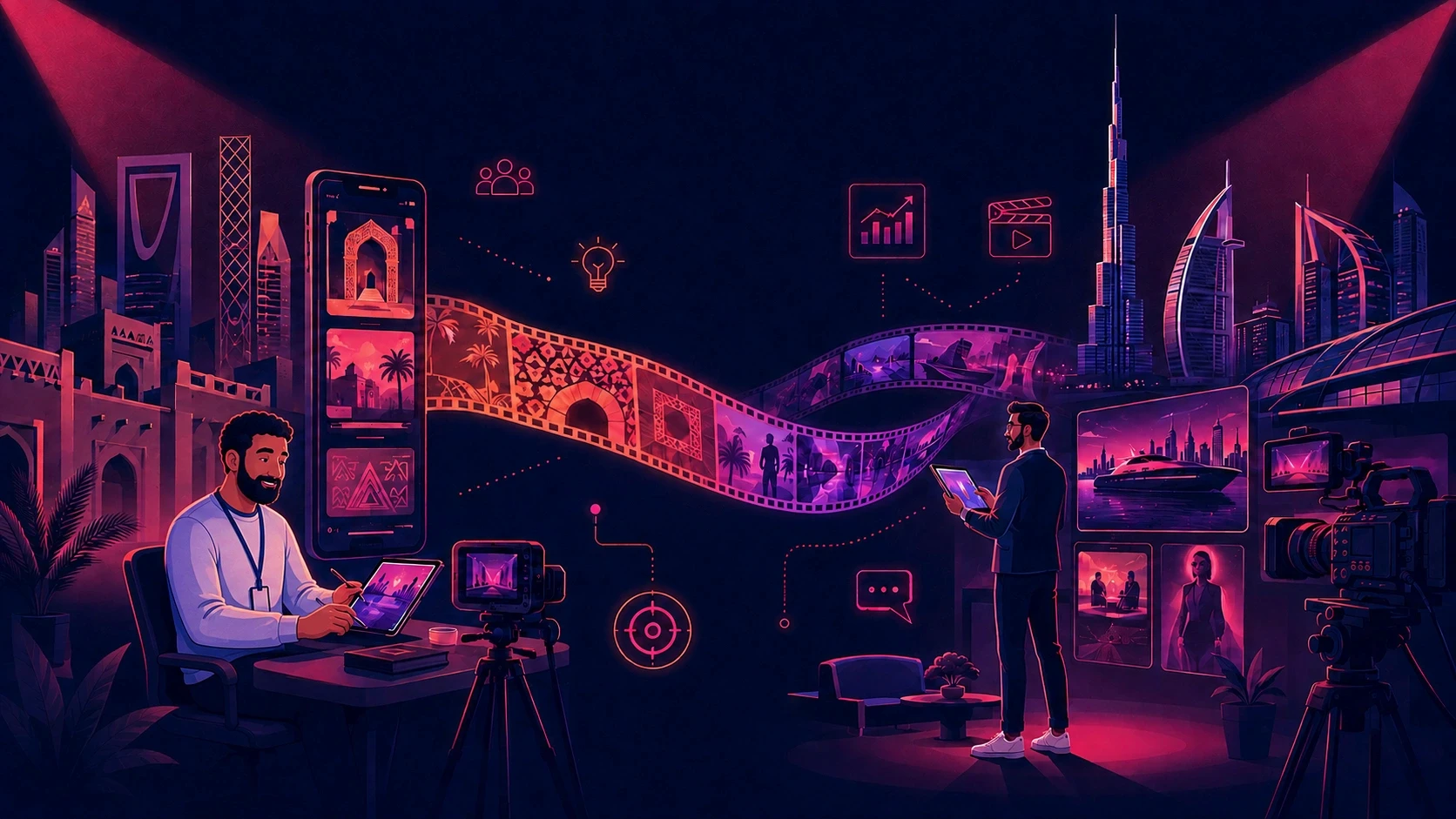
A Practical ROI Example: A GCC Retail Campaign
Consider a GCC retail brand launching a character for a seasonal campaign.
The approved character must appear in product visuals, paid social ads, short-form videos, and Arabic voiceover content within three weeks.
Week 1: Concept Approval
The team creates a strong hero image and treats it as the official reference.
Week 2: Multi-Channel Production
Internal marketers, freelancers, and an external agency begin creating assets in different tools.
Each person re-uploads the reference, rewrites prompts, and interprets the character independently.
Week 3: Review and Correction
The character now looks slightly different across assets.
The team pauses approvals, compares every output with the original, and sends inconsistent pieces back for revision.
The visible problem is character drift.
The commercial problem is the cost of correction.
Rework cost = inconsistent assets × average correction hours × blended hourly cost
If 18 assets require an average of 1.5 hours of revision at a blended cost of $60 per hour, the campaign absorbs $1,620 in avoidable rework before accounting for management time, delayed media, or replaced assets.
With ALStudio's Character DNA, the team can lock the approved identity once in Constants Studio and reuse that identity across connected workflows.
The precise savings will vary by team, but the return can be measured through:
Fewer rejected assets
Shorter approval cycles
Lower revision hours
More usable outputs per production hour
More content variations from one approved concept
How Character DNA Supports Brand Character Design at Scale
Character DNA is a stored, reusable identity for a brand character. It is designed to preserve the approved character across future content rather than re-approximating it from scratch each time.
It sits inside ALStudio's Constants Studio alongside other reusable identity layers:
Brand DNA: visual rules, logo use, colors, and creative direction
Product DNA: product appearance and defining details
Character DNA: face, proportions, wardrobe, styling, and identity
Environment DNA: recurring locations, worlds, and scene characteristics
Together, these layers provide a stronger foundation for a connected AI content creation workflow.
A character can move into a new scene or format while the broader brand system remains connected.
For example, a retail mascot could appear:
Holding a new product
Presenting a seasonal offer
Appearing in a social video
Hosting an educational clip
Appearing in a localized Arabic campaign
Moving through different branded environments
The character changes context without needing to be redesigned every time.
This is especially useful when several contributors work on the same account. Instead of relying on one designer's memory or a folder of reference files, the team works from the same approved identity.
Brand Character Design Use Cases by Team
Marketing Teams
Use a recurring character across a campaign calendar without allowing the identity to drift between the first post and the fiftieth.
The operational benefit is fewer correction rounds and faster approvals.
Ecommerce Brands
Place the same character across product launches, seasonal promotions, ad creative, and product education.
When combined with AI product marketing assets, a reusable character can become part of a broader content system rather than a single campaign asset.
Agencies
Give account teams, designers, editors, and freelancers access to one approved character identity.
This is particularly valuable for retainer clients with recurring deliverables and changing production resources.
Agencies can also combine character systems with broader brand consistency workflows to reduce inconsistencies across client campaigns.
B2B and Learning Teams
Create a recognizable host for explainers, onboarding, training, or product education.
A consistent presenter can make a library of otherwise separate content feel connected.
Content Creators
Build a virtual personality or mascot that remains recognizable across static posts, short-form video, longer episodes, and branded collaborations.
GCC and MENA Brands
Develop characters that can support regional storytelling and Arabic content while preserving the same visual identity across localized campaign versions.
For teams comparing AI video platforms for this type of production, understanding the difference between individual generation tools and broader creative systems is important. For example, see ALStudio vs. Higgsfield and ALStudio vs. Runway.
How to Build a Brand Character That Converts
1. Define the Business Role
Decide what the character must help the audience do.
Is it meant to improve recall, explain a complex product, make a serious category more approachable, or carry a recurring content series?
A clear role prevents the character from becoming decoration.
2. Start With Audience and Brand Strategy
Document the brand traits the character should express and the audience response it should create.
Choose personality, age, styling, behavior, and cultural cues intentionally.
The character should support your broader brand DNA, not operate as an isolated visual.
3. Design for Many Situations
Test whether the character works in:
Close-ups
Full-body poses
Emotional reactions
Product scenes
Different environments
Static content
Video
Localized campaigns
A design that only works in one hero pose will become expensive to scale.
4. Lock the Non-Negotiable Identity Traits
Record the facial structure, proportions, color palette, clothing rules, accessories, voice, and behavioral traits that cannot change.
Separate these from flexible details such as pose, expression, and scene.
This distinction is central to solving AI character consistency at production scale.
5. Run a Production Test Before Launch
Create a small campaign set before approving full production:
One hero image
Three social variations
One product-led visual
One short video scene
One localized or voice-led asset
Review the set side by side.
If the identity breaks before launch, it will break faster at scale.
6. Store the Identity as a Shared System
A character sheet is useful documentation, but teams also need a reusable production source.
Lock the approved identity where every authorized contributor and workflow can use it.
This is where a Creative AI Operating System can become more valuable than a collection of disconnected generation tools.
7. Measure Operational Return
Track the metrics that reveal whether the system is improving production:
First-pass approval rate
Average revisions per asset
Time from brief to approved output
Cost per usable asset
Number of formats created from one concept
Brand-consistency issues found during review
These indicators are more actionable than generation volume alone.
Common Brand Character Design Mistakes
Treating the Character as a One-Time Deliverable
The illustration is only the starting point. Long-term value depends on repeatable use.
Choosing Style Before Strategy
A fashionable visual direction cannot compensate for a character with no clear brand role.
Re-Uploading References at Every Handoff
Every new interpretation creates another opportunity for drift.
Testing Only Static Images
Video, voice, product interaction, and localization reveal different consistency problems.
Leaving Ownership Unclear
Someone must approve changes and protect the character's core identity.
Measuring Output Instead of Usable Output
A large number of generated assets means little if many require correction or cannot be published.
Using Several Competing Tools Without a Shared Identity Layer
Tool flexibility is valuable only when the brand remains intact between workflows.
For teams evaluating their current setup, a broader AI content production workflow can help identify where unnecessary handoffs and repeated work are occurring.
Brand Character Design Cost and Timeline
The cost of brand character design depends on strategy depth, concept rounds, illustration complexity, animation requirements, usage guidelines, and the number of formats being prepared.
Traditional agency-led development can take several weeks or months because it may include research, strategic positioning, concept exploration, stakeholder reviews, final artwork, and guidelines.
AI-assisted workflows can compress visual exploration and initial production. However, faster concept generation should not be confused with a complete character system.
Teams still need to validate consistency, document the identity, establish ownership, and test the character across real campaign formats.
When comparing options, calculate total production cost—not just the cost of the first image.
Include:
Strategy and concept development
Internal review time
Revisions and rejected outputs
Rebuilding assets for new formats
Freelancer or agency handoffs
Delays caused by inconsistent creative
Ongoing character governance
A lower upfront cost can produce a higher total cost if the character must be corrected every time it is reused.
Is ALStudio the Right Fit for Your Character Workflow?
ALStudio is most relevant for teams when a character is expected to become an ongoing brand asset rather than a single illustration.
It can be a strong fit if:
You publish recurring character-led content
Several people or partners create assets for the same brand
Your campaigns span images, videos, editing, and voice
Character drift is already creating revisions or rejected work
You manage multiple brands or client identities
You need a repeatable content system for GCC or MENA campaigns
If you only need one experimental image, a general-purpose generator may be sufficient.
If the character must remain recognizable across a real campaign calendar, a persistent identity workflow can help protect both the creative and production investment.
Teams can also explore ALStudio's broader AI creative platform or review the Enterprise solution for larger production environments.
Frequently Asked Questions
How Much Does Brand Character Design Cost?
Costs vary widely based on strategy, illustration, animation, guidelines, and usage requirements.
Compare total ownership cost rather than the initial image price. A cheaper concept can become expensive if every campaign requires manual corrections or redesign.
How Long Does Brand Character Design Take?
A traditional process may take several weeks or months, depending on research, concept rounds, approvals, and deliverables.
AI can accelerate exploration, but teams should still allow time to test the character across images, video, voice, and real campaign scenarios.
What Is the Difference Between a Brand Character and a Mascot?
A mascot is one type of brand character, often designed as a recognizable representative of a company, product, team, or campaign.
Brand character is the broader category and can also include virtual presenters, recurring animated figures, or branded creators.
What Is the Difference Between AI Brand Character Design Tools?
Many tools use reference images to guide each new generation.
Persistent-identity systems store the approved character for reuse across future workflows.
The right choice depends on whether you need occasional images or consistent multi-format production.
How Do You Keep an AI Character Consistent?
Define the character's non-negotiable traits, test it across multiple formats, use one approved source of truth, and reduce repeated reinterpretation at tool handoffs.
A persistent identity layer can make this easier for ongoing team production.
Can B2B Brands Use Characters Effectively?
Yes.
B2B brands can use characters to explain complex products, host learning content, humanize technical topics, and create a recognizable presence across campaigns.
The character needs a clear communication role and consistent execution.
How Can Teams Measure the ROI of a Brand Character?
Track first-pass approval rate, revisions per asset, production time, cost per usable asset, content reuse across formats, and brand recall or engagement where appropriate.
Compare these measures before and after introducing the character system.
Turn One Character Into a Reusable Brand Asset
A brand character should become more valuable each time it appears—not more expensive to recreate.
ALStudio's Creative AI Operating System helps teams lock approved characters as Character DNA and reuse them across connected image, video, voice, editing, and campaign workflows.
Instead of treating character design as a finished image, teams can treat it as reusable creative infrastructure.
Create your Character DNA in ALStudio and test one approved identity across your next campaign.
Recommended schema: Article + FAQPage + SoftwareApplication