How Animus Built ALStudio.ai: Turning Agency Experience into a Creative AI Platform

Discover how Animus built a creative AI platform MENA agencies and brands can use for consistent, Arabic-first content production at scale with ALStudio.
How Animus Built a Creative AI Platform MENA Teams Can Scale With
A creative AI platform MENA agencies and marketing teams can depend on needs to solve more than content generation. It needs to preserve brand identity, support Arabic-first production, connect creative workflows, and help teams move from a brief to finished content without rebuilding context at every stage.
That is the problem Animus set out to solve with ALStudio.ai.
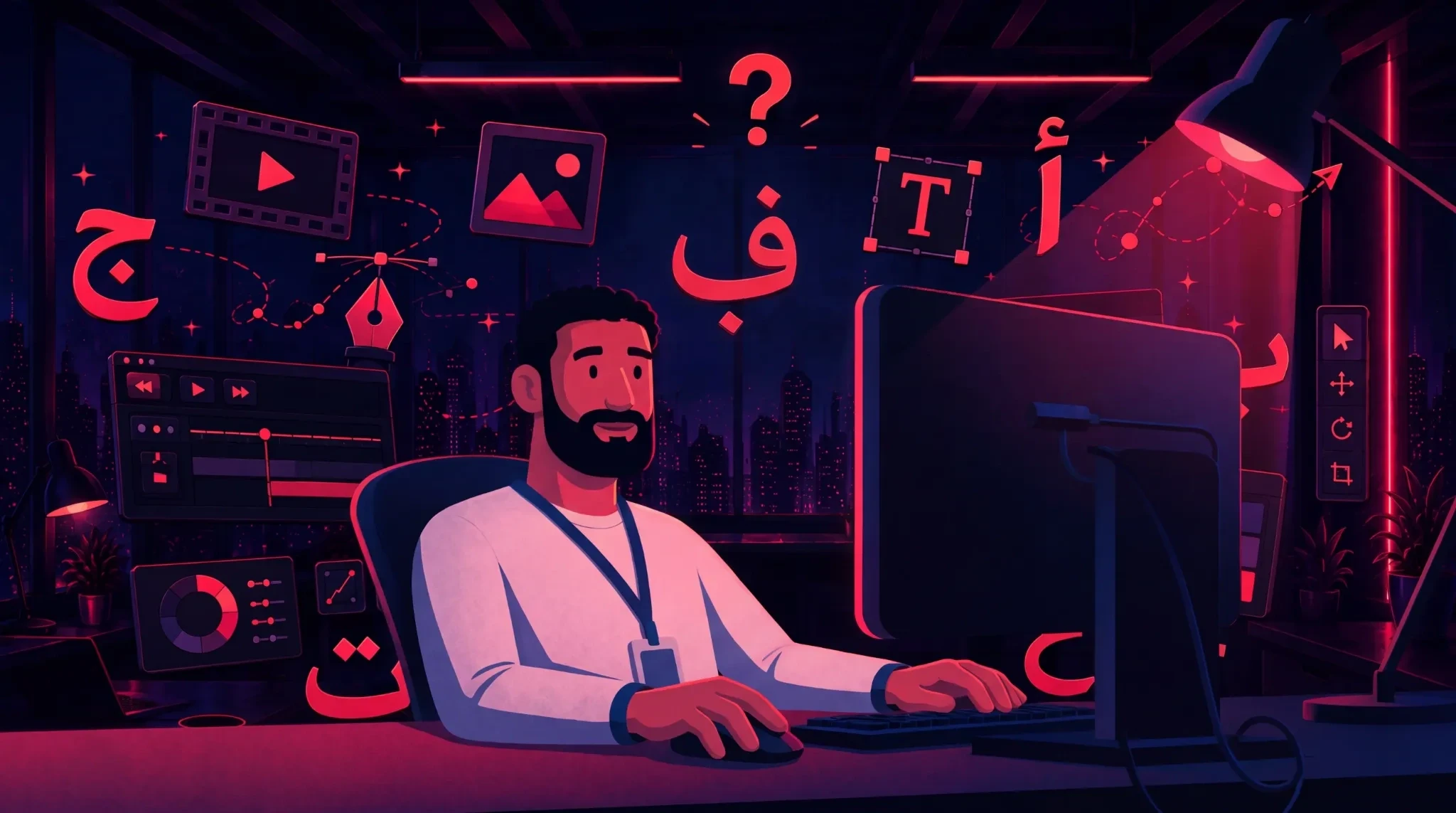
Animus did not start with the assumption that creative teams needed another AI generator. Agency production had already revealed a different problem: teams were moving between writing systems, image generators, video models, voice platforms, campaign workflows, and editing environments while humans manually carried the context between them.
That becomes particularly important in MENA.
Creative production can involve Arabic and English, different regional audiences, localized voiceovers, multiple campaign formats, and strict brand requirements while still needing the speed expected from generative AI.
While building ALStudio's Consistency Engine, we found that generation quality was only one part of the production problem.
The harder challenge was preserving what should not change while everything else around it did.
That insight became the foundation of ALStudio's Creative AI OS.
What Is a Creative AI Platform MENA Teams Actually Need?
A creative AI platform MENA teams can use at production scale is infrastructure that connects AI generation with persistent brand context, Arabic and multilingual production, repeatable workflows, and creative control.
The distinction matters because creating an asset and running creative production are different jobs.
An image generator can produce an image.
A video model can produce a clip.
A language model can produce copy.
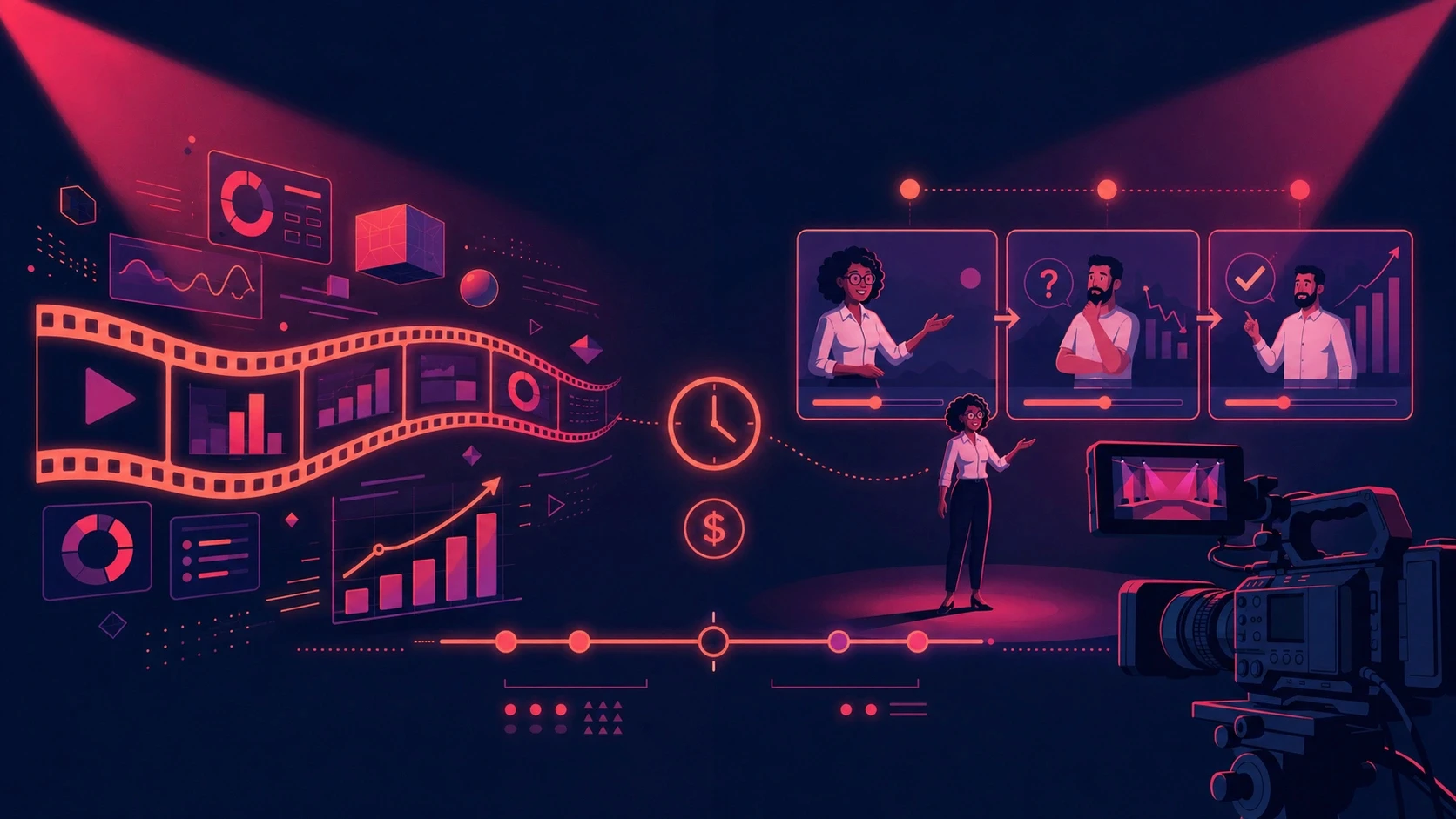
But a campaign may require all three, plus voiceover, localization, multiple aspect ratios, consistent products and characters, editing, VFX, campaign variations, and approval.
The question therefore changes from:
Can AI create this?
to:
Can our team build, control, and scale this reliably?
That second question is what led Animus toward a Creative AI OS rather than a collection of disconnected generation features.
Learn more about what a Creative AI OS means.
Why Does This Matter in MENA?
MENA creative teams frequently operate across languages, markets, formats, and cultural contexts.
Arabic itself cannot always be treated as one generic localization layer. Voice, phrasing, tone, and audience expectations can differ between markets.
ALStudio was therefore built Arabic-first rather than treating Arabic as a later translation feature. The platform supports 22+ Arabic dialects for voice production alongside multilingual creative workflows.
For agencies, the challenge is even larger.
One team may need to manage several completely different client identities without allowing brand rules, characters, products, or environments to drift between campaigns.
A creative AI platform for this market needs memory as much as generation.
Why Fragmented AI Workflows Break at Production Scale
Fragmented AI workflows break at scale because each system typically knows only a fraction of the creative context required to produce the finished campaign.
A common workflow might involve:
One environment for research and copy
Another for images
Another for video
Another for voice
Traditional post-production software for finishing
Each system can be useful individually.
The problem appears between them.
Someone has to carry the prompt.
Someone has to upload the references again.
Someone has to remember the approved character.
Someone has to check the product.
Someone has to reapply the brand guidelines.
Someone has to tell the next system what happened in the previous one.
Humans effectively become the API between creative applications.
Generation Quality Does Not Guarantee Production Consistency
In our testing across multiple AI models, one pattern repeatedly appeared: a strong individual generation did not guarantee a strong sequence.
A character could look excellent in one frame and subtly different in the next.
A product could retain its general appearance but lose important proportions or packaging details.
An environment could become a reinterpretation of the previous location.
Brand colors and visual treatment could drift as more outputs were produced.
We initially approached these as generation problems.
We eventually realized they were memory problems.
That observation shaped ALStudio's architecture.

How Animus Turned Agency Problems Into Product Architecture
ALStudio's architecture maps recurring creative-production problems to persistent systems rather than requiring teams to solve those problems repeatedly through prompting.
Animus had already encountered the operational side of content production: briefing, concept development, scripts, storyboards, characters, campaign adaptations, revisions, localization, animation, editing, and delivery.
Generative AI accelerated individual stages, but it also introduced new coordination problems.
Instead of hiding those problems behind a larger prompt box, we used them as product requirements.
Repeated Briefing Became Constants Studio
A team should not have to explain the same brand from zero every time it starts another creative workflow.
Constants Studio became ALStudio's shared memory layer.
It stores persistent creative information such as:
Brand DNA
Character DNA
Product DNA
Environment DNA
Visual style
Logo
Color palette
The goal is simple:
Set persistent identity once, then make it available throughout production.
ALStudio's current platform describes Brand, Product, Character, and Environment DNA as reusable identity layers across its creative workflows.
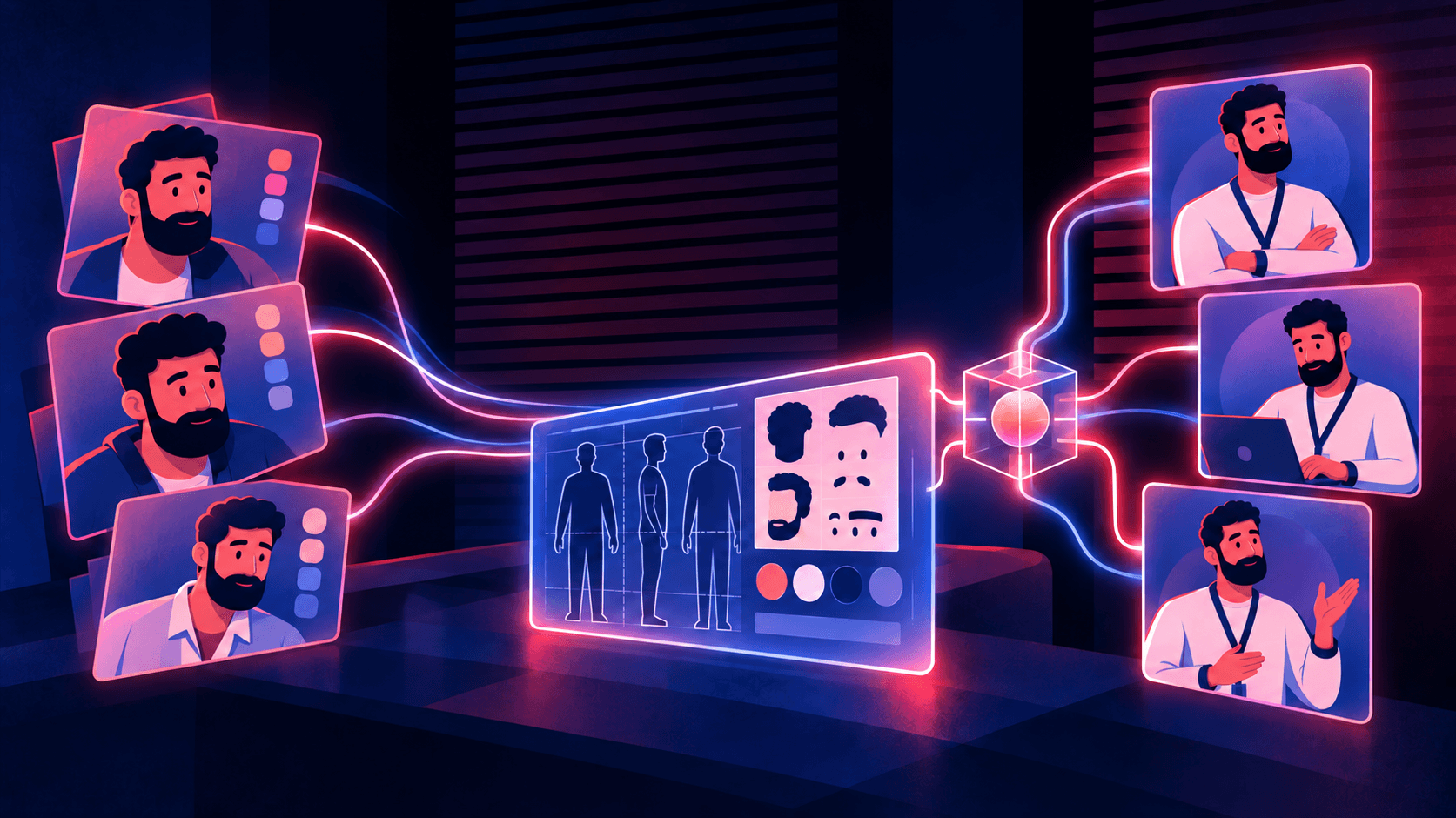
Character Drift Became Character DNA
Characters are particularly difficult to manage through isolated reference workflows.
A character may need to appear in a storyboard, social campaign, cinematic sequence, explainer, different environment, new outfit, or new camera angle while remaining recognizably the same person.
Character DNA is designed to preserve that identity as the surrounding creative changes.
See how ALStudio approaches AI character consistency.
Product Variation Became Product DNA
For ecommerce and advertising, approximate product identity is often not enough.
The creative concept can change dramatically while the product itself needs to remain recognizable.
Product DNA separates the persistent product from the changing campaign surrounding it.
Environment Drift Became Environment DNA
The same principle applies to recurring locations.
A campaign world may need to continue across scenes, formats, or episodes. Environment DNA provides persistent context for that environment rather than asking each generation to reinterpret a text description independently.
Brand Inconsistency Became Brand DNA
Brand consistency is broader than inserting a logo.
It includes colors, typography, visual language, tone, creative rules, and recognizable identity.
Brand DNA gives those elements a persistent role inside production.
Read more about brand consistency at scale.
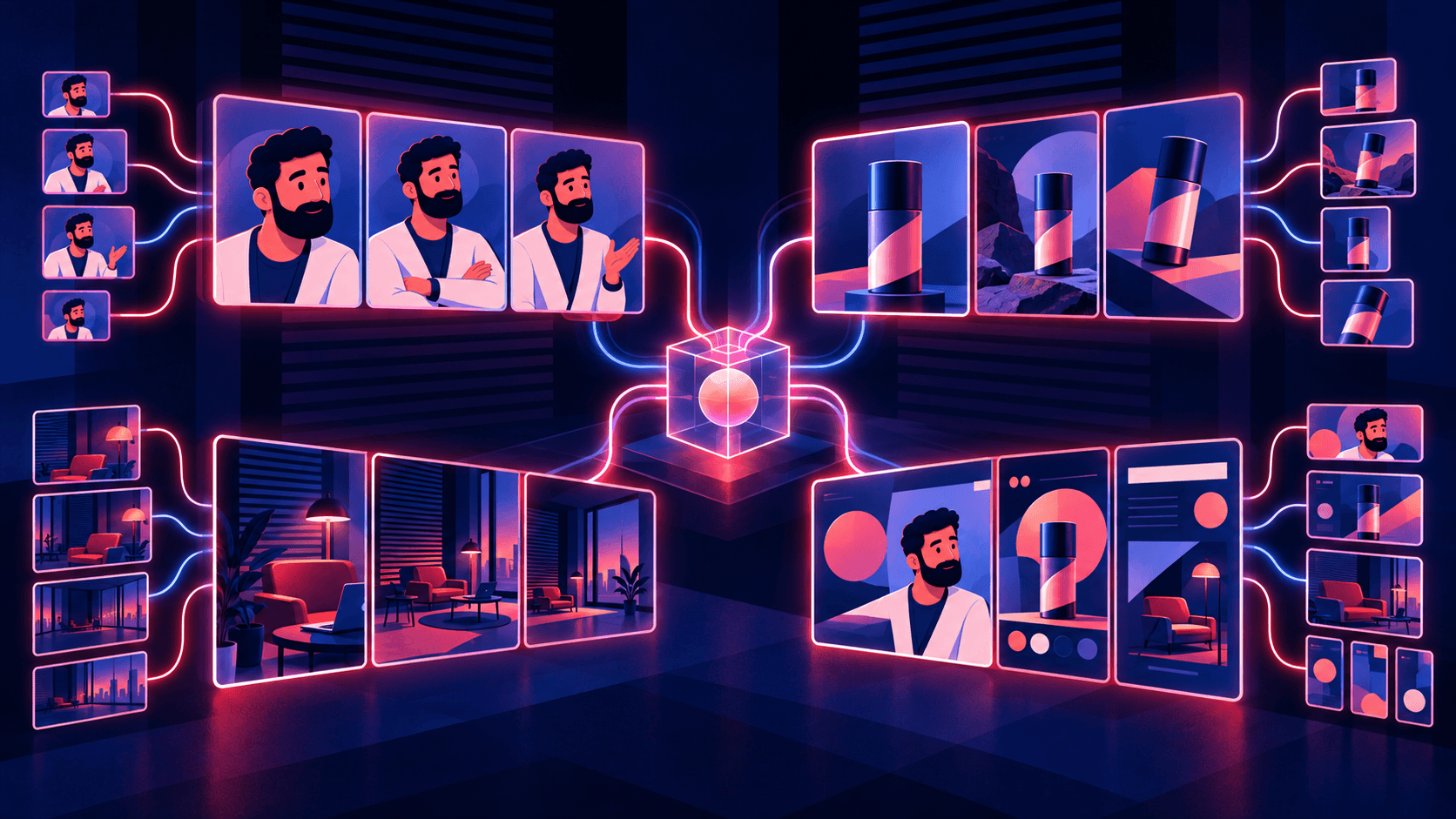
Why Consistency Is the Real Scaling Problem
AI content scales successfully only when the elements that should remain constant can survive increases in output volume, formats, team members, and campaigns.
Generating more content is not inherently difficult.
Controlling more content is.
This is particularly relevant to agencies and enterprise teams because scaling usually adds more variables simultaneously:
More channels
More formats
More people
More approvals
More products
More campaigns
More markets
While building ALStudio's Consistency Engine, we found it useful to separate consistency into four different problems.
1. Character Consistency
The same character should remain recognizable across relevant outputs.
2. Product Consistency
The product should retain the identity required by the campaign even when environments and creative concepts change.
3. Scene Consistency
Recurring environments should maintain continuity across the production.
4. Brand Consistency
Teams should produce work under the same approved brand identity even when different people or workflows are involved.
Treating all four as one generic "consistency" feature misses the operational difference between them.
A campaign can be perfectly on-brand while its hero character changes face.
A character can remain consistent while the product changes.
A product can remain accurate while the campaign's visual language moves away from the brand.
The Consistency Engine addresses these as separate layers.
Explore ALStudio's approach to consistent AI commercials.
How a Creative AI Platform MENA Workflow Works
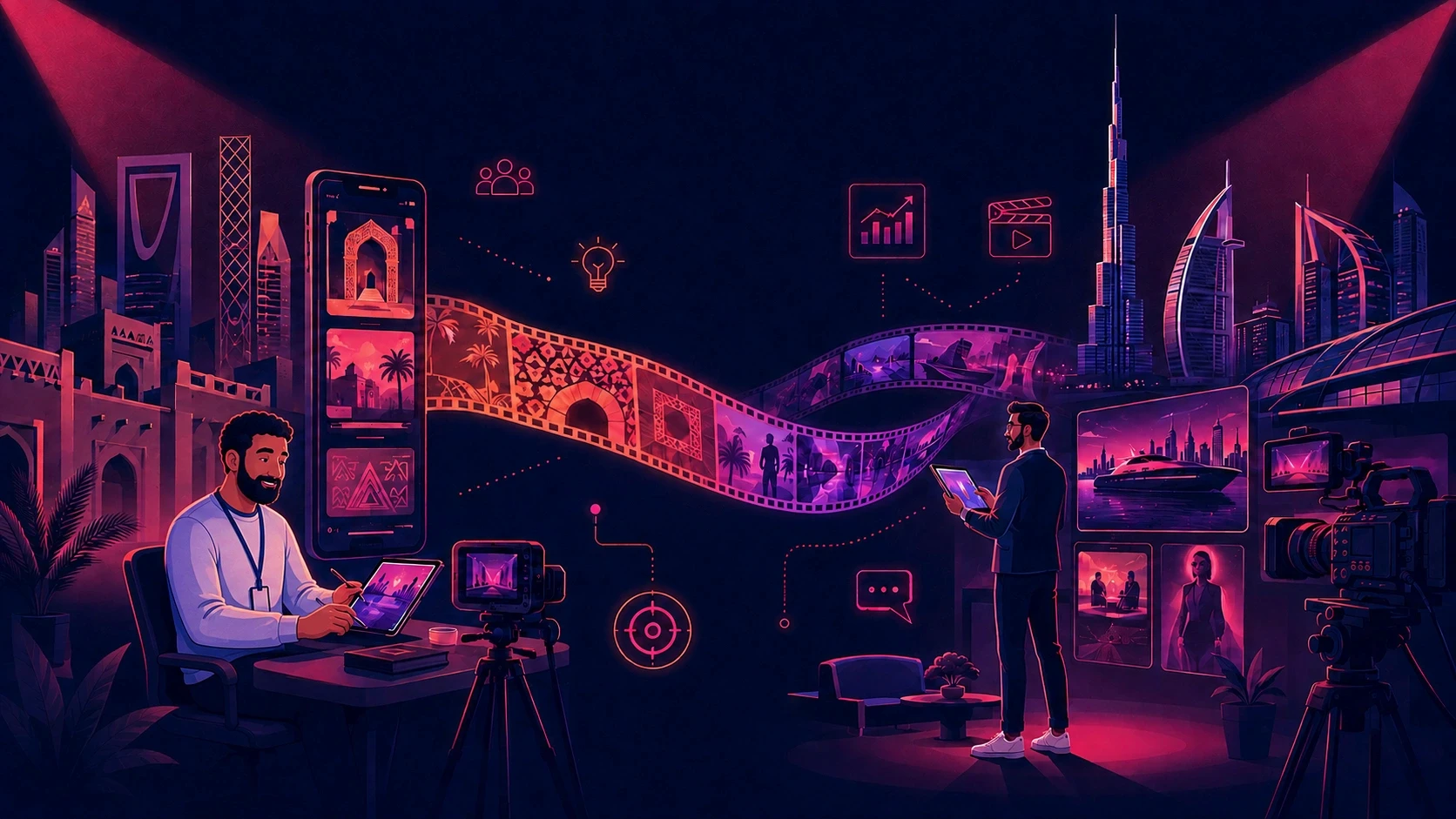
A scalable creative AI workflow moves from persistent identity to production, adaptation, and finishing without forcing teams to rebuild context at each stage.
ALStudio organizes that process through four connected Studios supported by Constants Studio.
Step 1: Establish Persistent Creative Context
Before production begins, reusable identity can be established through Constants Studio.
The team determines which constants matter.
For a corporate campaign, Brand DNA may be central.
For ecommerce advertising, Brand DNA and Product DNA may work together.
For an animated campaign, Character DNA and Environment DNA may become equally important.
This separates the elements that should remain stable from the creative decisions that should remain flexible.
Step 2: Develop the Content
Content Studio handles written production.
A single campaign can require:
Briefs
Scripts
Captions
Landing-page copy
Emails
Hashtags
Social content
Other written assets
The important architectural idea is not simply that AI can write these formats.
It is that written production exists inside the same broader creative system as the visual production that follows.
Step 3: Build Film and Video
Film Studio handles cinematic production through a structured pipeline:
Story Idea → Script → Storyboard → Character Sheet → Environment Sheet → Scene Generation → Voiceover → Final Film
That pipeline reflects how film is actually assembled.
Instead of asking one model to jump from a prompt to an entire production, individual creative decisions can be developed through stages.
Step 4: Expand the Campaign
Marketing Studio starts from the marketing objective.
The workflow can be organized around:
Awareness
Leads
Sales
Engagement
Retention
Social Factory can then turn one brief into coordinated content for multiple platforms.
For agencies, this addresses one of the least glamorous but most expensive parts of production: adapting a campaign after the main creative idea has already been approved.
Step 5: Finish the Work
AI generation does not eliminate post-production.
Assets may still require:
Editing
VFX
Transitions
Upscaling
Background replacement
Object removal
Visual adjustments
Editor Studio brings that stage into the broader workflow.
The purpose is not to remove creative professionals from the process.
It is to remove unnecessary workflow fragmentation around them.
A Realistic Agency Use Case
Consider an agency developing a bilingual product campaign for a regional brand.
The campaign requires:
A hero concept
English and Arabic copy
Product imagery
Short-form social videos
Voiceover
CGI concepts
Platform adaptations
Final edited deliverables
Without Persistent Creative Context
The team gathers the brand guidelines and product references.
Those materials move into the copy workflow.
Then they move again into image generation.
Product references are uploaded to video workflows.
Voice requirements are briefed separately.
When another creative starts producing social variations, they need access to the same references and instructions.
The campaign technically uses AI throughout, but the production architecture remains manual.
With Persistent Creative Context
Brand DNA establishes the brand identity.
Product DNA establishes the product.
The campaign brief can move through Marketing Studio.
Written assets can be developed through Content Studio.
Film requirements can move through Film Studio.
Arabic voice production can be handled with the appropriate dialect.
Final assets can move through Editor Studio for finishing.
The benefit is not simply fewer clicks.
The benefit is that the campaign has a production memory.
Enterprise Creative AI Requires Governance, Not Only Generation
Enterprise AI content production requires systems for identity, workflow, repeatability, and control because more users create more opportunities for inconsistency.
For a solo creator, prompting can function as personal memory.
The creator knows what they intended.
That model becomes harder to maintain when a marketing department, external agency, ecommerce team, regional office, and production partner all touch the same brand.
What Enterprises Need to Control
Enterprise teams should consider:
Which identity elements must remain constant?
Which creative decisions can vary?
Who can establish or change brand context?
How does context move between written, visual, video, and marketing workflows?
How are outputs reviewed?
How does localization affect the core identity?
Which AI model should handle each task?
This is where the distinction between an AI generator and an operating system becomes important.
The generator produces an output.
The operating system coordinates how production happens.
Why Multi-Model Generation Matters
Multi-model AI generation lets creative teams choose different models for different production requirements without making one model the foundation of the entire workflow.
Different creative tasks have different requirements.
A model that works well for one cinematic style may not be the preferred choice for another.
New models also continue to enter the market.
ALStudio's current website describes access to 100+ AI models across image, video, voice, copy, and other creative workflows.
The architectural principle is more important than the number:
Models should be interchangeable. Production context should persist.
We assumed early AI creative systems would naturally organize themselves around the model.
Agency production suggested the opposite.
The model is one component of the production stack.
Identity, workflow, approvals, editing, localization, and campaign structure remain relevant regardless of which model generates a particular asset.
Arabic-First AI Production Is More Than Translation
Arabic-first creative AI means designing language, voice, and production workflows with Arabic markets in mind rather than adding Arabic only after an English workflow has been built.
This distinction matters for MENA teams.
Localization is not simply changing English text into Arabic.
Creative production may require:
Different wording
Regional tone
Right-to-left considerations
Market-specific messaging
Voice choices
Dialect decisions
Platform-specific adaptations
ALStudio supports 22+ Arabic dialects for voiceover, according to its current product site.
For regional agencies, that means Arabic production can become part of the workflow itself rather than a separate localization layer added after the campaign has already been developed.
Arabic-first does not mean Arabic-only.
MENA brands frequently work across Arabic and English, and regional companies may operate across many languages.
The architecture therefore needs to support multilingual production while treating Arabic as a first-class production requirement.
For a deeper look at the distinction between translation and regional adaptation, see Animus' guide to Middle East campaign localization.
Creative AI Platform Comparison Framework
The right platform depends on the production problem a team is trying to solve.
Requirement | Isolated AI Generator | Connected AI Workflow | ALStudio Creative AI OS |
|---|---|---|---|
Single asset generation | Strong fit | Strong fit | Strong fit |
Persistent brand context | Usually prompts/references | Depends on workflow | Brand DNA |
Character continuity | Reference-dependent | Depends on system | Character DNA |
Product continuity | Reference-dependent | Depends on system | Product DNA |
Environment continuity | Prompt/reference-dependent | Depends on system | Environment DNA |
Written content workflow | Often separate | Varies | Content Studio |
Film production workflow | Usually generation-focused | Varies | Film Studio |
Campaign adaptation | Usually external | May be supported | Marketing Studio + Social Factory |
Post-production | Usually external | Varies | Editor Studio |
Arabic voice production | Platform-dependent | Platform-dependent | 22+ Arabic dialects |
Multi-model production | Often model-specific | Platform-dependent | Multi-model workspace |
The decision should therefore begin with workflow requirements rather than the longest feature list.
If the requirement is one experimental image, a specialized generator may be sufficient.
If the requirement is repeated production across brands, products, characters, teams, campaigns, languages, and formats, persistent context becomes much more important.
Common Mistakes When Implementing Creative AI in MENA
Mistake 1: Choosing Models Before Designing the Workflow
A team subscribes to several AI systems before deciding how creative work should actually move through production.
Better practice: Map the workflow first, then decide which models belong inside it.
Mistake 2: Treating Prompt Libraries as Permanent Memory
Prompt templates are useful, but they become difficult to govern when many people and campaigns are involved.
Better practice: Separate reusable identity from temporary instructions.
Mistake 3: Treating Arabic as a Final Translation Step
A campaign developed entirely for English may require more than translation to work for Arabic-speaking audiences.
Better practice: Plan language, voice, format, and localization during production.
Mistake 4: Scaling Generation Before Solving Consistency
Producing more assets magnifies inconsistency if identity controls are weak.
Better practice: Determine what must remain constant before increasing output volume.
Mistake 5: Ignoring Post-Production
AI-generated does not automatically mean delivery-ready.
Better practice: Include editing and finishing in the workflow architecture from the beginning.
Best Practices for Implementing a Creative AI Platform
The best implementation begins with the production system, not the AI model.
1. Map Your Existing Production Workflow
Document how a campaign moves from brief to delivery.
Identify where information is repeatedly copied, uploaded, rewritten, or lost.
2. Identify Your Constants
Decide what must remain stable.
For most organizations, this includes some combination of:
Brand
Product
Character
Environment
Visual style
Tone
3. Separate Constants From Campaign Variables
The product may remain constant while the environment changes.
The brand may remain constant while campaign messaging changes.
Separating these concepts makes AI workflows easier to control.
4. Choose Models by Task
Do not make one model responsible for the entire creative stack simply because it performs well in one area.
Choose models based on production requirements.
5. Design Localization Into the Workflow
For MENA production, determine languages and dialect requirements before the final stage.
Localization should influence production rather than being treated as a last-minute translation task.
6. Keep Humans in Creative Control
AI should accelerate production, not eliminate judgment.
Creative direction, cultural understanding, strategy, review, and final approval remain human responsibilities.
7. Measure Production Outcomes
Do not evaluate a creative AI implementation only by generation volume.
Consider whether the system improves:
Consistency
Repeated briefing
Campaign adaptation
Localization
Review processes
Production control
Time from concept to finished asset
Limitations of Creative AI Platforms
Creative AI infrastructure does not remove every production challenge.
Generative models can still produce unexpected results.
Characters and products may still require review.
Creative direction still matters.
Localization still requires cultural judgment.
Enterprise teams still need governance.
Human approval remains important for high-value brand work.
A Creative AI OS should therefore not be evaluated by whether it eliminates human production.
The more useful question is whether it gives those humans better infrastructure for directing AI production.
For Animus, that distinction became central to ALStudio.
We were not trying to automate creativity away.
We were trying to remove the fragmentation surrounding it.
Why ALStudio's Creative AI Platform MENA Approach Started With Production
The story behind ALStudio is ultimately straightforward.
Agency work exposed problems that isolated generation could not solve.
Repeated briefing led to Constants Studio.
Identity drift led to the Consistency Engine.
Character requirements led to Character DNA.
Product requirements led to Product DNA.
Recurring worlds led to Environment DNA.
Brand governance led to Brand DNA.
Fragmented copy, film, campaign, and editing workflows led to Content Studio, Film Studio, Marketing Studio, and Editor Studio.
Arabic and regional production requirements led to an Arabic-first approach with 22+ Arabic dialects for voiceover.
And the rapid evolution of generative models reinforced the decision to build around multi-model production rather than one underlying model.
That is the difference between starting with a generator and starting with production.
Conclusion: Building Creative AI Infrastructure for MENA
A creative AI platform MENA agencies, brands, creators, and enterprises can scale with needs more than generation.
It needs:
Persistent identity
Arabic-first production
Multi-model flexibility
Connected workflows
Campaign adaptation
Post-production
Human creative control
Animus built ALStudio from inside that production problem.
Reference-based workflows can generate approximations. Constants Studio and the Consistency Engine are designed to preserve the creative context that production depends on.
Together with Content Studio, Film Studio, Marketing Studio, and Editor Studio, they form ALStudio's Creative AI OS for teams moving from isolated AI generation toward controlled creative production.
Explore ALStudio.ai to see how the platform connects brand identity, creative workflows, AI models, and production in one environment.
Frequently Asked Questions
1. What should a MENA agency look for in a creative AI platform?
A MENA agency should consider brand consistency, Arabic and multilingual production, multi-model generation, campaign workflows, reusable creative context, and post-production.
The platform should support production across clients without requiring teams to reconstruct brand, product, character, and environment information for every new asset.
2. How long does it take to implement a Creative AI OS?
Implementation depends on the complexity of the organization's brands and workflows.
Teams should first establish persistent brand and product context, map existing production stages, define approval requirements, and introduce AI workflows gradually rather than attempting to automate the entire creative operation at once.
3. How is ALStudio different from using separate AI generators?
Separate generators primarily solve individual generation tasks, while ALStudio is designed around connected creative production.
Constants Studio provides reusable Brand DNA, Character DNA, Product DNA, and Environment DNA, while Content Studio, Film Studio, Marketing Studio, and Editor Studio address different stages of the production workflow.
4. How much does ALStudio cost for agencies and marketing teams?
ALStudio currently offers a free plan, with paid plans and custom enterprise options. Pricing and plan details can change, so teams should check the current ALStudio pricing page for the latest information.
5. Does ALStudio support Arabic content?
Yes. ALStudio describes its platform as Arabic-first and currently supports 22+ Arabic dialects, alongside multilingual creative workflows.
6. Can ALStudio support multiple AI models?
Yes. ALStudio's current website describes access to 100+ AI models across creative production, including image, video, voice, and copy workflows.
7. What is the Consistency Engine?
The Consistency Engine is the architecture ALStudio uses to preserve creative identity across production. It works through persistent identity layers including Brand DNA, Character DNA, Product DNA, and Environment DNA.
8. Can agencies use ALStudio for localized campaigns?
Yes. The platform is designed for multilingual and regional creative workflows, including Arabic-first production. This can be particularly relevant when a campaign needs multiple language, voice, format, and platform variations while maintaining shared brand and product identity.
For the broader strategy behind MENA localization, see Animus' Middle East campaign localization guide.
9. Does AI eliminate the need for creative teams?
No.
AI can accelerate generation and production, but creative strategy, cultural judgment, direction, review, approvals, and brand decisions still require human involvement.
10. Is there a free ALStudio plan?
Yes. ALStudio currently offers a Free plan. The current pricing page lists free access with limited image, video, voiceover, script, and prompt generation, with no credit card required.
Start free on ALStudio with no watermark on any plan and no credit card required.