Arabic Content Localization: Why Translation Alone Is Not Enough
Arabic content localization adapts dialect, culture, voice and brand identity for regional markets. Learn how to build consistent Arabic campaigns at scale.
Arabic Content Localization: How Animus Scales MENA Marketing Without Increasing Production Costs
Arabic content localization is more than translating a campaign into Arabic. At Animus, we treat localization as a creative production process that helps global and regional brands adapt campaigns for MENA markets while protecting the identity, quality and strategic intent of the original work.
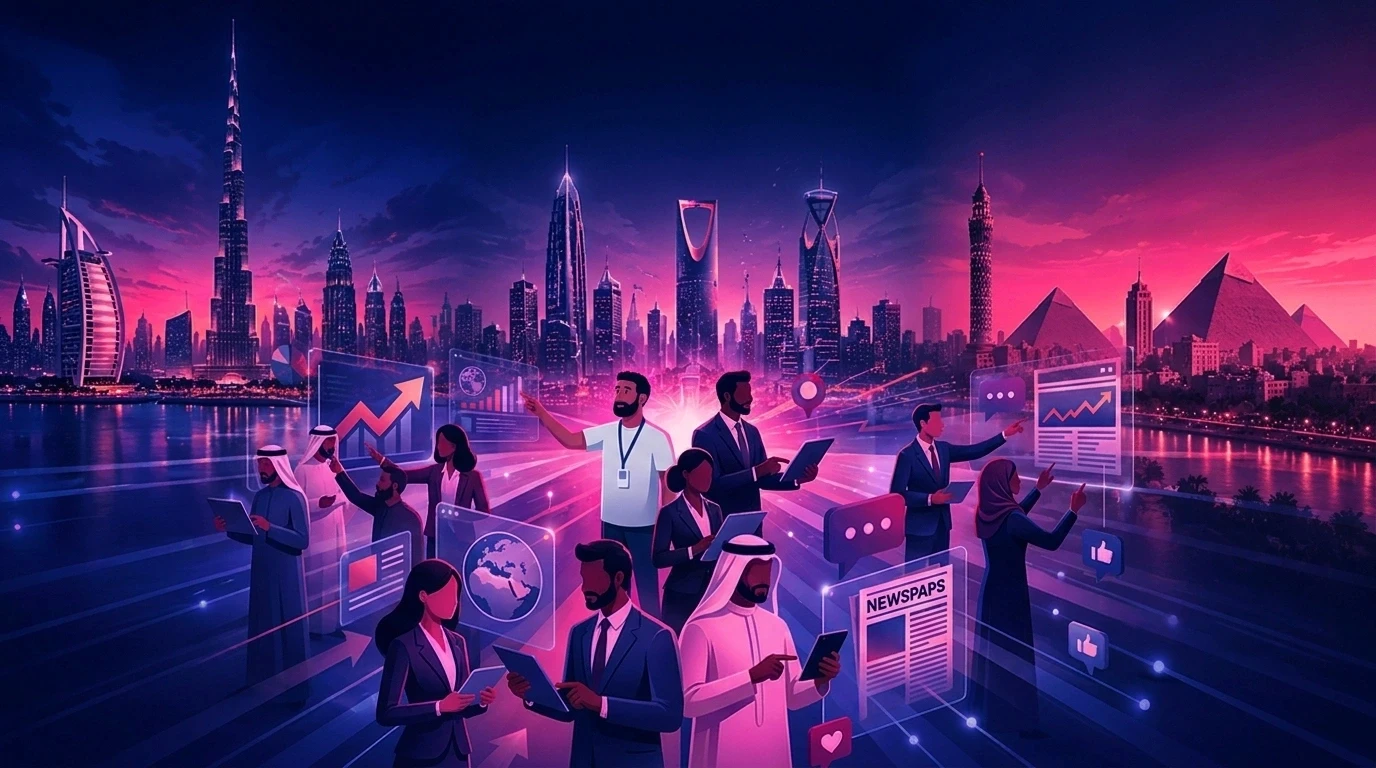
A campaign targeting Saudi Arabia, the UAE, Egypt, Kuwait or other MENA markets may require different dialects, cultural references, voiceovers, talent, visuals, messaging and platform formats.
That does not mean every market needs to become a completely separate production project.
The commercial challenge is more specific:
How can a brand create market-relevant Arabic content without multiplying production costs, timelines and approval processes?
At Animus, we approach that problem by separating the elements that should remain consistent from the elements that need to change.
The brand stays recognizable.
The product stays accurate.
The campaign idea stays connected.
The language, cultural context, voice, storytelling and platform execution can adapt.
That is the foundation of scalable Arabic content localization.
What Is Arabic Content Localization?
Arabic content localization is the process of adapting marketing content for a specific Arabic-speaking audience while preserving the campaign's core message, brand identity and commercial objective.
Localization can involve:
Arabic copy
Regional dialects
Tone of voice
Cultural references
Voiceover
Talent and presenters
Visual environments
Product presentation
Right-to-left layouts
On-screen text
Calls to action
Platform-specific formats
Translation asks:
What does this message mean in Arabic?
Localization asks:
How should this brand communicate the same idea to this particular audience?
That difference matters.
A grammatically correct translation can still sound unnatural. A translated video can still feel like it was created for another market. A global campaign can technically contain Arabic copy while remaining culturally distant from the audience.
At Animus, we therefore treat Arabic as part of the creative process rather than a final production step.
This approach is especially important when one campaign needs to work across several markets and platforms.
For more on the distinction between translation and localization, see our guide to Arabic Content Localization.
Why Arabic Content Localization Is a Marketing and Production Strategy
Localization is often treated as a translation expense.
For brands operating across MENA, it is more useful to think about localization as part of the overall content production system.
Imagine a global campaign that needs to launch in:
Saudi Arabia
UAE
Egypt
Kuwait
Each market may require different:
Scripts
Voiceovers
Captions
Social videos
Product scenes
Talent
Calls to action
Cultural references
Platform adaptations
A fragmented production model can turn those requirements into four separate creative projects.
A structured localization model starts with one campaign foundation and identifies which elements need to change.
At Animus, that distinction helps us approach localization as controlled creative variation, rather than recreating the campaign from zero for every market.
The objective is not to make four identical campaigns.
It is also not to create four unrelated campaigns.
The objective is to create four locally relevant expressions of the same strategic idea.
The Real Cost of Poor Localization
The cost of localization is not simply the translation invoice.
Poor localization can create additional production costs through:
Repeated copy revisions
Incorrect terminology
Additional voiceover sessions
Recreated product visuals
Inconsistent characters
Repeated design work
Extra editing
Multiple approval rounds
Delayed launches
Platform-specific rework
Brand consistency corrections
The actual economics are closer to:
Total localization cost = language adaptation + creative adaptation + production + revisions + approvals
That is why localization should be considered before production begins.
If Arabic is added after the master campaign is finished, teams may discover that:
The Arabic copy no longer fits the layout.
The voiceover changes the edit duration.
The visual hierarchy does not work in RTL.
The original joke does not translate.
The product scene needs a different context.
The CTA needs to change.
The social cutdown needs a different opening.
Fixing these issues late is more expensive than planning for them from the beginning.
Translation vs Localization
Translation transfers language.
Localization adapts communication.
For marketing campaigns, that difference can affect:
Translation | Localization |
|---|---|
Transfers wording | Adapts meaning and intent |
Focuses primarily on language | Considers language, culture and creative |
Can produce one Arabic version | Can produce market-specific versions |
Usually starts with existing copy | Can influence the creative concept |
Treats language as an output | Treats language as part of production |
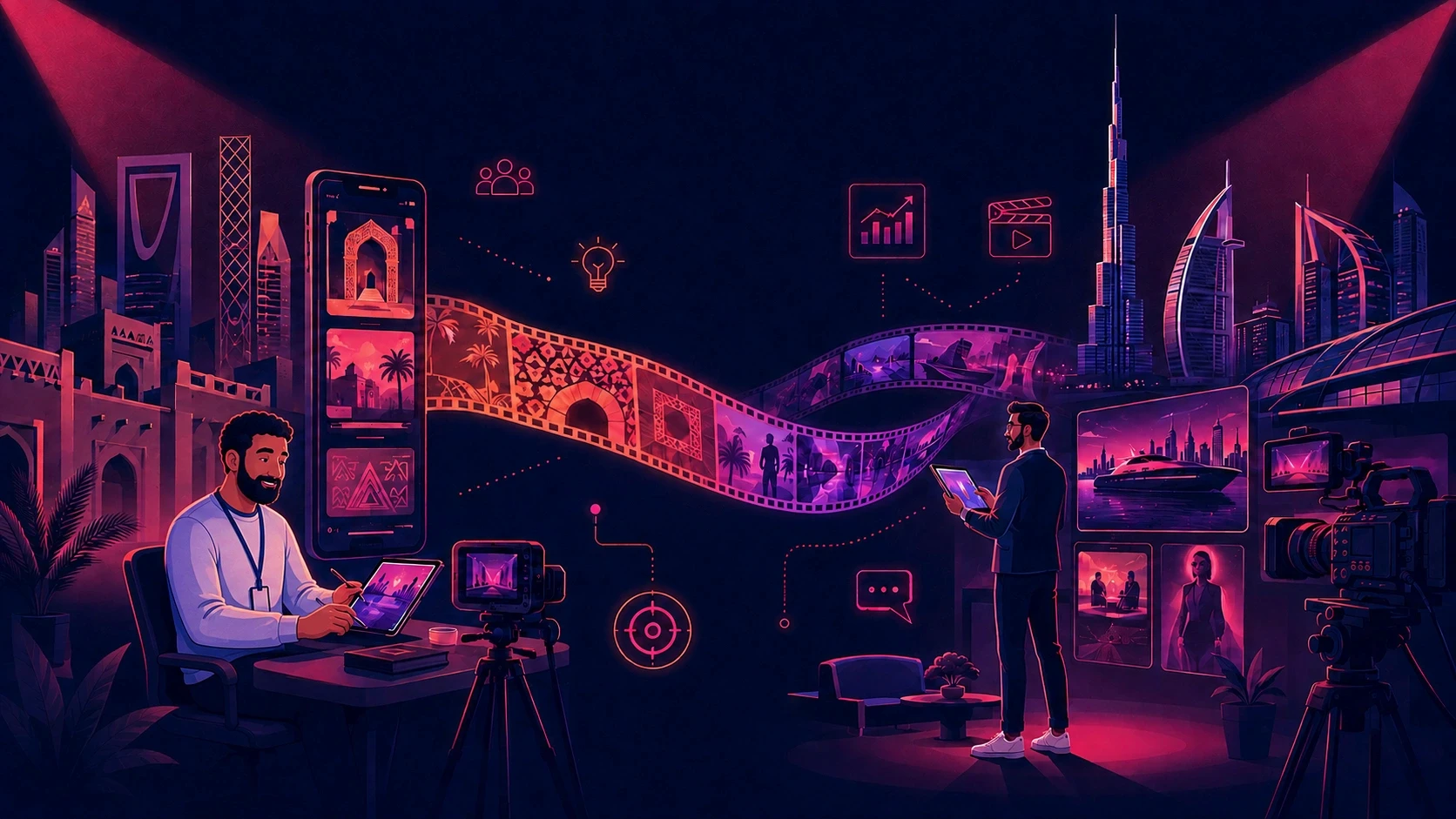
At Animus, localization can extend across strategy, creative direction, video production, animation, motion graphics, social content and post-production.
That is particularly relevant for campaigns where the audience should experience the content as locally created rather than simply translated.
The Five Layers of Arabic Content Localization
A scalable localization process needs to consider more than language.
1. Linguistic Localization
The first layer is language.
This includes:
Terminology
Grammar
Sentence structure
Spelling
Copywriting
On-screen text
Captions
The goal is not simply grammatical accuracy.
The language should sound appropriate for the brand, audience and communication context.
A corporate financial campaign, a skincare advertisement and a creator-led social video should not necessarily use the same Arabic style.
2. Dialect Localization
Arabic is not one uniform marketing voice.
Depending on the campaign, audience and market, brands may need:
Saudi Arabic
Emirati Arabic
Egyptian Arabic
Gulf Arabic
Levantine Arabic
MSA
A deliberate Arabic-English combination
Dialect becomes particularly important in:
UGC
Social videos
Creator campaigns
Conversational advertising
Voiceover
Performance marketing
The right choice depends on the audience and objective.
Our multilingual production framework at Animus similarly emphasizes matching dialect to the market rather than treating "Arabic" as a single production setting.
3. Cultural Localization
Cultural localization considers whether the campaign actually makes sense within the audience's context.
This can affect:
Humor
Scenarios
References
Talent
Examples
Social behavior
Visual cues
Storytelling
Product use cases
Good cultural localization does not mean adding superficial regional symbols to every scene.
The goal is relevance.
A campaign should feel appropriate to its audience because the communication itself has been considered for that audience.
4. Creative Localization
Creative localization affects the way the campaign is expressed.
This can include:
Visual storytelling
Characters
Environments
Product scenes
Motion graphics
Voiceover
Pacing
Typography
Captions
Calls to action
Aspect ratios
This is where localization becomes a production discipline.
At Animus, our studio capabilities span video, animation, motion graphics, CGI, VFX and technology-assisted production, allowing localization to happen within the creative workflow rather than being separated into a translation-only process.
5. Brand Localization
The final layer is protecting the brand.
Some elements should usually remain controlled:
Logo
Product identity
Brand colors
Typography
Approved claims
Core positioning
Visual identity
Character identity
Brand voice
Other elements can be adapted:
Dialect
Talent
Cultural references
Examples
Voiceover
CTA
Social format
Local storytelling
The principle is simple:
Localize what represents the audience. Preserve what represents the brand.
MSA vs Regional Arabic: Which Should Brands Use?
There is no universal Arabic localization strategy.
The choice should depend on:
Audience + market + platform + campaign objective + brand positioning
MSA can be appropriate for:
Corporate communications
Educational content
Formal campaigns
Informational pages
Regional communications
Certain pan-Arab campaigns
Regional dialects can be appropriate for:
UGC
Creator content
Social advertising
Conversational campaigns
Lifestyle content
Local voiceovers
For example, a Saudi social campaign may require Saudi Arabic, while an Egyptian creator campaign may benefit from Egyptian Arabic.
The key is not choosing the dialect that sounds "most Arabic."
It is choosing the communication style that fits the audience and the job the content needs to perform.
How Animus Approaches Arabic Content Localization
At Animus, localization starts before translation.
Our process can be structured around six questions.
1. What is the campaign trying to achieve?
Is the objective:
Awareness?
Engagement?
Leads?
Sales?
Education?
Retention?
The answer affects how much creative adaptation is required.
2. What makes the campaign recognizable?
Before localizing, identify the campaign's creative constants.
These may include:
Core idea
Product
Brand identity
Visual language
Character
Key message
Approved claims
Color system
Campaign assets
These become the foundation for every market version.
3. What needs to change?
Next, define the local variables.
These may include:
Dialect
Voice
Talent
Cultural references
Copy
CTA
Environment
Platform format
Storytelling
This prevents unnecessary recreation.
4. Does the concept work locally?
Not every global concept transfers perfectly.
Sometimes translation is enough.
Sometimes the storytelling itself needs to change.
At Animus, localization therefore includes creative thinking, not only language adaptation.
5. How should the campaign be produced?
The same idea may need to become:
Hero video
Social cutdowns
Reels
TikToks
Paid ads
UGC-style videos
Product visuals
Motion graphics
Landing-page content
These should be considered as part of the campaign system.
6. Does the final content pass both tests?
Every localized asset should answer two questions:
Does this feel relevant to the local audience?
And:
Does this still clearly belong to the original brand and campaign?
Both matter.
A Real Animus Example: Vichy Localization in Egypt
One of the clearest examples of this approach is Animus Agency's localization work for Vichy / L'Oréal's Dercos Anti-Dandruff range in Egypt.
The project was not simply an Arabic translation of an existing global advertisement.
Animus describes the work as a national localization campaign involving:
Localized creative direction
Concept adaptation
Brand adaptation
YouTube production
Instagram content
Facebook content
TikTok content
Dermatologist-led hero videos
Short-form content
Product visuals
Motion graphics
Platform-specific assets
The campaign maintained the global brand framework while adapting the creative experience for Egyptian audiences.
Animus reports that the campaign generated 55M+ YouTube views across organic and paid distribution.
That figure should not be interpreted as proof that localization alone caused the performance. Media investment, targeting, creative quality, distribution and campaign strategy all influence results.
The more useful lesson is the production model:
Global brand standards + local creative direction + platform-specific production.
That is the balance brands need when entering MENA markets.
You can read the full Vichy localization case study and view the Vichy campaign project.
How to Build a Scalable Arabic Localization Workflow
Step 1: Audit the Global Campaign
Before translating anything, document:
Campaign proposition
Brand rules
Product requirements
Approved claims
Existing creative
Target audience
Required platforms
Existing assets
Approval requirements
This establishes the global foundation.
Step 2: Create a Localization Matrix
Classify every major element as:
Globally fixed
Locally adaptable
Market-specific
Platform-specific
For example:
Product packaging → fixed
Brand colors → fixed
Core proposition → fixed
Voiceover → market-specific
CTA → adaptable
Video duration → platform-specific
This simple framework can reduce unnecessary creative recreation.
Step 3: Define the Market
Do not create a generic "Arabic version."
Define the actual audience.
For example:
Saudi consumers
UAE consumers
Egyptian consumers
GCC professionals
Pan-Arab audiences
Arabic-speaking Gen Z audiences
The audience affects language, tone, visual context and channel strategy.
Step 4: Localize the Meaning
Do not translate every sentence literally.
Adapt:
Expressions
Humor
Examples
CTA
Tone
Cultural references
Voiceover delivery
The objective is to preserve commercial intent, not word order.
Step 5: Establish Brand and Product Constants
Create reusable references for:
Product appearance
Packaging
Logo
Typography
Colors
Character identity
Environments
Visual style
Brand voice
This becomes even more important when AI-generated content is involved.
Step 6: Produce Platform Variations
The localized campaign should be planned for its actual distribution channels.
A campaign may need:
YouTube
Instagram
TikTok
Facebook
Paid social
Website
UGC
Vertical video
Short-form cutdowns
A 30-second horizontal master should not automatically become the creative strategy for every platform.
Step 7: Review Local Relevance and Brand Consistency Separately
Run two reviews.
Local review
Does the content feel natural and appropriate for the target audience?
Brand review
Does it still look, sound and behave like the same brand?
This separation helps teams identify whether an issue is localization or brand governance.
Step 8: Turn Successful Decisions Into Infrastructure
The next campaign should not begin from zero.
Keep approved:
Terminology
Brand rules
Product references
Characters
Environments
Voice approaches
Creative decisions
Platform learnings
This is where localization becomes increasingly scalable.
How AI Changes Arabic Content Localization
Generative AI can make it significantly easier to create additional content variations.
But more generation also creates more opportunities for inconsistency.
A product may look different between scenes.
A character may change between videos.
A logo may be distorted.
A voice may sound inconsistent.
An environment may drift.
Different AI models may interpret the same reference differently.
So the challenge is no longer only:
Can we generate the content?
It is:
Can we generate localized content while maintaining control over the creative system?
That is where AI-assisted production can complement an agency workflow.
At Animus, AI can be considered alongside traditional production, animation, CGI, VFX and post-production rather than treated as a replacement for creative direction.
Where ALStudio Fits Into an Animus Localization Workflow
ALStudio can support the production infrastructure behind scalable localization, while Animus provides the creative strategy, direction and production expertise.
This distinction matters.
Animus is the agency and creative production layer.
ALStudio is the AI-assisted production infrastructure.
ALStudio's workflow can support:
Content development
Scripts, campaign copy, captions and localized messaging.
Marketing production
Campaign variations, social content and market-specific creative.
Film production
Story development, visual production, voiceover and video workflows.
Post-production
Editing, visual refinement, background changes, VFX and adaptation.
Persistent creative context
Brand DNA, Product DNA, Character DNA and Environment DNA can provide reusable creative context for AI-assisted production.
The purpose is not to automate the strategic decision of what should change in each market.
The purpose is to reduce the amount of production context teams have to recreate for every asset.
For Animus-led campaigns, that can make AI useful as part of a broader production system rather than as an isolated content generator.
Arabic Localization for Agencies
Agencies face a larger version of the localization problem.
A single agency may manage multiple clients, each with different:
Brand guidelines
Products
Audiences
Markets
Dialects
Campaign objectives
Approval processes
The production challenge becomes maintaining context across multiple projects.
A structured agency workflow can define:
Client constants
What must remain consistent.
Market variables
What can change by country.
Platform variables
What changes by channel.
Production variables
Which assets require live action, CGI, animation, AI or hybrid production.
This creates a controlled system for producing multiple market variations without treating every asset as a completely new project.
Arabic Localization for Global Enterprises
Enterprise brands have another requirement: governance.
Global marketing teams need confidence that regional campaigns remain within approved brand boundaries.
Regional teams need enough flexibility to make content relevant.
The solution is not to make every market identical.
It is to define the boundaries clearly.
Global constants
Brand identity
Product
Approved claims
Core proposition
Logo
Visual identity
Local variables
Language
Dialect
Talent
Cultural context
CTA
Storytelling
Platform execution
This gives local teams room to adapt without requiring them to rebuild the brand.
What Should Stay Consistent and What Should Change?
One of the most useful localization exercises is simply dividing creative elements into two groups.
Keep consistent
Brand identity
Product identity
Core campaign idea
Approved claims
Visual identity
Key messaging
Character identity
Localize
Dialect
Voiceover
Cultural references
Talent
Examples
CTA
Local copy
Platform execution
Market-specific storytelling
The principle is:
Preserve the assets that represent the brand. Adapt the elements that represent the audience.
How to Measure the ROI of Arabic Localization
Localization ROI should be evaluated across both marketing performance and production efficiency.
Track:
Total localization investment
Cost per localized asset
Number of usable assets
Production hours
Revision rounds
Time to market
Engagement
Leads
Conversion rate
Revenue
A simple framework is:
Localization ROI = (Incremental value generated − localization investment) ÷ localization investment
But revenue is not the only useful metric.
For production teams, efficiency can also matter.
Cost per localized asset
Total localization cost ÷ number of usable localized assets
Content efficiency
Number of usable localized assets ÷ total production investment
Production efficiency
Previous production cost − new production cost
These measurements help brands understand whether their localization workflow is actually creating economic value.
Common Arabic Localization Mistakes
1. Treating Arabic as One Language Setting
Saudi, Egyptian, Emirati and other audiences may require different approaches.
2. Translating Before Understanding the Audience
The market strategy should come before the final copy.
3. Localizing Only the Voiceover
A localized voice cannot fix a campaign whose visuals, pacing and storytelling remain unsuitable for the audience.
4. Changing Too Much
Localization should not turn one global brand into several unrelated brands.
5. Changing Too Little
Simply replacing English text with Arabic may leave the campaign feeling imported.
6. Ignoring Platform Behavior
The same localized campaign may require different executions across YouTube, Instagram and TikTok.
7. Producing Without Reusable Creative Context
When every asset starts from separate references, consistency becomes harder and production becomes more repetitive.
Why Animus for Arabic Content Localization?
Animus approaches localization as part of the creative production process.
That means localization can connect:
Strategy
Creative direction
Arabic copy
Video production
Animation
Motion graphics
CGI
VFX
Social content
AI-assisted production
Post-production
Instead of asking:
"How do we translate this campaign?"
The more useful question is:
"How should this campaign exist in this market?"
That shift can affect everything from the script and voiceover to the visual execution and final platform formats.
Animus has also developed dedicated work around multilingual video production, where brand consistency, dialect selection and visual QA are treated as connected parts of the production process.
The Scalable MENA Localization Model
For brands expanding across MENA, a scalable localization system can follow this structure:
One strategic campaign foundation
↓
Shared brand and product constants
↓
Market-specific language and cultural adaptation
↓
Localized creative production
↓
Platform-specific variations
↓
Consistency and local QA
↓
Performance measurement
This model allows brands to extract more value from the original creative investment without assuming every market should receive the exact same content.
The objective is not simply to produce more Arabic assets.
It is to produce more relevant Arabic assets without losing control of the brand.
Frequently Asked Questions
What is Arabic content localization?
Arabic content localization adapts marketing content for a specific Arabic-speaking market by considering language, dialect, culture, creative execution, voice, visuals and platform requirements while maintaining the brand's core identity.
What is the difference between Arabic translation and localization?
Translation focuses primarily on transferring language. Localization considers how the complete communication should work for a particular audience, including language, cultural context, creative execution and platform behavior.
Should brands use MSA or an Arabic dialect?
It depends on the audience, market, platform, campaign objective and brand positioning. MSA can suit formal and informational communication, while regional dialects can be useful for conversational, creator-led and social content.
Can one campaign be localized for Saudi Arabia, UAE and Egypt?
Yes. The most scalable approach is to establish shared campaign and brand constants, then adapt language, dialect, cultural context, talent, storytelling, CTA and platform execution for each market.
Can AI help with Arabic content localization?
Yes. AI can support scripts, visuals, voiceovers, video variations and post-production. Human creative and cultural review remains important for terminology, local relevance, brand governance and high-stakes communication.
How can brands reduce Arabic localization costs?
Brands can reduce duplicated production by planning localization before production, creating reusable brand and product assets, establishing clear global constants and producing multiple market versions from a shared creative foundation.
How does Animus approach Arabic localization?
Animus combines creative strategy, localization, video production, animation, motion graphics, CGI, VFX, social content and technology-assisted production to adapt campaigns for MENA audiences while maintaining brand consistency.
Can Animus localize an existing global campaign?
Yes. Localization can begin with an existing global campaign and determine which elements should remain fixed and which should be adapted for the target MENA market.
Can Animus produce multilingual video content?
Yes. Animus works across multilingual and regional video production, including market-specific language, dialect, voiceover, visual adaptation and platform-specific content.
Can ALStudio support Arabic localization?
ALStudio can support the production side of localization through connected content, marketing, film and editing workflows, as well as persistent creative context such as Brand DNA, Product DNA, Character DNA and Environment DNA.
Conclusion: Localize Smarter, Not From Scratch
Arabic content localization is not simply a translation task. It is a creative production strategy for brands that need to scale across MENA.
The most effective framework is to separate what should change from what should remain consistent.
Localize the language.
Adapt the culture.
Build for the platform.
Preserve the brand.
Reuse the creative foundation.
Measure the commercial impact.
At Animus, we approach this as a connected production problem. Strategy, Arabic localization, creative direction, video, animation, motion graphics, CGI, VFX and AI-assisted production can work together instead of being handled as disconnected tasks.
The Vichy localization campaign demonstrates how a global brand can be adapted for a local market while maintaining global brand standards. The broader opportunity is to turn that approach into a repeatable system for Saudi Arabia, the UAE, Egypt and wider MENA markets.
The goal is not to create more content for the sake of volume.
The goal is to create more relevant market-specific content from the same strategic foundation.