Motion Graphics vs Explainer Videos: What Is the Difference?
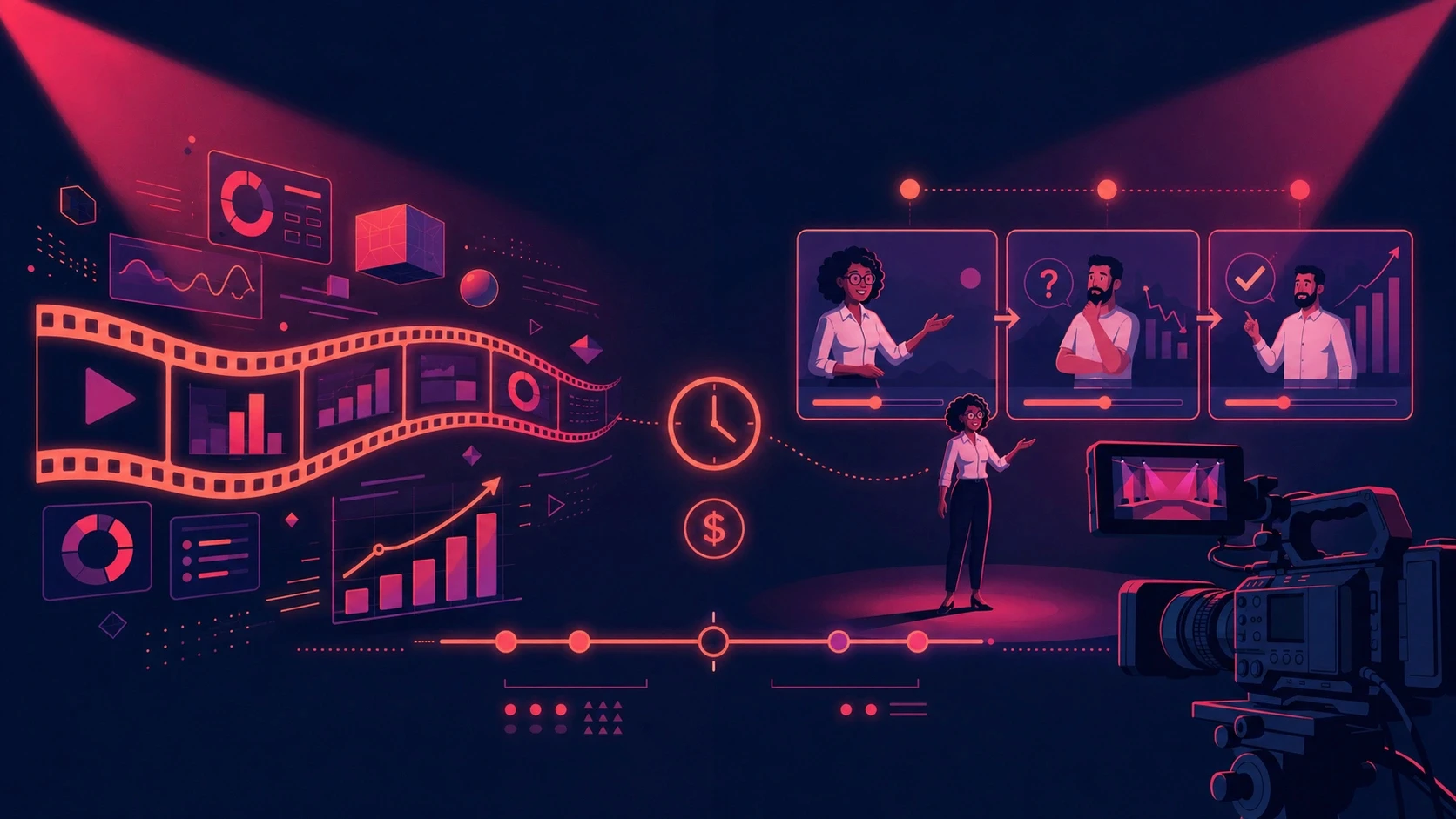
Motion graphics vs explainer video explained: cost, length, story arc, and use cases compared, plus how to produce both formats without brand drift.
Motion Graphics vs Explainer Video: Which Format Does Your Brand Need?
Choosing the wrong video format can mean spending weeks producing content that looks impressive but does not do the job your audience needs.
A motion graphics video may deliver a product feature clearly in 20 seconds. A narrative explainer may need 60 or 90 seconds to build context, introduce a problem, and make the solution feel relevant. Neither format is automatically better. The right choice depends on the message, audience, platform, and business objective.
At Animus Agency, we approach the motion graphics vs explainer video decision as a communication challenge first. Before choosing a style, we define what the viewer needs to understand, feel, remember, and do next. That foundation guides the script, visual language, animation technique, duration, and final deliverables.
The Short Answer
Choose motion graphics when you need to communicate one idea, feature, process, statistic, or announcement quickly.
Choose an explainer video when the viewer needs context, a problem–solution story, or a stronger reason to trust the solution.
Combine both when the campaign needs a clear visual system as well as a structured narrative.
If Your Priority Is...
Explaining one feature quickly: Choose motion graphics.
Visualizing data or a process: Choose motion graphics.
Creating short paid-social content: Choose motion graphics.
Explaining a complex product or service: Choose an explainer video.
Building trust around a customer problem: Choose an explainer video.
Supporting a landing page or sales presentation: Choose an explainer video.
Building a multi-platform campaign: Develop one core story, then adapt it into both formats.
The goal is not simply to produce more video. It is to create the right video for the communication task and the platform where the audience will see it.
What Is a Motion Graphics Video?
A motion graphics video uses animated typography, icons, illustrations, charts, interface elements, shapes, product visuals, and transitions to communicate information through movement.
It usually prioritizes speed, clarity, and visual organization. Instead of asking viewers to follow a complete character journey, it guides their attention through a sequence of focused visual messages.
Common Uses of Motion Graphics
Product and feature announcements
App and software demonstrations
Data and performance highlights
Corporate and internal communication
Event screens and launch films
Social media advertisements
Logo animation and brand films
Infographic and process videos
Motion graphics can be especially effective when the message is abstract. A process, system, or set of numbers may be difficult to film, but animation can transform it into a clear visual sequence.
Production time and cost depend on the creative direction, duration, design detail, animation complexity, voiceover, music, localization, and number of final formats. A short motion graphics video can still require extensive craft when it includes custom illustration, advanced transitions, 3D elements, or detailed brand animation.
What Is an Explainer Video?
An explainer video guides the audience through a subject using a structured narrative. It often begins with a recognizable problem, introduces a solution, demonstrates how that solution works, and ends with a clear next step.
Explainers may use 2D character animation, 3D animation, motion graphics, live action, voiceover, product demonstration, or a combination of techniques. What defines the format is not one visual style; it is the way the information is organized into a persuasive story.
Common Uses of Explainer Videos
Product and service explanations
SaaS and technology platforms
Healthcare and educational communication
Employee onboarding and training
Sales enablement
Public-awareness campaigns
Financial or technical subjects
Brand and customer stories
An explainer normally requires deeper pre-production. The team must shape the message, write the script, plan the scenes, establish visual continuity, direct the voiceover, and make sure every part of the story supports the final call to action.
That additional structure is valuable when the audience genuinely needs context. If the message is simple, however, a full narrative may add time without adding clarity.
Motion Graphics vs Explainer Video: Direct Comparison
Consideration | Motion Graphics | Explainer Video |
|---|---|---|
Primary strength | Clarity and information compression | Context, storytelling, and persuasion |
Typical structure | Text, icons, charts, UI, and visual transitions | Problem, solution, proof, and action |
Characters | Optional | Common, but not required |
Voiceover | Optional | Often valuable |
Production planning | Usually lighter | Usually more extensive |
Best funnel role | Awareness, feature clarity, and retargeting | Education, consideration, and sales support |
Best placements | Social feeds, presentations, events, and product updates | Landing pages, campaigns, sales journeys, and training |
Main risk | Being too shallow for a complex decision | Being too long for a simple message |
These are useful tendencies, not rigid rules. A motion graphics video can tell a powerful story, and an explainer can be short and visually direct. The best creative direction is the one that serves the audience without adding unnecessary information.
How Animus Chooses the Right Format
At Animus, the format is part of a wider creative and production strategy. We look at five questions before recommending a direction.
1. What Must the Audience Understand?
If the audience only needs to understand a feature, process, or result, motion graphics may be enough. If they need to understand why the problem matters and how the solution changes their situation, an explainer structure is usually stronger.
2. Where Will the Video Be Seen?
A social feed demands a faster opening and immediate visual clarity. A landing page allows more time for explanation. An event screen may need to work without sound, while a training video may depend on detailed narration.
Animus plans the story around the real viewing environment, not only the master video.
3. How Much Story Does the Message Need?
Not every message needs characters, dialogue, and a complete narrative arc. We identify the shortest structure that can communicate the idea without losing meaning or emotional impact.
4. What Does the Brand Need to Look and Feel Like?
The visual approach may involve clean graphic animation, expressive character design, cinematic 3D, CGI product visuals, mixed media, or a custom combination. The technique should strengthen the brand rather than distract from it.
5. What Additional Assets Will the Campaign Need?
A campaign rarely ends with one master video. It may require vertical edits, square posts, short teasers, cutdowns, GIFs, still frames, event versions, language versions, or platform-specific adaptations.
Planning these outputs from the beginning makes the production more efficient and helps every asset feel connected.
The Animus Production Process
Whether the project becomes a motion graphics video or a full explainer, Animus connects strategy, storytelling, design, animation, sound, and delivery through one production process.
Discovery and Creative Strategy
We begin by understanding the audience, campaign objective, brand position, message, platform, and desired action. This prevents the project from becoming a collection of attractive scenes without a clear purpose.
Scriptwriting and Message Development
The script defines the communication structure. We simplify complex information, establish the right tone, and make sure the key message appears early enough to hold attention.
Storyboarding and Visual Development
Storyboards turn the script into a visual plan. They establish composition, pacing, transitions, character actions, product moments, and the relationship between voiceover and on-screen information.
Style Frames and Art Direction
Before full animation begins, style frames define the visual world. This stage aligns color, typography, illustration, characters, environments, lighting, textures, and brand details.
Animation and Production
Depending on the project, production may include 2D animation, 3D animation, motion graphics, character animation, CGI, compositing, visual effects, or mixed-media execution. Explore the wider Animus animation and production capabilities.
Sound, Voiceover, and Localization
Music, sound design, and voice performance shape how the video feels. For regional and international campaigns, localization also includes language, dialect, pacing, pronunciation, typography, cultural context, and layout—not translation alone.
Master Delivery and Campaign Adaptation
The final master can be adapted into the formats required for social media, digital advertising, presentations, websites, events, internal communication, or training.
Which Format Delivers Better ROI?
Neither format has inherently higher ROI. The stronger option is the one that produces the desired audience action at an efficient total cost.
Video ROI = (Revenue attributed to the video − Total video cost) ÷ Total video cost × 100
Total cost should include more than the first production estimate:
Strategy and briefing
Scriptwriting and storyboarding
Design and animation
Voiceover, music, and sound design
Localization
Revision rounds
Format adaptations
Distribution and paid media
Performance should be evaluated against the campaign objective. Useful measures may include:
Cost per qualified lead
Landing-page conversion rate
Product-demo requests
Trial or signup completion
Training completion
Support-query reduction
Revenue influenced
A visually impressive video with high views but no relevant audience action is not automatically the better-performing asset.
A Smarter Multi-Format Campaign Approach
Brands often do not need to choose only one format. They need a content system in which each video performs a different job.
For example, a product launch may include:
A 60-second animated explainer for the website or sales presentation
A 20-second motion graphics video focused on the main feature
Short vertical cutdowns for social media
A silent event-screen version with stronger on-screen messaging
Localized voiceover and typography for different markets
Animus can develop these assets from one approved creative foundation. The story, design language, character identity, product appearance, and brand tone remain consistent while the pacing and structure change for each platform.
This approach avoids treating every output as a separate project and gives the campaign a recognizable visual identity across channels.
Motion Graphics and Explainer Videos for MENA Audiences
For GCC and MENA campaigns, format selection is only part of the decision. The content must also be localized for the people and markets it represents.
Important considerations include:
Arabic dialect or Modern Standard Arabic
Formal versus conversational delivery
Brand and product-name pronunciation
Cultural setting, wardrobe, behavior, and visual details
Platform-specific viewing habits
Motion graphics require particular attention to Arabic text direction, letter joining, hierarchy, and timing. Explainer videos require the same care in voice casting, dialogue, phrasing, and cultural context.
Animus combines regional understanding with an international production approach, helping brands create content that feels intentional rather than simply translated.
Frequently Asked Questions
Is motion graphics the same as an explainer video?
No. Motion graphics is a visual technique based on animated graphic elements. An explainer video is defined by its communication purpose and narrative structure. Some explainer videos are created entirely with motion graphics.
Which is cheaper: motion graphics or an explainer video?
Motion graphics can be more cost-efficient when the message is short and does not require many characters or narrative scenes. Final cost still depends on duration, style, complexity, production quality, voiceover, localization, and revisions.
Which format is better for B2B marketing?
Motion graphics works well for data, features, systems, and concise product communication. An explainer is often better when a B2B buyer needs context, proof, or help understanding a complex solution.
How long should the video be?
The video should be as short as possible without losing essential meaning. Social content often needs a fast, concise structure, while landing-page, training, or sales videos may justify a longer runtime.
Can one project use both formats?
Yes. A campaign can use an explainer as the main story and motion graphics cutdowns for features, statistics, social media, retargeting, and event content.
Can Animus adapt the video for Arabic and international markets?
Yes. Localization can include voiceover, language, dialect, on-screen typography, timing, visual context, and multiple delivery formats.
Choose the Format by Outcome
Motion graphics and explainer videos are not competing creative trends. They are different tools for different communication jobs.
Use motion graphics when the audience needs speed, clarity, and visual impact. Choose an explainer when they need context, progression, and persuasion. Use both when the campaign needs one central story supported by flexible content across platforms.
Animus Agency brings together creative strategy, scriptwriting, storyboarding, design, 2D and 3D animation, motion graphics, CGI, sound, localization, and campaign adaptation to build video content around a clear business purpose.
Have a message but are not sure which format fits it? Contact Animus Agency to discuss the right creative and production direction for your campaign, or follow Animus Agency on LinkedIn for recent work and behind-the-scenes content.