2D vs 3D Animation: Which Is Better for Your Brand Campaign?

Compare 2D vs 3D animation by cost, production, use cases and brand impact. Learn when to choose 2D, 3D or a hybrid approach for your next campaign.
2D vs 3D Animation: Which Is Right for Your Brand Campaign?
Choosing between 2D vs 3D animation is not really a question of which style is better.
The better question is:
What does each scene need to communicate, and which visual approach makes that message easiest to understand?
Choose 2D animation when the campaign needs clarity, abstraction, characters, motion graphics, or simple visual storytelling.
Choose 3D animation when the audience needs to see a product's shape, materials, depth, construction, or movement through space.
Choose hybrid animation when the campaign needs both.
For modern marketing teams, there is another consideration: consistency. A campaign may use 2D, 3D, AI-generated video, or a combination of all three. The product, character, environment, colors, and brand identity still need to feel like they belong to the same campaign.
2D vs 3D Animation at a Glance
If your campaign needs... | Consider |
|---|---|
Clear explanations | 2D |
Abstract ideas or processes | 2D |
Character-led storytelling | 2D |
Infographics and motion graphics | 2D |
Product form and materials | 3D |
CGI product advertising | 3D |
Realistic depth and camera movement | 3D |
Product demonstrations | 3D |
Both explanation and product impact | Hybrid |
The important point is that 2D and 3D are communication choices, not quality levels. A well-designed 2D campaign can be more effective than unnecessary 3D, while a product reveal may need the dimensional detail that 3D provides.
What Is 2D Animation?

2D animation creates movement in a two-dimensional visual space using height and width.
It can include:
Motion graphics
Vector animation
Illustrated explainers
Frame-by-frame animation
Stylized characters
Infographics
Graphic social content
Its biggest advantage for brands is controlled simplicity.
Instead of showing every detail, a 2D animation can remove distractions and focus attention on the message. A complicated process can become a simple sequence of icons. An abstract service can become a visual metaphor. A character can communicate emotion without realistic rendering.
2D animation works well for:
Explainer videos
SaaS and technology marketing
Educational content
Character-led campaigns
Motion graphics
Infographics
Internal communications
Social media videos
Stylized brand films
When 2D may not be enough
2D can be less suitable when viewers need to understand precise physical form, materials, construction, or realistic spatial relationships.
For example, if you are launching a new physical device, showing the actual shape, surface, components, and movement may require a dimensional approach.
What Is 3D Animation?

3D animation creates objects, characters, and environments with simulated depth and volume.
A traditional 3D workflow can include:
Modeling
Texturing
Rigging
Lighting
Animation
Rendering
Compositing
3D is especially useful when the physical qualities of a product are part of the message.
A product can rotate, open, transform, break into components, or appear from impossible camera angles. Materials can react to light, and virtual cameras can move through spaces that would be difficult or expensive to film.
3D animation works well for:
Product launches
CGI advertising
Automotive campaigns
Packaging visualization
Architecture and real estate
Technical demonstrations
Premium product films
Virtual environments
Product visualization
When 3D may be unnecessary
If the audience only needs to understand an idea or process, detailed 3D may add production work without adding useful information.
The goal is not to make every campaign more dimensional. The goal is to make the message clearer.
2D vs 3D: The Main Differences

Factor | 2D Animation | 3D Animation |
|---|---|---|
Main strength | Clarity and stylization | Depth and physical presence |
Best for | Ideas, processes, characters | Products, materials, spaces |
Visual language | Graphic or illustrated | Dimensional or realistic |
Camera movement | Graphic or simulated | Movement through 3D space |
Product detail | Stylized representation | Detailed dimensional visualization |
Brand expression | Illustration and motion systems | Branded dimensional worlds |
Main complexity | Design and animation detail | Assets, materials, lighting and rendering |
Strong campaign role | Explanation and storytelling | Demonstration and product impact |
These are guidelines rather than fixed rules. A detailed frame-by-frame 2D film can require more production time than a simple 3D sequence. Likewise, an AI-generated dimensional look does not necessarily mean a traditional 3D production pipeline was used.
For additional background, Adobe explains the technical differences between 2D and 3D animation in its guide to how 3D animation is made.
When Should a Brand Choose 2D Animation?

1. The idea matters more than physical realism
If the audience needs to understand a process, service, system, or concept, 2D can simplify the information.
For example, a financial platform could explain automated payments using icons, diagrams, characters, and motion instead of building a realistic virtual bank.
2. The brand needs a recognizable illustration system
Shapes, colors, characters, typography, and motion behavior can become recurring brand assets.
This is especially useful for brands that publish:
Educational series
Product explainers
Social content
Character-led campaigns
Internal communications
3. The subject is abstract
Some subjects do not have an obvious physical form.
Data, security, emotions, workflows, software, and digital services can be difficult to show realistically. 2D gives creative teams more freedom to turn these ideas into simple visual metaphors.
4. The campaign needs many social variations
A modular 2D system can be adapted into:
9:16 vertical videos
1:1 social posts
16:9 hero videos
Short paid ads
Educational clips
Planning these formats early makes the campaign easier to scale.
When Should a Brand Choose 3D Animation?

1. Product form affects the buying decision

For a vehicle, device, bottle, package, or piece of furniture, the physical form is part of the value proposition.
3D can show:
Shape
Proportions
Materials
Finishes
Components
Product movement
2. The campaign needs impossible camera angles

3D makes it possible to move the camera through a product, inside a machine, around a structure, or through a virtual environment.
This can create views that would be difficult or impossible to capture with a physical camera.
3. Materials and lighting matter

Glass, metal, plastic, fabric, liquid, and other surfaces can communicate different qualities through lighting and reflections.
For premium products, these details can become part of the visual story.
4. The assets can be reused
A properly prepared 3D product model can support future:
Product videos
Still images
Product-page visuals
Social content
New camera angles
Product launches
However, reuse should be planned from the beginning. It does not happen automatically.
When Is Hybrid Animation the Better Choice?
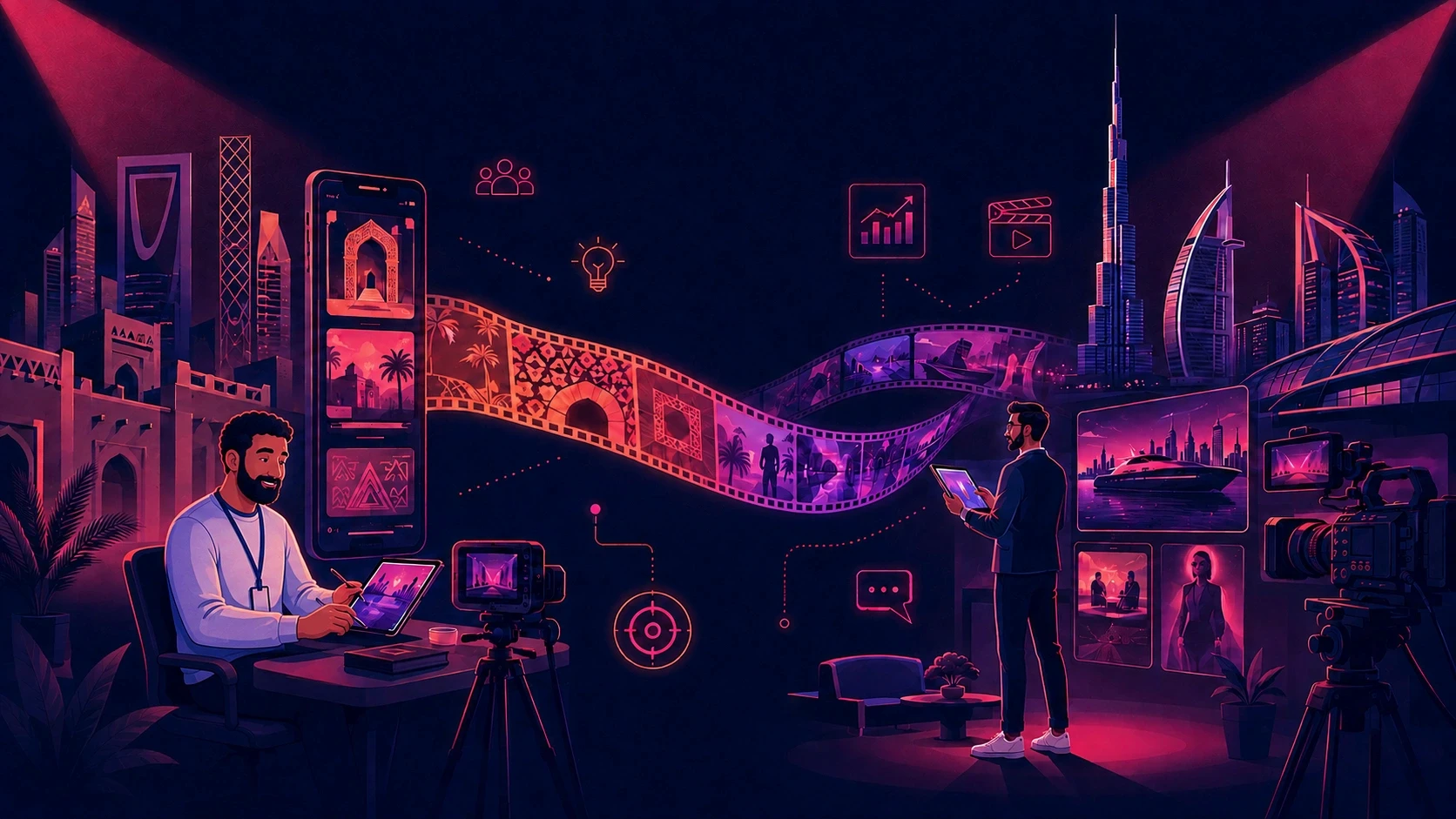
Hybrid animation combines different visual treatments according to what each scene needs to communicate.
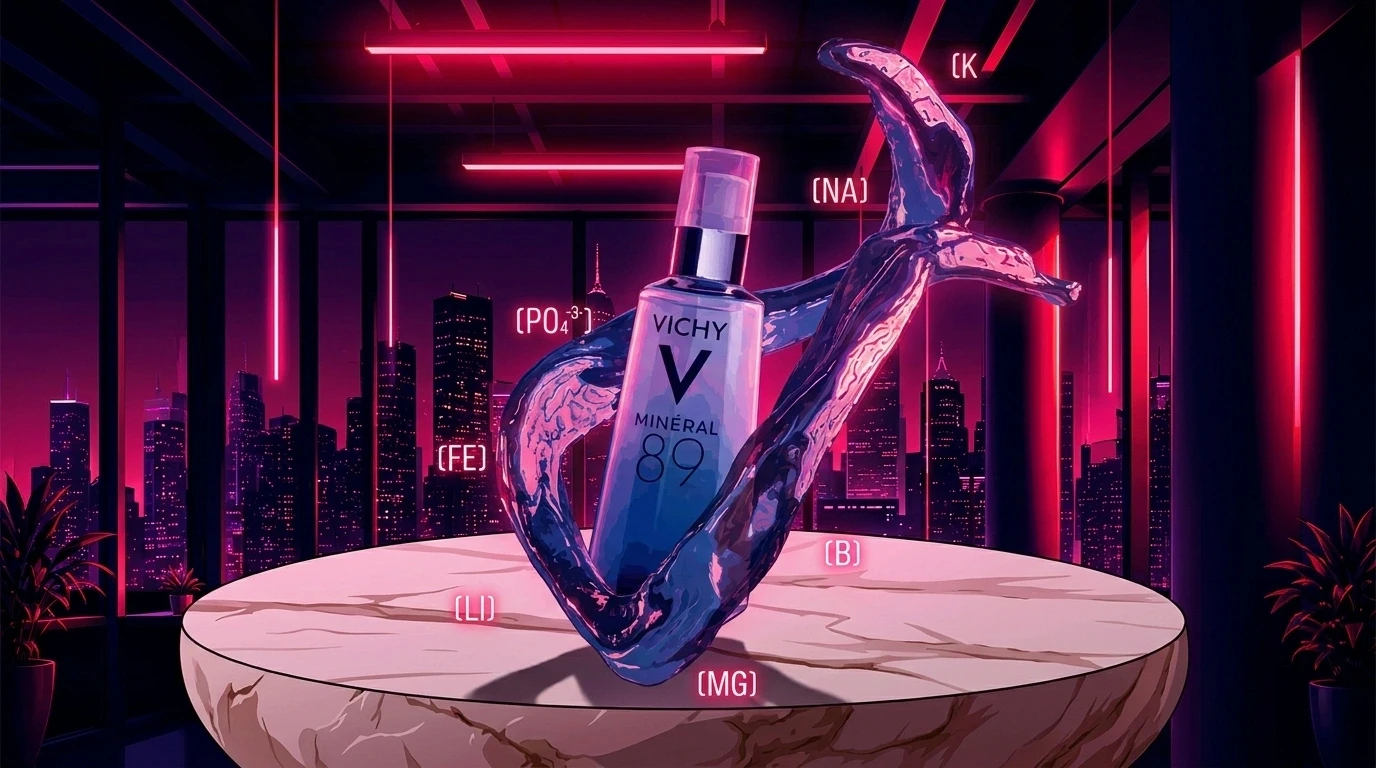
Imagine a skincare launch:
3D introduces the bottle and packaging.
2D motion graphics explain ingredients and benefits.
2.5D connects the product to a lifestyle scene.
Vertical edits adapt the campaign for social platforms.
Localized versions keep the same product and brand identity across markets.
The campaign does not need every scene to use the same technique.
It needs every scene to feel like it belongs to the same brand.
That means keeping important constants consistent, including:
Product proportions
Packaging
Brand colors
Typography
Character identity
Lighting logic
Environment style
Motion behavior
The Real Difference: What the Audience Needs to See

A simple way to decide is to ask:
Does the audience need to understand an idea?
Use 2D.
Does the audience need to understand a physical object?
Use 3D.
Does the audience need both?
Use hybrid.
This approach keeps the creative decision connected to the campaign objective instead of choosing a visual style simply because it looks impressive.
2D Animation: Benefits and Limitations
Benefits
Clear communication: Remove visual distractions and guide attention.
Strong brand identity: Illustration and motion can become recognizable brand assets.
Flexible abstraction: Represent invisible or complicated ideas simply.
Expressive characters: Stylization can communicate personality without realism.
Modular adaptation: Build a graphic system that can scale across formats.
Limitations
It may not communicate physical construction or materials precisely.
Detailed frame-by-frame work can be time-intensive.
Generic illustration can make a campaign feel interchangeable.
Product proportions may be harder to demonstrate accurately.
3D Animation: Benefits and Limitations

Benefits
Product visualization: Show form, components, and behavior from controlled angles.
Camera freedom: Create shots that would be difficult to film.
Material control: Manage reflections, textures, lighting, and surfaces.
Asset reuse: Reuse well-built models across future content.
Dimensional impact: Create cinematic product moments.
Limitations
Traditional workflows can involve modeling, rigging, lighting, and rendering.
Changes to approved assets can affect multiple shots.
Realism does not automatically improve communication.
Strong technology still needs strong art direction.
What Determines the Cost of 2D vs 3D Animation?

There is no universal rule that 2D is cheaper than 3D.
The budget depends on the actual production scope.
Important factors include:
Video duration
Number of scenes
Character complexity
Product modeling
Number of environments
Rigging and simulation
Art direction
Level of realism
Rendering and compositing
Voiceover and lip sync
Revision rounds
Number of formats
Localization
Asset reuse requirements
Instead of asking, “Is 2D or 3D cheaper?”, ask:
Which production workflow can deliver the required assets at the right quality, speed, and level of control?
When comparing production proposals, use the same duration, scenes, deliverables, formats, localization requirements, and revision assumptions. Otherwise, the prices are difficult to compare fairly.
How AI Is Changing 2D vs 3D Animation

AI video generation is changing the relationship between visual style and production method.
A shot can look illustrated, dimensional, cinematic, or stylized without following the traditional production workflow associated with that style.
That creates more creative options, but it introduces another challenge:
Visual consistency.
A campaign can contain impressive individual clips while still feeling disconnected if:
The character changes between scenes.
The product shape changes.
Packaging details drift.
Environments feel unrelated.
Colors change from one asset to another.
Different AI models produce different visual interpretations.
The challenge is no longer only generating a good shot.
It is building a complete campaign where every shot belongs to the same visual system.

The Consistency Problem Most 2D vs 3D Comparisons Miss
Campaign consistency means preserving the things viewers need to recognize while allowing the creative treatment to change.
Creative variables can change | Creative constants should stay consistent |
|---|---|
Camera angle | Character identity |
Scene composition | Product design |
Animation technique | Packaging |
Lighting treatment | Brand colors |
Platform format | Typography |
Shot duration | Environment identity |
A character can move from a 2D explainer into a 2.5D social clip while remaining recognizable.
A product can appear in a cinematic 3D reveal and a graphic feature sequence while keeping the same proportions, label, and colors.
This becomes even more important when teams:
Create many assets
Use multiple AI models
Work across several team members
Produce content for different platforms
Localize campaigns across markets
How ALStudio Supports 2D, 3D and Hybrid Campaigns
ALStudio is a Creative AI Operating System designed to connect creative production with persistent brand identity.
Instead of treating every generation as a separate task, ALStudio connects workflows, creative identity, and production in one system.
Film Studio connects the production process
Film Studio can take a project through a structured workflow:
Story idea → Script → Storyboard → Character and environment sheets → Scene generation → Voiceover → Final film
This creates a connected production process instead of treating every shot as an unrelated prompt.
Constants Studio stores creative foundations
Constants Studio can store reusable creative foundations such as:
Brand DNA
Character DNA
Product DNA
Environment DNA
These foundations can be reused when creating different scenes, formats, and campaign assets.
The Consistency Engine keeps the campaign connected
ALStudio's Consistency Engine is designed around:
Character consistency
Product consistency
Scene consistency
Brand consistency
This matters whether the campaign is 2D, 3D, AI-generated, or hybrid.
ALStudio also provides access to multiple AI video models and Arabic voiceover capabilities, supporting teams that need to create and localize content across markets.
Explore ALStudio: Start creating with ALStudio
A Simple Workflow for Choosing 2D or 3D
Step 1: Define the audience outcome
Ask:
What should the viewer know, feel, or do after watching?
Start with the communication goal, not the animation style.
Step 2: Identify what must stay accurate
List the elements that cannot change:
Product
Packaging
Character
Logo
Colors
Typography
Environment
Brand style
Step 3: Match the visual treatment to the job
Use:
2D for simplification and explanation.
3D for physical form and product visualization.
Hybrid when the campaign needs both.
Step 4: Plan distribution before production
Decide early whether you need:
Hero film
Reels
TikTok videos
Paid ads
Product-page videos
Square social assets
Localized versions
This prevents the campaign from being designed around one hero video only.
Step 5: Lock creative constants
Define recurring brand, product, character, and environment elements before scaling production.
Step 6: Choose the production method scene by scene
Some scenes may benefit from:
Traditional animation
AI generation
3D
2D
Compositing
VFX
Live-action integration
The workflow does not need to be identical for every shot.
Step 7: Review the complete campaign
Before publishing, check:
Is the product still recognizable?
Is the character clearly the same?
Do recurring environments feel connected?
Does every format feel like the same brand?
Can the campaign scale without rebuilding the identity?
Common Mistakes to Avoid
Choosing 3D just because it looks more premium
Dimensionality alone does not create a premium campaign.
Art direction, composition, lighting, storytelling, product accuracy, and execution matter more than simply using 3D.
Assuming 2D is always cheaper
Complex illustration, character development, and frame-by-frame animation can require significant production time.
Choosing the style before defining the objective
Start with the message and audience response. Then choose the visual treatment.
Designing only the hero film
A modern campaign may also need:
Short-form videos
Paid cutdowns
Social formats
Product visuals
Localized versions
Plan the production system, not just one film.
Treating AI generations as separate clips
A group of attractive clips is not automatically a coherent campaign.
The same character, product, environment, and brand identity should remain recognizable across the complete content system.
Forcing every scene into one visual style
Different scenes can use different techniques.
Visual coherence is more important than technical uniformity.
2D vs 3D Animation Decision Checklist
Choose 2D when:
The campaign explains an abstract idea or process.
Fast visual comprehension is important.
The brand benefits from illustration or character storytelling.
Motion graphics are central to the campaign.
Social adaptations are a major part of distribution.
Choose 3D when:
Product shape or materials are important.
Realistic depth and camera movement are needed.
The campaign requires internal or exploded views.
Product visualization is central to the message.
Reusable dimensional assets can support future content.
Choose hybrid when:
The campaign needs both explanation and product impact.
Different scenes have different communication jobs.
You want to combine graphic storytelling with dimensional product visuals.
How to Plan a Campaign That Performs Across More Channels
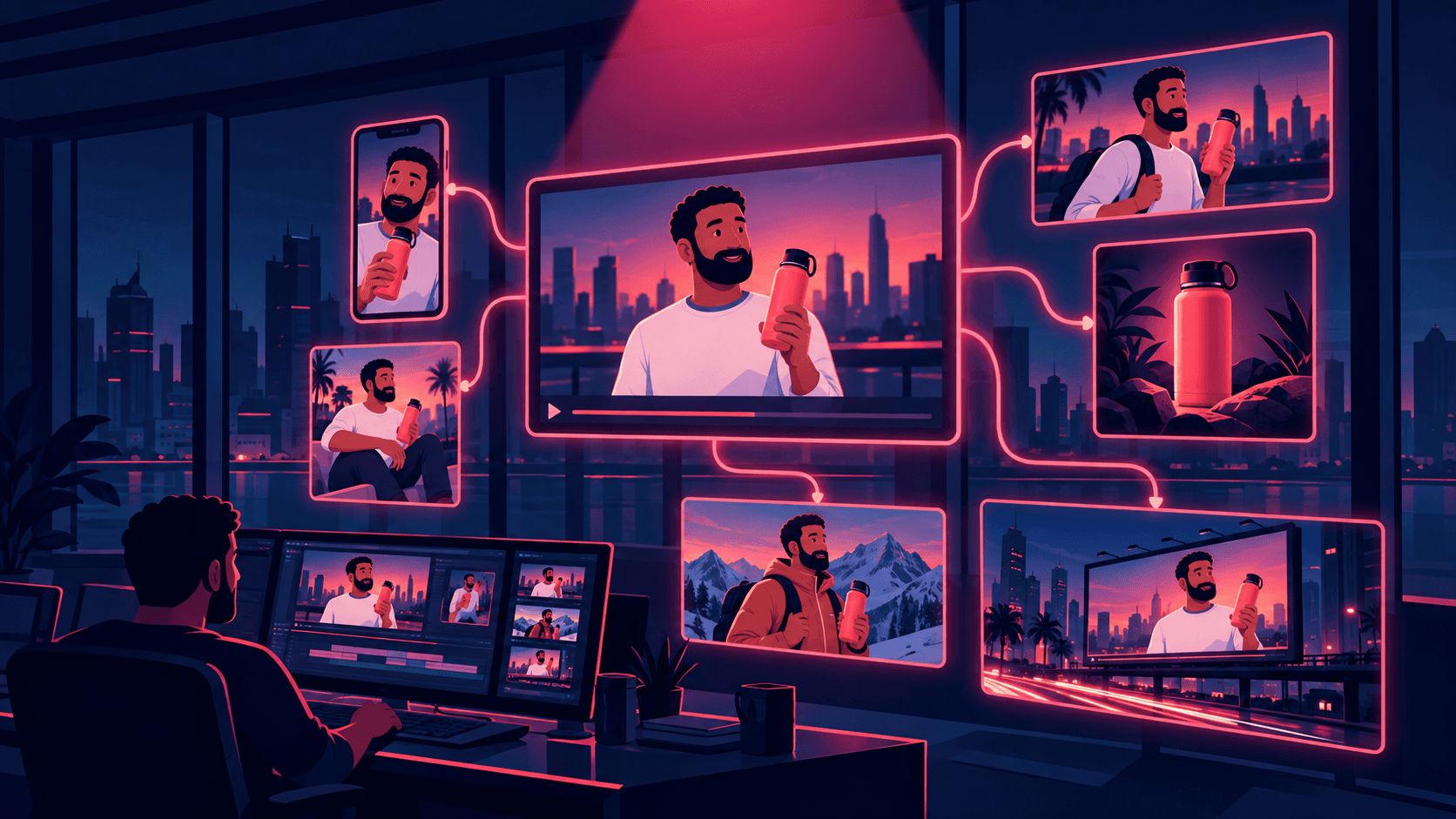
The strongest production plan does not stop at the first video.
Before production begins, define the complete asset system:
Hero film → Short-form edits → Paid ads → Product visuals → Social posts → Localized versions
Then decide which elements need to remain constant across every asset.
This makes the original production more useful because the same creative foundation can support more campaign outputs instead of being rebuilt for every channel.
For teams producing content at scale, ALStudio brings these production workflows into one Creative AI OS, with brand identity and reusable creative foundations built into the workflow.
Explore ALStudio's AI content production workflow
See how AI content workflows can scale
Explore AI product content best practices
Conclusion: 2D vs 3D Animation
There is no universal winner between 2D and 3D animation.
The right choice depends on what the audience needs to understand.
Choose 2D for clarity, abstraction, characters, and graphic storytelling.
Choose 3D for products, materials, physical form, and spatial experiences.
Choose hybrid when the campaign needs both.
For modern brands, the bigger production challenge is often consistency. The animation technique can change from scene to scene, but the product, character, environment, and brand identity should remain connected.
That is where a structured creative production system becomes useful.
Build 2D, 3D, or hybrid campaigns with ALStudio. Save your brand, product, character, and environment identity once, then reuse them across your creative production workflow.
Frequently Asked Questions
Is 2D or 3D animation better for marketing?
2D is useful for clear explanations, graphic storytelling, abstract concepts, and stylized characters. 3D is useful when product form, materials, depth, or physical environments matter. Many campaigns can combine both.
Is 2D animation cheaper than 3D animation?
Not always. Cost depends on duration, style, characters, assets, environments, rendering, revisions, formats, and deliverables. Complex 2D animation can require more work than a simple 3D sequence.
Can a brand combine 2D and 3D animation?
Yes. A brand can use 2D for explanations and 3D for product reveals or demonstrations. Consistent products, characters, colors, environments, and motion behavior help the combination feel intentional.
Which style is best for product marketing?
3D can be useful when customers need to understand a product's shape, materials, components, or construction. 2D can communicate benefits and abstract features clearly. A hybrid approach can combine both.
How long does 2D or 3D animation take?
Timelines depend on scope, visual complexity, asset readiness, feedback rounds, production method, and the number of final formats. A short controlled animation can take weeks, while a detailed campaign with multiple formats and localized versions can take considerably longer.
Can AI generate both 2D and 3D animation styles?
AI systems can generate illustrated, dimensional, and cinematic visual treatments. Creative direction, identity controls, editing, and quality review are still important when producing a complete campaign.
Does ALStudio have a free plan?
Yes. ALStudio offers a free plan so users can test its creative production workflow before scaling. Current plan details are available on the ALStudio pricing page.
Start free on ALStudio — no watermark on any plan, no credit card required.